Tamarind
Tamarindus indica L.
Fabaceae
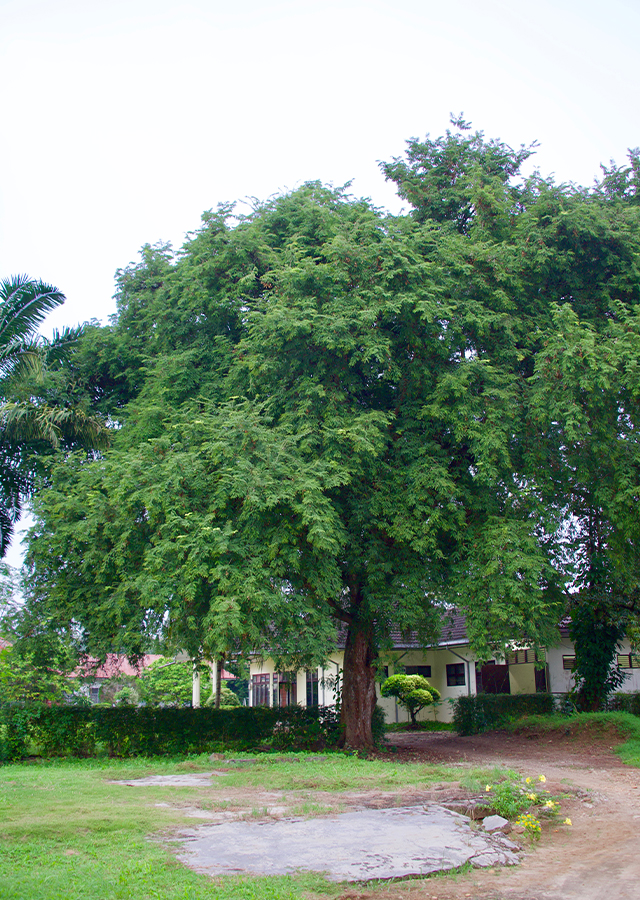
Location in our garden
Orchard
Synonym
Cavaraea elegans Speg.
Tamarindus erythraeus Mattei
Tamarindus occidentalis Gaertn.
Habitus

Trees. Evergreen trees, can grow to 25 m high with a spread up to 10 m
Part Used
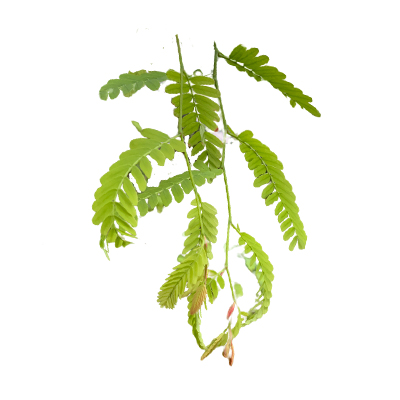
 Leaves
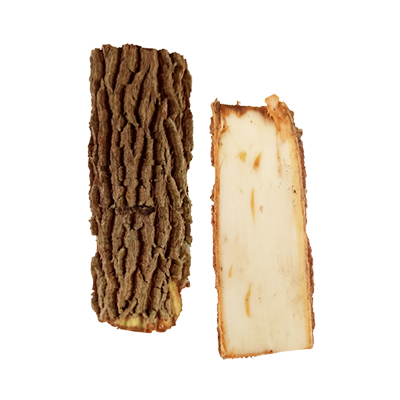
 Bark
Bark Flowers
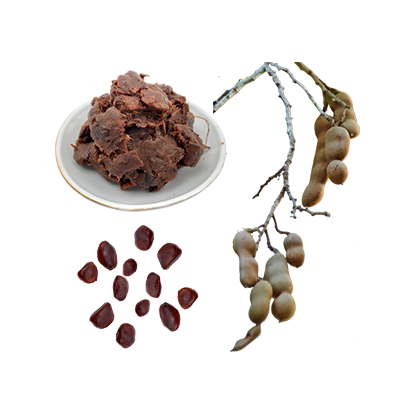
 Fruit
Fruit Roots
Roots Twigs
Twigs Stem
Stem
Growing Requirements
 Full Sunshine
 Drought Resistant
Habitat
 Riverbanks
 Forest
 Grassland
Overview
Tamarind is native to Eastern Africa, including parts of the Madagascar dry deciduous forests. The tree grows wild throughout the Sudan. The fruit was well known to the ancient Egyptians and to the Greeks in the fourth Century B.C. Now introduced into most tropical areas around the world, tamarind has become naturalized in many areas particularly in India, South-East Asia, tropical America, the Pacific Islands and the Caribbean.
Vernacular Names
Asam Jawa, Tambaring (Indonesia), Tamarinde (Afrikaans), Tetul (Bangladesh), Luo-wang (Chinese), Sambak (Philippines), Bakham somkham (Thailand), Dar-al-sida (Arabic), Ambli (Hindi).
Agroecology
It grows best in drier areas of the tropics, though it can also do well in much wetter, monsoon areas so long as there is a distinct dry season. Found at elevations up to 1,500 m. Annual daytime temperatures are within 20-35 °C, but can tolerate 12-45 °C. When dormant, can survive temperatures down to about -3 °C, but young growth can be severely damaged at -1 °C. Prefers a mean annual rainfall in the range 800-3,000 mm, but tolerates 300-4,500 mm.
Morphology
- Barks - dark grey and is closely fissured.
- Leaves - alternate, paripinnately compound with small leaflets.
- Foliage - the bright green, pinnate foliage is dense and feathery in appearance, pale green leaflets per leaf.
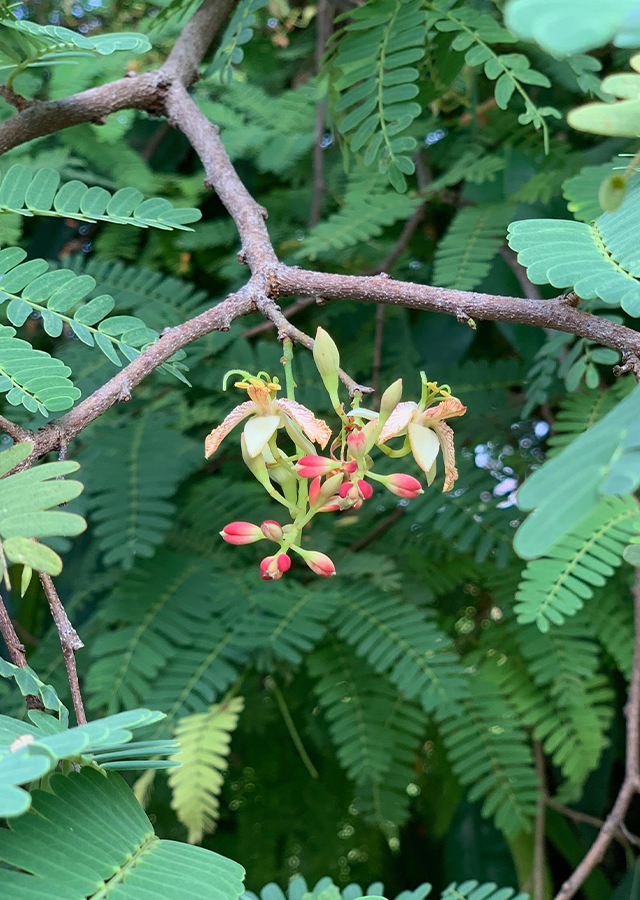
- Flowers - inconspicuous, five-petalled flowers are borne in small racemes and are yellow with orange or red streaks. The flower buds are pink due to the outer color of the 4 sepals which are shed when the flower opens.
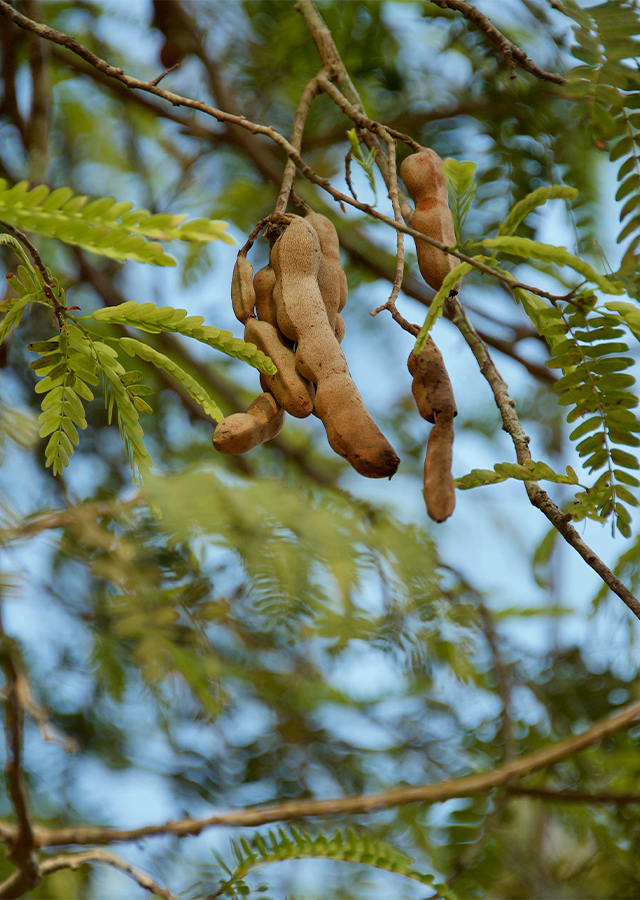
- Fruits - brown, 7.5-20 cm long, irregularly curved indehiscent pods are borne in abundance along the new branches.
- Seeds - irregularly shaped, hard, brown and wrapped in protective endocarp layer.
Cultivation
Propagated by seeds and by marcotting, grafting, budding, and air-layering.
Chemical Constituents
Tannins, saponins, steroids, flavonoids, alkaloids, β-sitosterol, cycloartanol, limonene, longigolene, crytopinone, malic acid, tartaric acid.
Traditional Medicinal Uses
Medicinal Uses
- The plant is astringent, tonic, digestive, antiasthmatic, febrifuge, carminative, antiscorbutic, antibilious.
- Pulp considered refrigerant and laxative.
Traditional Uses
- People take tamarind for constipation, liver and gallbladder problems, and stomach disorders. It is also used to treat colds and fever.
- Women sometimes use tamarind to treat pregnancy-related nausea.
- It is given to children to treat intestinal worms.
- Thick paste of tamarind seeds is used as a cast for broken bones.
- Decoction of leaves used as an aromatic bath for fevers, puerperism, and convalescence.
- Decoction of ash used for colic, indigestion; as gargle for sore throats, aphthous sores.
- Warm juice of young leaves used in dysentery.
- Powdered seeds are given in dysentery; boiled and decocted, used as a poultice for boils.
- Young leaves may be used in fomentation for rheumatism, inflammation of joints.