Mangrove Apple
Sonneratia caseolaris (L.) Engl.
Lythraceae
Location in our garden
Aquatic
Synonym
Aubletia caseolaris (L.) Gaertn.
Blatti caseolaris (L.) Kuntze
Sonneratia acida L.f.
Habitus

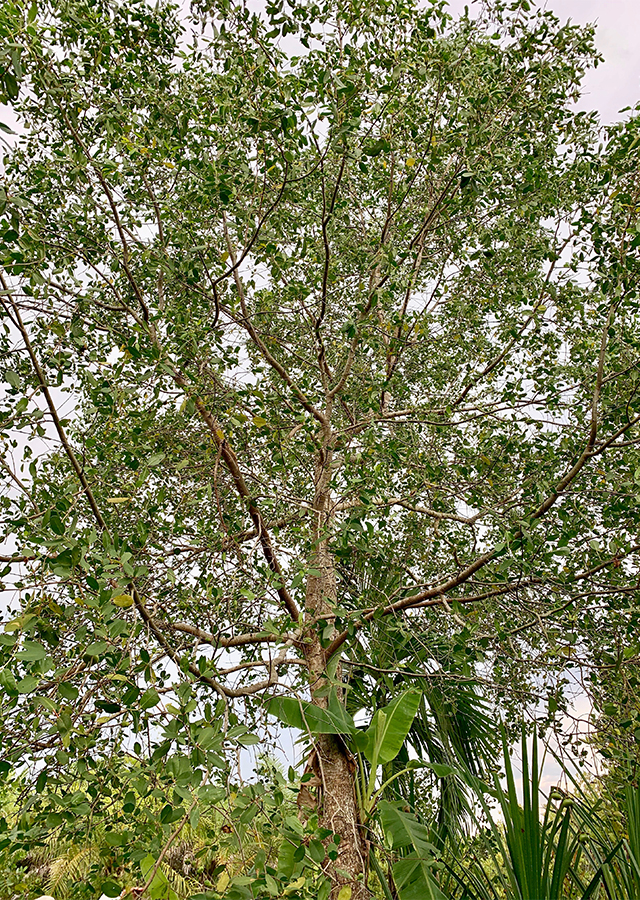
Trees. An evergreen perennial tree with a columnar crown that can grow up to 5-20 m tall
Part Used
 Leaves
 Fruit
Fruit
Growing Requirements
 Full Sunshine
Habitat
 Wetland
Overview
Mangrove apple is native to South and South-East Asia and is distributed from India and Sri Lanka up to Southern China, and throughout South-East Asia to Northern Australia and the Western Pacific islands. There are increasing threats to mangrove swamps in general, mainly from human activities. Consequently, the tree has been classified as 'Least Concern' in the IUCN Red List of Threatened Species (2010)
Vernacular Names
Berembang (Malaysia), Tamoo (Burma), Lamphu (Thailand), Pagatpat (Philippines), Bần chua (Vietnam), Pedada nasi (Brunei), 'âm'-pië (Cambodia).
Agroecology
A plant of coastal areas in the tropics. It grows best where the mean annual minimum and maximum temperatures are within the range 20- 30 °C, though it tolerates 10-38 °C. It prefers a mean annual rainfall of 1,500-2,500 mm, and succeeds in areas with no dry season as well as those with a dry season. Prefers a sunny position and a heavy soil, but tolerates most soil types. Grows in areas that are inundated by salt water at high tides. Prefers a pH in the range 6.7-7.3. Plants are tolerant of strong, salt-laden winds.
Morphology
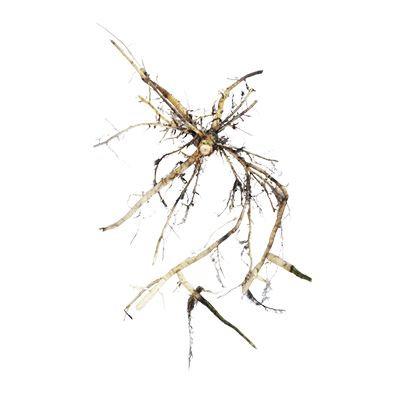
- Roots - consisting of extended cable roots giving rise to descending anchor roots and numerous erect, often branched, cone-shaped pneumatophores (breathing roots) extending 0.2-2.5 m above the substrate, and numerous narrow feeding roots developing horizontally in the substrate.
- Barks - flaky, greyish pale brown. Young branchlets quadrangular, occasionally 4-winged, with 2 pairs of glands.
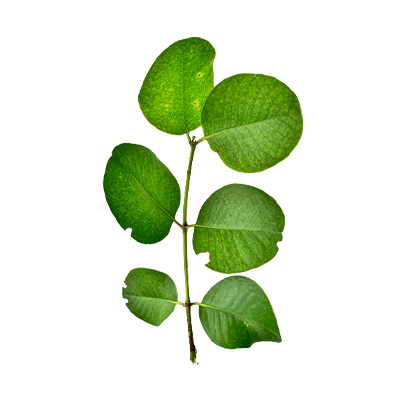
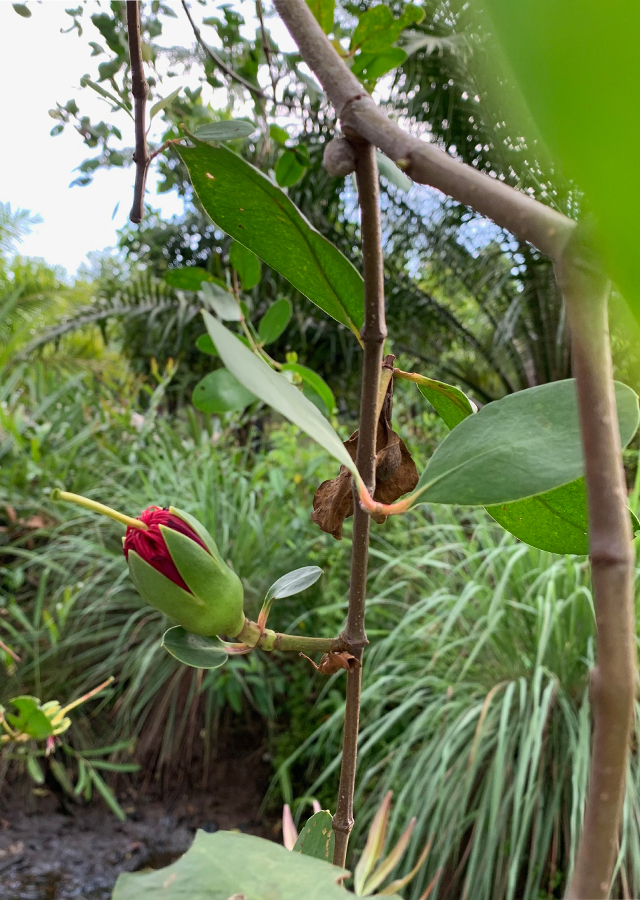
- Leaves - simple, opposite, entire, glabrous, leathery, leaf-blade elliptical, ovate or obovate, apex rounded, often with recurved mucro, veins not prominent, petiole 2-9 mm long, reddish, stipules absent.
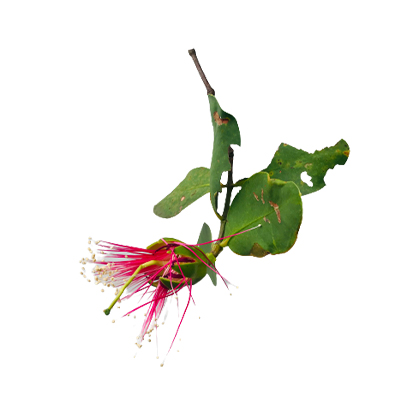
- Flowers - bisexual, terminal, either single or in groups of 2 or 3, 4-8-merous, pedicel short, often quadrangular, calyx tubular, leathery, 5-8-lobed, persistent in fruit.
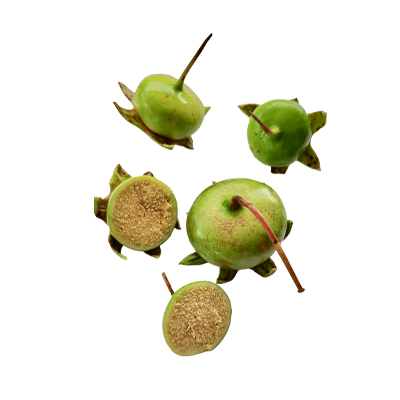
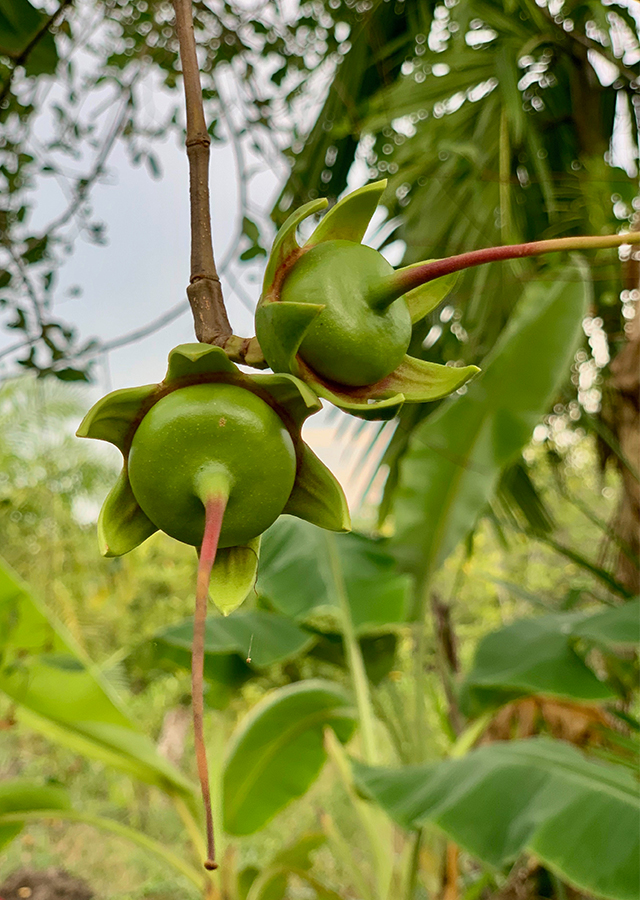
- Fruits - a depressed-globose berry, 5-7.5 cm in diameter, 3-4 cm long, with fleshy pulp and leathery green, glossy pericarp, crowned by the style base, indehiscent, resting on the persistent calyx which is spreading and not enclosing the fruit.
- Seeds - numerous, irregularly angular, ca. 7 mm long.
Cultivation
- It is propagated by seed, it has a low viability of less than three months.
- Reforestation is usually by means of seedlings, planted at a spacing of 1 m x 1 m.
Chemical Constituents
Alkaloids, terpenoids, steroids, phenolic (galat acid, 2 flavonoids luteolin, luteolin 7-O-ß-glycoside), pectin, tannins, saponins, nyasol, maslinic acid.
Traditional Medicinal Uses
Medicinal Uses
- The plant is said to be haemostatic.
- The plant is considered astringent and antiseptic.
- Study screened a crude ethanol extract of leaves for antinociceptive and antidiarrheal activities.
Medicinal Uses
- It is a folk remedy for sprains, swellings, and worms.
- The old fruit walls are used as a treatment for worms. Half-ripe fruits are a treatment for coughs.The fruits are used to make poultices.
- The pounded leaves are used as a treatment for haematuria and smallpox.
- Fermented juice is useful in arresting hemorrhage.
- Fruit used as poultice in sprains and swellings.