
Pepper Elder
Peperomia pellucida (L.) Kunth
Piperaceae
Location in our garden
Beneficial Weed
Synonym
Micropiper pellucidum (L.) Miq.
Micropiper tenellum Klotzsch ex Miq.
Peperomia concinna (Haw.) A.Dietr.
Habitus

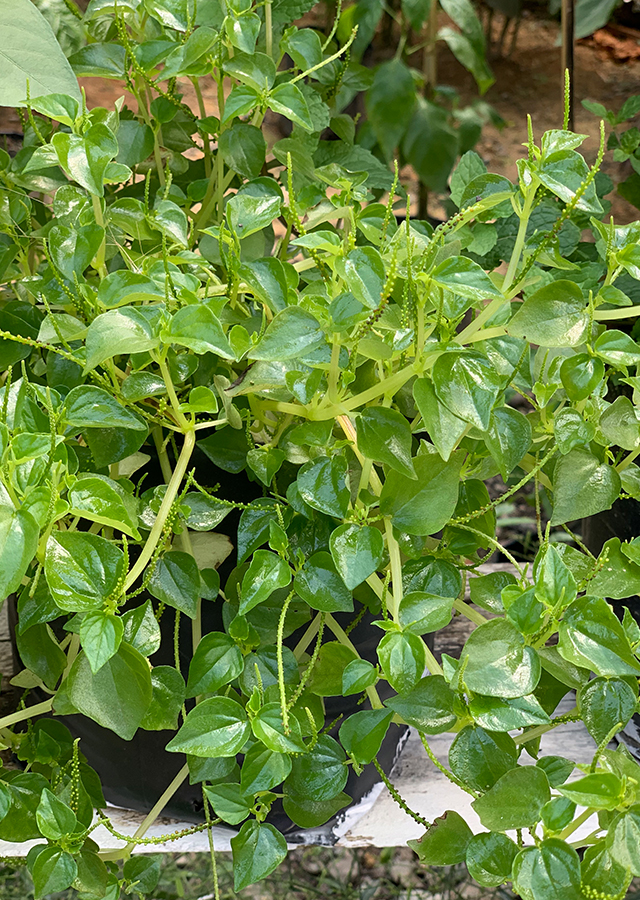
Herbaceous. Slender and low growing annual plant, mostly 25 cm tall or less.
Part Used
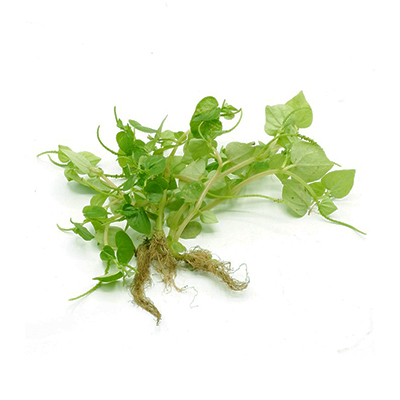
 The Whole Plant
Growing Requirements
 Need Shade
Habitat
 Forest
 Grassland
Overview
Pepper elder is natively found in tropical Central and South America. It is now widely spread in the tropics and is often naturalized and sometimes grown like a weed. Often, the leaves are harvested from the wild and used as a fruit, medicine, and tea locally. The plant is grown in the tropics as a medicine and food crop and is sold in local markets.
Vernacular Names
Ketumpangan air (Indonesian), Ulasiman-bato (Philippines), Phak krasang (Thai), Cao hu jiao (Chinese), Rau càng cua (Vietnamese), Mashitandu chedi (Indian), Vao vai (Samoan), Alumbre (Spanish).
Agroecology
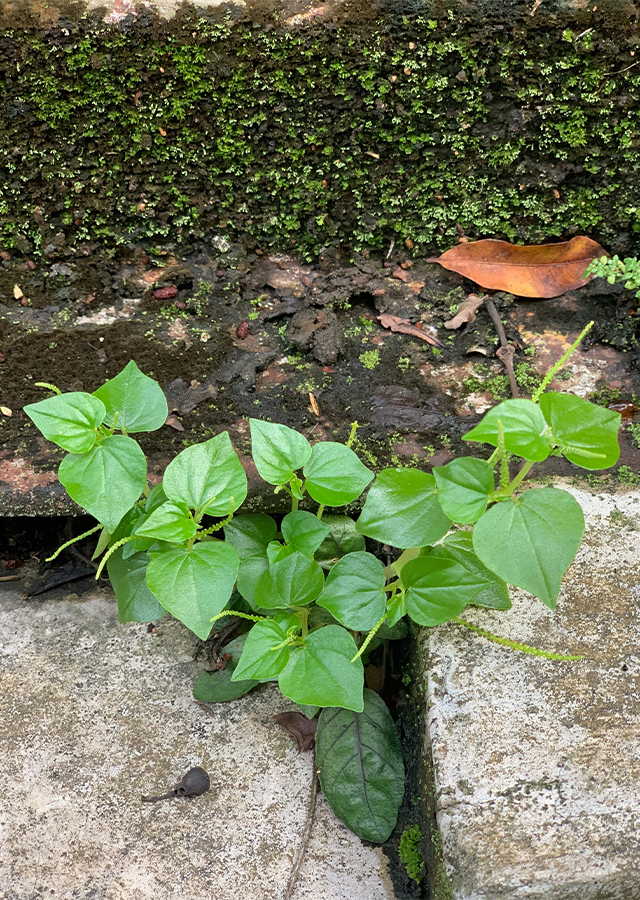
The plant grows up to 1,100 m altitude in moist shady areas, near homes, along paths and roads, on seasonally flooded river banks and on forested rocky hillsides. On damp, hard surfaces such as walls, roofs and steep gullies, it is especially common. It requires a minimum temperature of 10 °C and prefers organic matter-rich soil.
Morphology
- Stem - glabrous, initially erect, becoming decumbent, rooting at nodes.
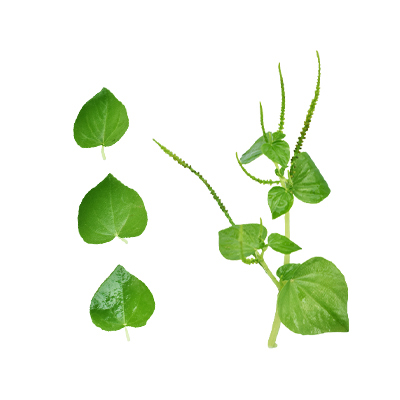
- Leaves - spirally arranged, simple and whole; absence of stipules; petiole up to 1.5(-2) cm long; blade elliptical-ovate to narrowly ovate or almost triangular, 2-3.5 cm x 2-3.5 cm, base rounded to truncate, apex acute, small, 5-7-veined palmate.
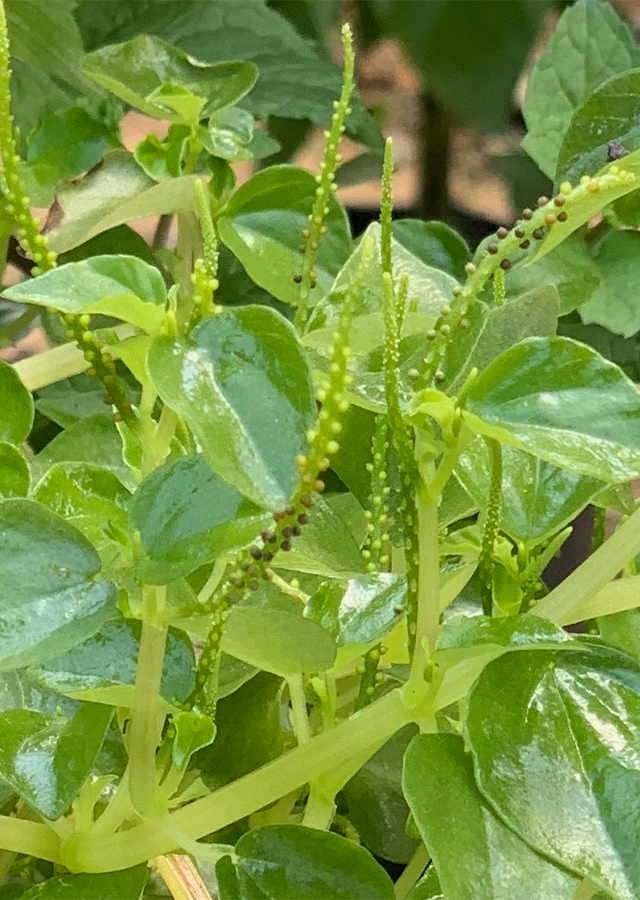
- Flowers - leaf-opposed spike up to 6.5 cm long; bracts rounded, up to 0.5 mm long, bisexual, sessile; perianth absent; stamens 2, filaments short, anthers oblong, tiny; ovary superior, rounded-ovoid, c. 0.5 mm in diameter, 1-celled, stigma 1, sessile.
- Fruits - globose drupe 0.5–1 mm in diameter, blackish brown to orange, sticky, papillate, 1- seeded.
Cultivation
Propagation is mostly by seed (germination takes about 15 days) but is also possible by stem, leaf and leaf-bud cuttings.
Chemical Constituents
Alkaloid, flavonoid, glycosides, phenols, saponin, steroid, terpenoid, tanin, patuloside A, dillapiole, and pachypophyllin.
Traditional Medicinal Uses
- The anti-inflammatory and analgesic effects have been demonstrated by an extract of the aerial parts of the plant.
- The leaves and stems are analgesics, anticancer, antifungal, anti-inflammatory, diuretic, and refrigerant. They are used to treat bronchitis, asthma, gout, inflammation, headache, rheumatic pain, stomach pain, issues with the kidneys, and impotence.
- They are used to reduce cholesterol concentrations in Brazil.
- The leaves and stems of a fresh plant can be eaten as a salad or made into an infusion for treating arthritis. Place a 20 cm plant in 2 glasses of boiling water for the infusion, and take 1/2 cup of this infusion in the morning and evening. Externally, the leaves and stems are used as a facial rinse for treating complexion issues.
- The pounded whole plant is used to treat ulcers, boils, pustules, pimples, and wounds as a warm poultice.
- The pounded whole plant is a warm poultice for treating ulcers, boils, pustules, pimples, and wounds.
- The sap is used to treat cataracts, infections as eye drops.
Part Used
Reference Sources
- Alves, N.S.F., Setzer, W.N. & da Silva, J.K.R. (2018). The chemistry and biological activities of Peperomia pellucida (Piperaceae): a critical review. Journal of Ethnopharmacology https://doi.org/10.1016/j.jep.2018.12.021.