
Cape Leadwort
Plumbago auriculata Lam.
Plumbaginaceae
Location in our garden
Principal
Synonym
Plumbagidium auriculatum (Lam.) Spach
Plumbago alba Pasq.
Plumbago capensis Thunb.
Habitus

Climbers. A climber, herbaceous, perennial shrub, can grow up to 2 m tall
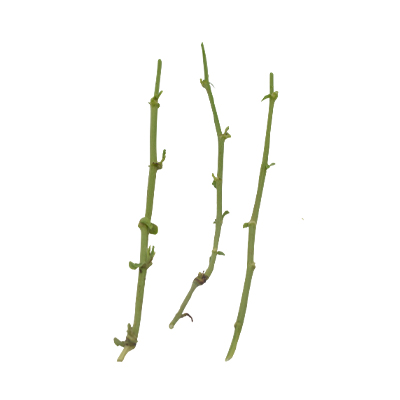
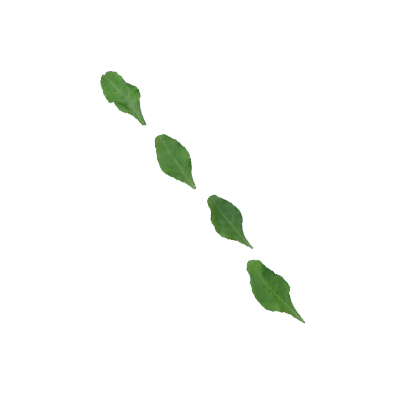
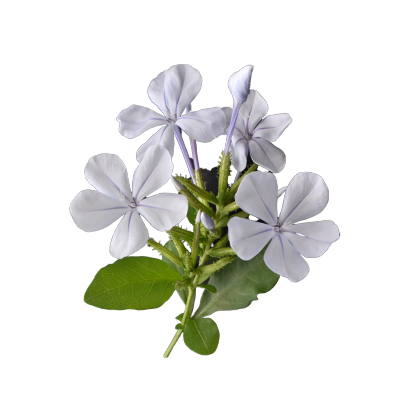
Part Used
 Leaves
 Flowers
 Roots
Roots Twigs
Twigs
Growing Requirements
 Full Sunshine
 Need Shade
 Drought Resistant
Habitat
 Coastal
 Shrublands
Overview
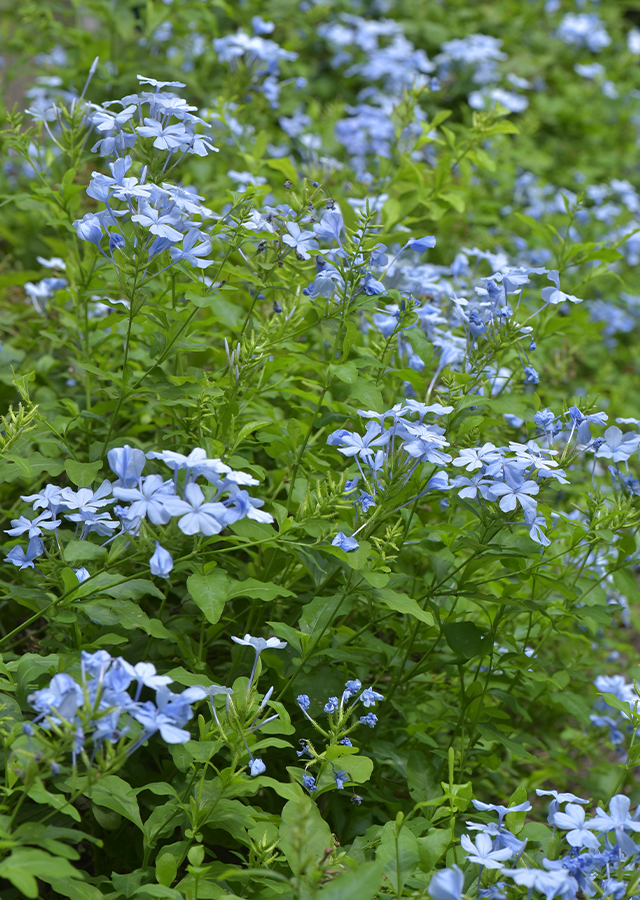
Cape leadwort is native to South Africa that has been introduced in tropical and subtropical climates of Europe, Asia, Africa and the Americas. It is widely cultivated as an ornamental, and is used in traditional medicine and as a source of dye. It has escaped from cultivation and become naturalized outside of its native range.
Vernacular Names
Lan zue hua (Chinese), Dentelaire du Cap (French), Plumbago azul (Spanish), Azulejo (Cuba), Esplúmbago (Spanish), Isabel segunda (Puerto Rican).
Agroecology
Commonly grown as an ornamental, low hedge, ground cover or on fences. Outside of cultivation it grows in thickets and disturbed sites. In its native range, the species is a common constituent of lowland scrub in eastern South Africa up to 1,623 m altitude. It prefers fertile, well-drained, slightly acidic, sandy soils in sunny localities. However it is a resilient plant that can tolerate light shade, salt and, once established, drought. It can tolerate some frost, and if the roots survive will be able to quickly recover after frost damage. It grows best in regions with a pronounced dry season.
Morphology
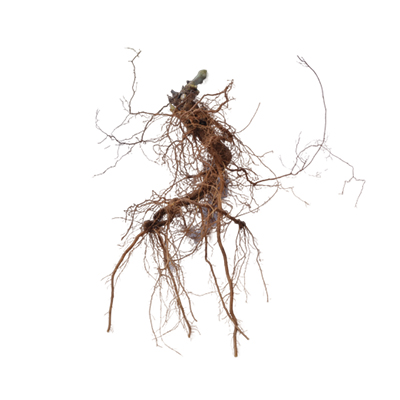
- Roots - branched tap root system.
- Stems - diffusely branched, erect, trailing or climbing.
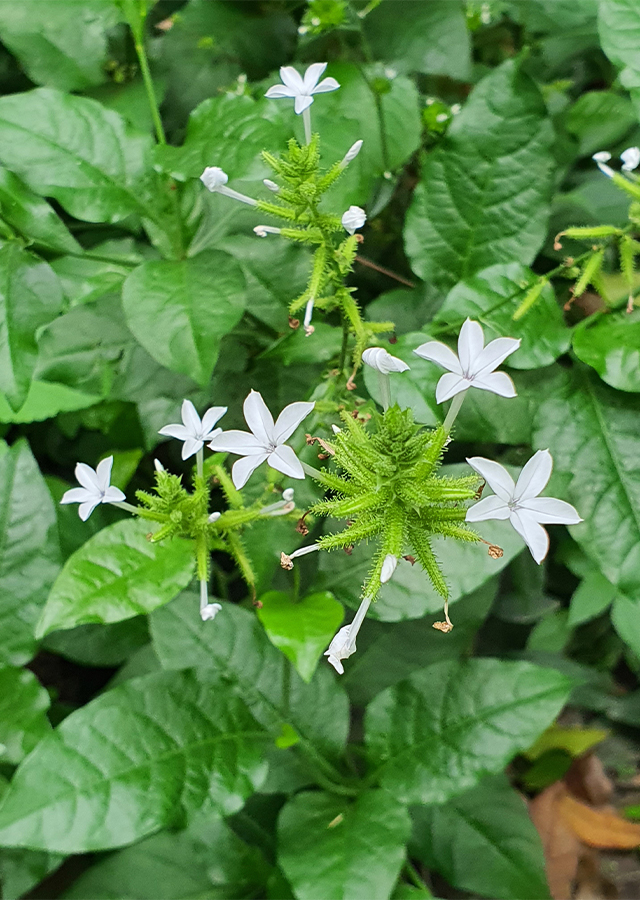
- Leaves - alternate, simple, entire, oblong or oblong-spatulate, up to 5 cm long, with the base tapering to a short petiole.
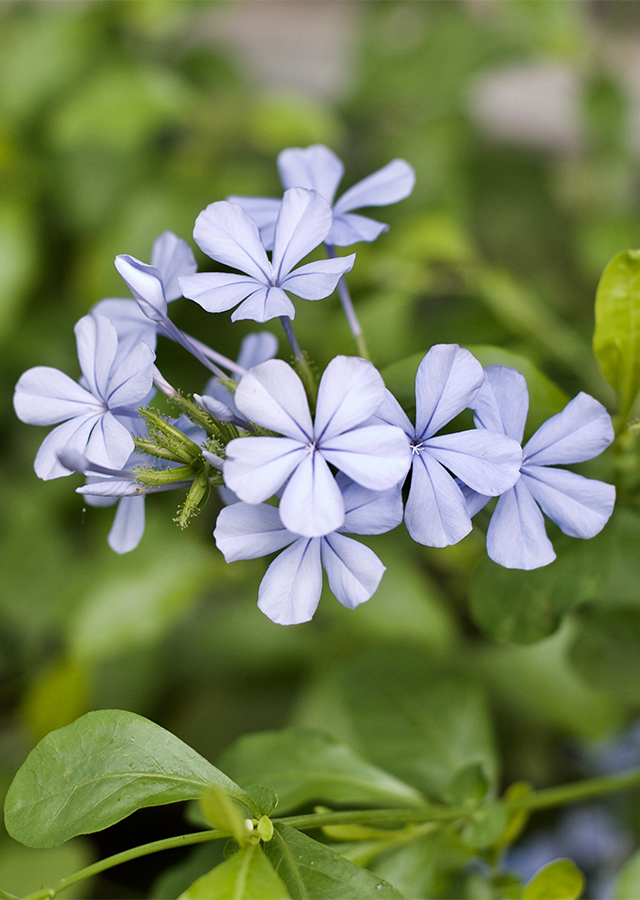
- Flower - short spikelike racemes, calyx is tubular, shorter than the slender corolla. Corolla tube measures 2 to 2.5 cm long, five-lobed, azure blue and spreading.
- Fruits - a capsule that splits into five parts.
- Seeds - one seed is produced per flower.
Cultivation
Plumbago auriculata propagates by seeds, cuttings, division, and rooted suckers.
Chemical Constituents
Naphthoquinone plumbagin (2-methyl juglone), epiisoshinanolone, steroid sitosterol and 3-O-glucosylsitosterol, plumbagic, palmitic acid, anthocyanins, heptadecanoic acid.
Traditional Medicinal Uses
- P. auriculata is considered styptic, wound healing, and analgesic.
- Studies have suggest various activities to plumbagin: antimicrobial, anticancer, cardiotonic, and antifertility.
- Studies have suggested anti-ulcer, antimalarial, anti-Heliobacter pylori, cytotoxic, and antifungal properties.
- In South Africa, decoction of aerial parts or roots is used to treat blackwater fever. Root infusion is used as emetic. Root powder is used for warts, and is also used as snuff to relieve headaches. Powdered and roasted root rubbed into scarifications over fractures to promote healing. Rubbed on painful areas of the body caused by strenuous exercise. Root extract is used as styptic in scrofula.
- In Tamilnanu, India, roots are used for piles, epilepsy and jaundice. Fresh cut flowers are used for bruises and for soothing sunburn, burns, spots and rashes.
- In Bangladesh, paste of root and stem is topically applied with milk to affected areas of the skin, and is also used for jaundice, epilepsy and headache. Dried bark is powdered and taken orally with water.
Part Used
Reference Sources
- CABI. (2017). Plumbago auriculata (cape leadwort). https://www.cabi.org/isc/datasheet/41933. 01-03-2021.
- Fern, Ken. (2014). Useful Tropical Plants: Plumbago auriculata Lam. http://tropical.theferns.info/viewtropical.php?id=Plumbago+auriculata. 01-03-2021.
- StuartXchange. (2016). Philippine Medicinal Plants: Blue plumbago-Plumbago auriculata Lam. http://www.stuartxchange.org/Plumbago.html. 01-03-2021.