
Buffalo Grass
Paspalum conjugatum P.J.Bergius
Poaceae
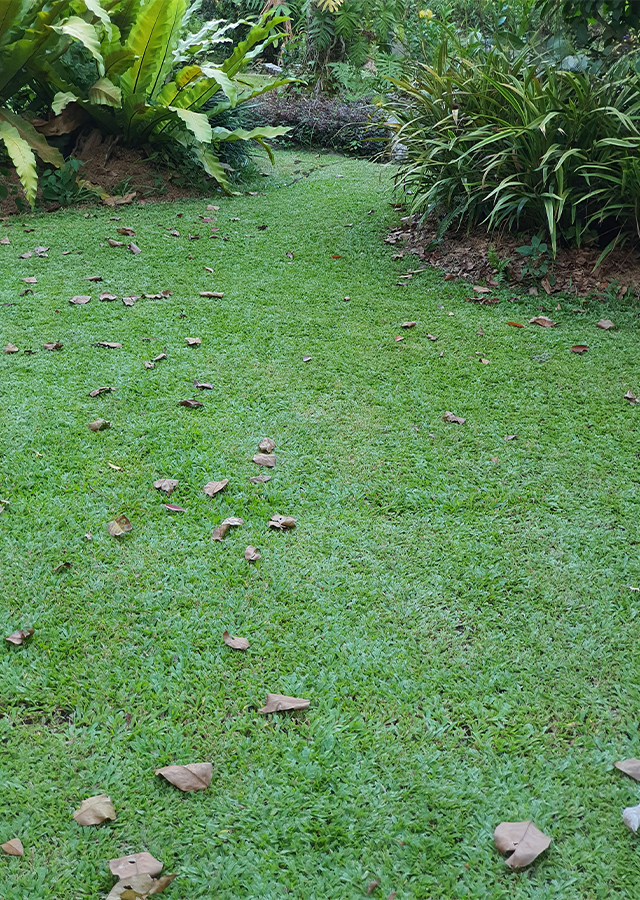
Location in our garden
Beneficial Weed
Synonym
Digitaria conjugata (P.J.Bergius) Schult.
Panicum conjugatum (P.J.Bergius) Roxb.
Paspalum africanum Poir.
Habitus

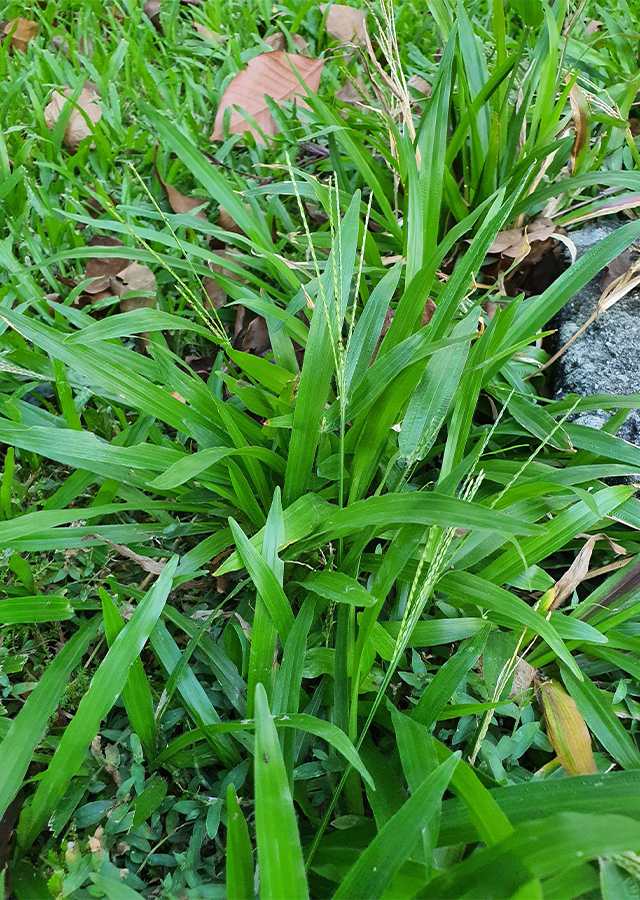
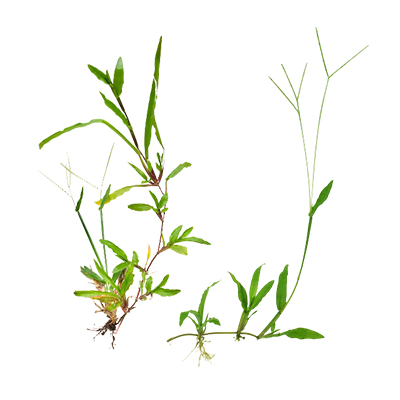
Herbaceous. A creeping, perennial grass with culms that can grow 30-60 cm tall.
Part Used
 Leaves
 Roots
Roots
Growing Requirements
 Full Sunshine
 Need Shade
Habitat
 Riverbanks
 Forest
 Grassland
Overview
Buffalo grass is native to America, which is tropical and subtropical. It occurs naturally as far as South America from the southern United States and the West Indies. It has been extensively introduced as a forage and lawn grass and it can now be found naturalized across tropical and subtropical regions.
Vernacular Names
Carabao grass, sour paspalum (English), Jampang Pahit (Sundanese-Indonesian), Paitan (Javanese-Indonesian), Kulape (Philippines), Ya-nomnon (Thailand), Dallisgras (German), Paspalo dilatato (Italian), Co san cap (Vietnamese).
Agroecology
Paspalum conjugatum has a wide range of climatic tolerance, growing wild in the tropics and subtropics and spreading widely as a weed outside its range. It is best adapted to humid climates. Succeeds in a wide range of habitats, growing well in full sun to moderate shade, in a wide range of soils including acidic, low-nutrient soils, and in wet as well as drier soils.
Morphology
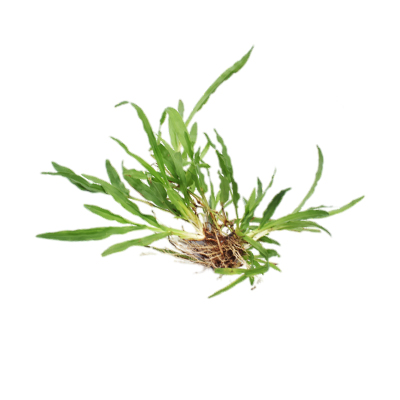
- Roots - a gregarious stoloniferous grass, root at the nodes to form new growth.
- Stems - spreading and branching below withe the flowering branches 20 to 70 cm high.
- Leaves - narrow lanceolate, flat and thin, glabrous, 8 to 20 cm long, 5 to 15 mm wide.
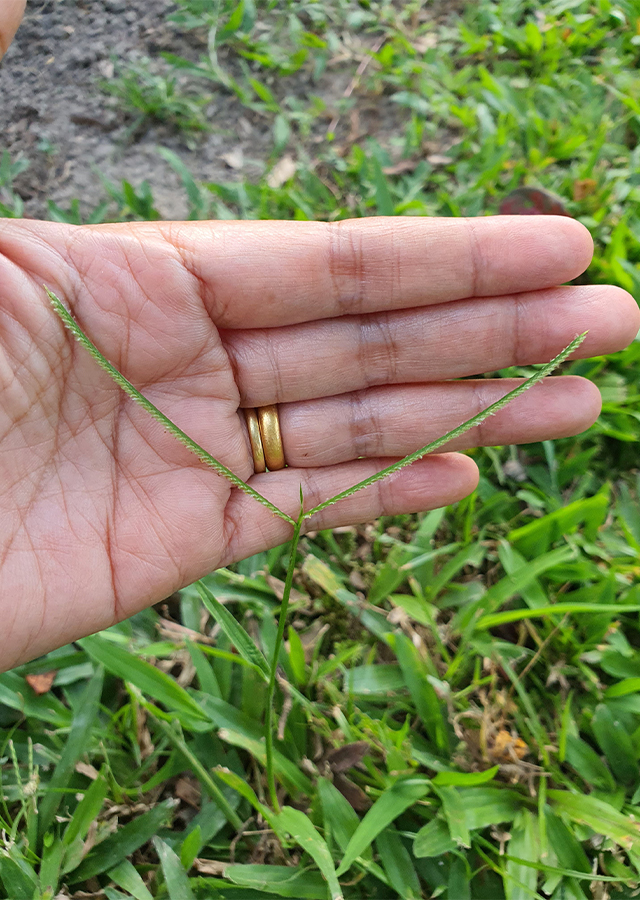
- Flowers - spikes are two, terminal, slender and 6 to 12 cm long.The spikelets are imbricate, 1.2 to 1.4 mm long, pale-green, plano-convex, the empty glumes with long, soft, white marginal hairs.
- Fruits - individual fruits about 1.5 mm long and 1 mm wide, flattened with fimbriate margins. Embryo is small.
- Seeds - 1 mm long and 0.8 mm wide.
Cultivation
- Propagated by seeds - the germination percentage is usually low.
- By cuttings of prostate culms, using 2-3 nodes per cutting (by stolons).
Chemical Constituents
Isoflavones, flavones, biflavonoids, hydrolyzable tannin-related derivatives and triterpenoids, glycosides, saponins, steroids.
Traditional Medicinal Uses
- Good for headaches, wounds and cuts, contusions, sprains and dislocations.
- The roots are used in the treatment of diarrhea and dysentery.
- The leaves are also used in the treatment of fever, debility, stomach troubles and pulmonary afflictions.
- The presence of a haemostatic glucoside, which reduced the time for blood clotting by 50%, has been reported for this species.
- In Borneo, the decoction of leaves used for wounds and sore, while in Sepik, Papua New Guinea, these are cured with crushed spikelets.
- In Cameroon, decoction of leaves, softened in hot ashes and ground in water, used for dysentery,
- In Africa, Malaysia and West Papua, young leaves are pounded and applied as paste onto wounds and cuts.
- In Congo, the leaves used with Macaranga sp. and Renealmia sp. in a vapor bath for fever.
- In Ecuadorian Amazon, infusion of the plant used for headaches.
- In Gabon, pounded with the leaf of Desmodium salicifolium and applied as compress for contusions, sprains and dislocations.
- Decoction of fresh roots are taken internally for diarrhea.
Part Used
Reference Sources
- Manidool, C. (1992). Paspalum conjugatum Bergius. In: L. 't Mannetje and R.M. Jones (Editor): Plant Resources of South-East Asia No. 4. Forages. Pudoc-DLO, Wageningen, the Netherlands. pp 177 - 178.