Whorled Pennyroyal
Hydrocotyle verticillata Thunb.
Araliaceae
Location in our garden
Aquatic
Synonym
Centella homalocarpa Drude
Centella verticillata (Thunb.) Fourc.
Hydrocotyle ambigua Britton, Sterns & Poggenb.
Habitus

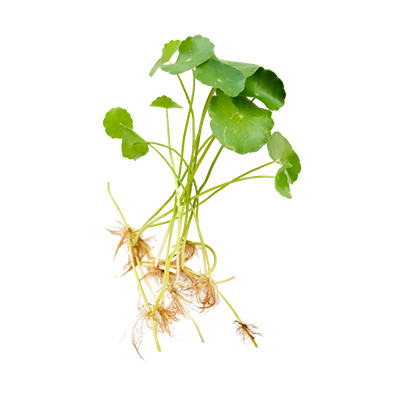
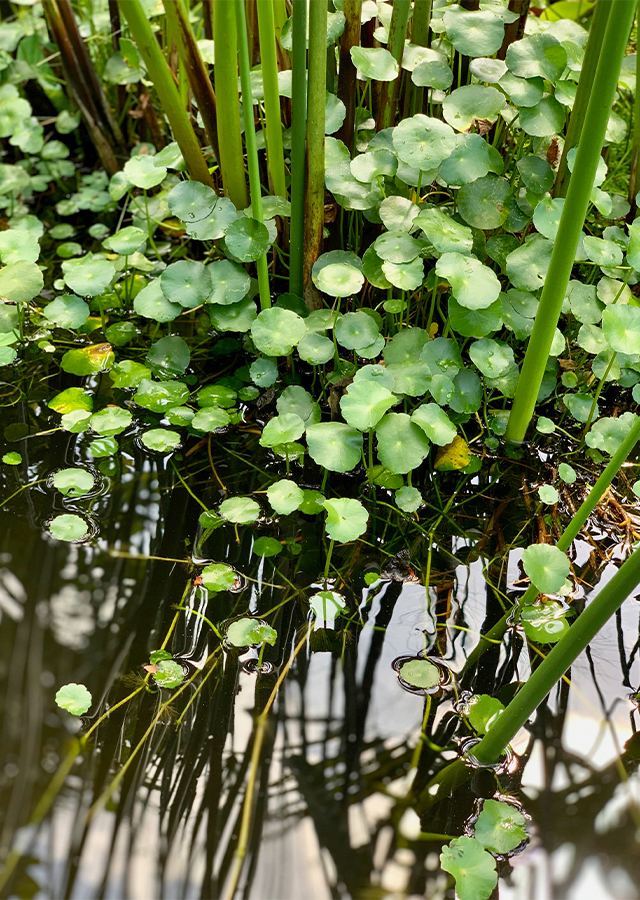
Aquatic. A perennial, glabrous, succulent prostate herb, 10–15 cm long
Part Used
 The Whole Plant
Growing Requirements
 Full Sunshine
Habitat
 Aquatic
Overview
It is native to North and South America, and is distributed from Massachusetts and South California in the USA to central Chile, Paraguay and Northern Argentina. The generic name is derived from the Greek hydro, water, and kotyle, small cup, probably referring to the watery habitat and peltate leaves of certain species. The specific epithet is derived from the Latin verticillatus, meaning whorled, probably referring to the inflorescence.
Vernacular Names
Mangkok (Tagalog-Philippines), Xiang gu cao (Chinese), Gewöhnlicher wassernabel (German), Sombrerillo de agua (Spanish), Spikblad (Swedish), Rau ma la sen (Vietnamese), Lus na pingine (Irish).
Agroecology
It is common in wet places such as pond and stream margins, nutrient-rich pools, irrigation and drainage canals, seeps, and muddy sites from sea level to 1,600 m. This plant grows well in marshy and acidic soil.
Morphology
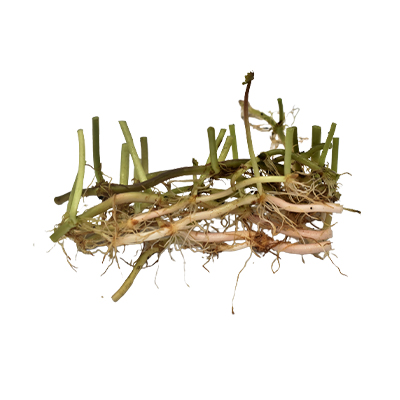
- Rooting - at the nodes with long stolon
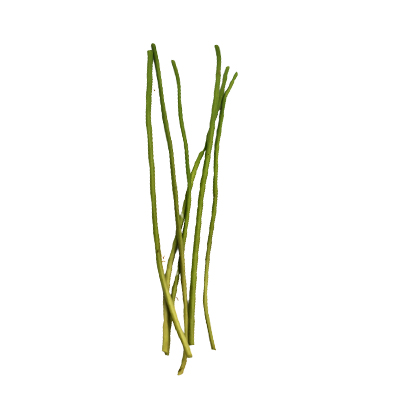
- Stems - slender, creeping.
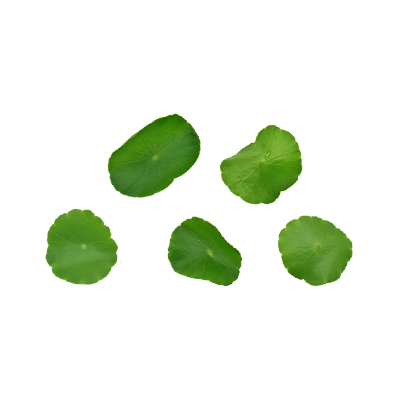
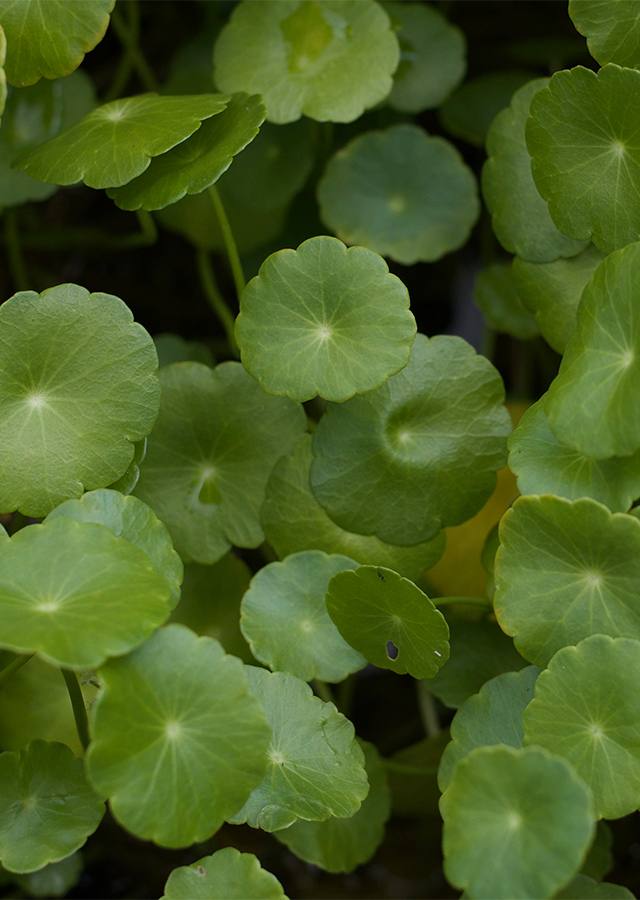
- Leaves - long and slender petioles, glossy, dark green, crenate, peltate to orbicular, 6 to 9 veined, up to 4 cm across.
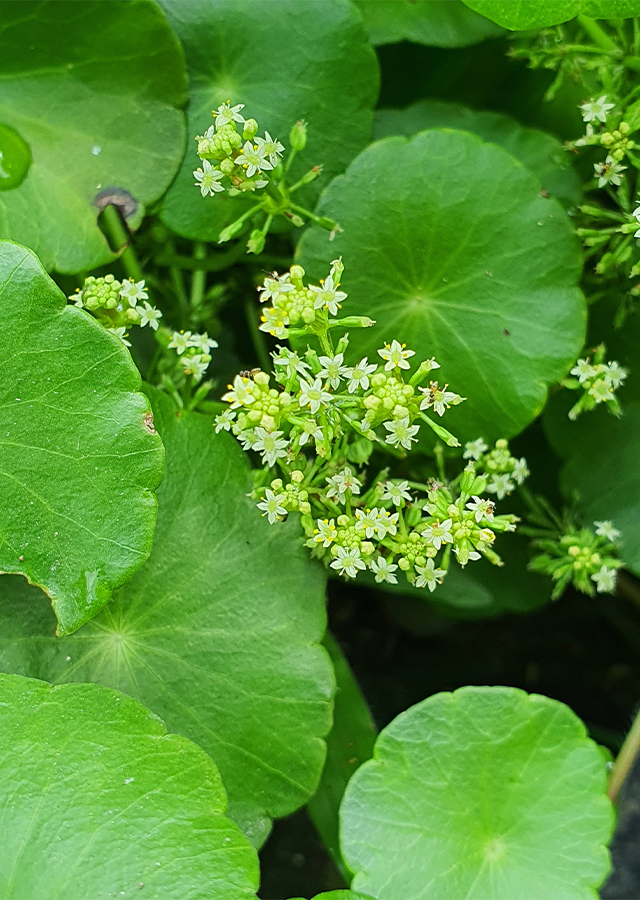
- Inflorescence - 5–25 cm long arising from the axil of the leaves.
- Flowers - white, tinged with pink to purplish green, 1 mm, subsessile, 3 to 6 in a simple head-like umbel, 3 mm across, sometimes with 1 to 3 whorls of flowers below.
Cultivation
Propagated by cuttings and seeds.
Chemical Constituents
Saponins, flavonoids, steroids, tannins, terpenoids, sterols, triterpenes, glycosides, β-carotene, essential oils (β-farnesen, β cubebene, y-muurolene, β-bisabolene.
Traditional Medicinal Uses
Medicinal Uses
- Studies have shown cytotoxic and phytoremediative properties.
- Considered vulnerary. It is used for eczema and other dermatologic maladies such as scrofula, ulcers.
- Also used for rheumatism, headaches, dizziness, bloody stools.
Traditional Uses
- In Samar, it is used for diarrhea.
- Leaves are used to dress burns or applied to skin diseases.
- In Malaya, traditionally used for treating wounds and as a diuretic.
- In Danish folk medicine, used for whooping cough.
- In India, it is used for treatment of leprosy.
- The poultice is used for the treatment of wounds and boils.
- The decoction of the plant is used for the treatment of abscesses, colds, coughs, hepatitis, influenza, purities, and sore throat.