
Coast cottonwood
Hibiscus tiliaceus L.
Malvaceae
Location in our garden
Principal
Synonym
Cistus tricuspis (Banks ex Cav.) Darwin
Abelmoschus guineensis Walp.
Hibiscus boninensis Nakai
Habitus

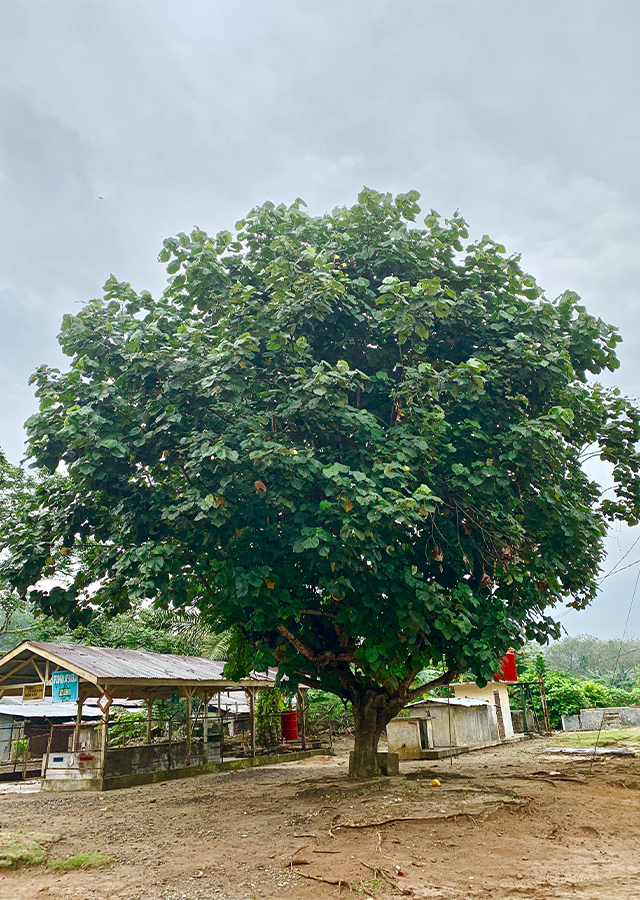
Trees. An evergreen shrub or small tree with low, spreading branches, growing 3-10 m tall.
Part Used
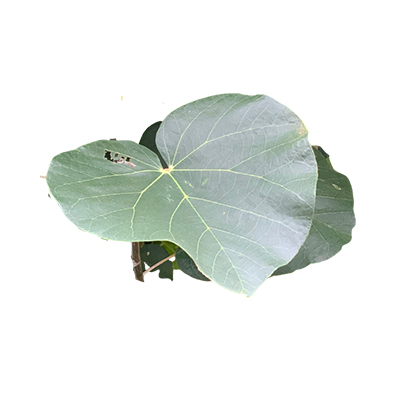
 Leaves
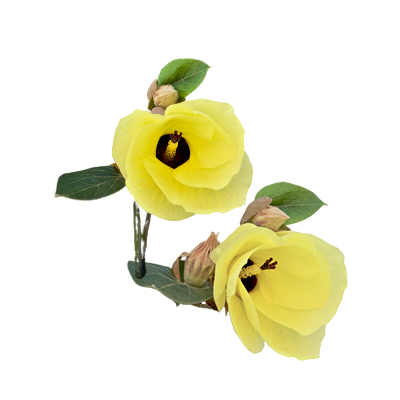
 Flowers
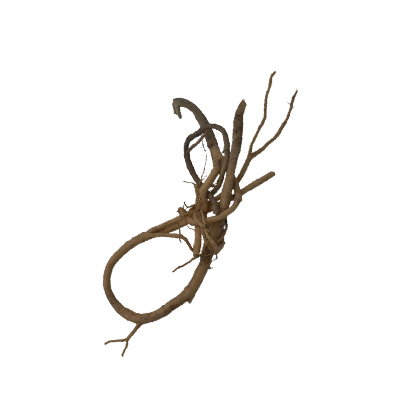
 Roots
Roots Stem
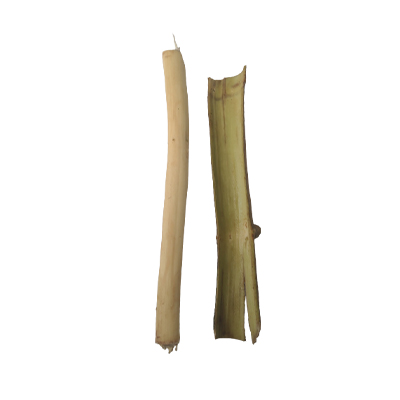
Stem
Growing Requirements
 Full Sunshine
 Drought Resistant
Habitat
 Wetland
 Riverbanks
 Coastal
 Roadside
 Shrublands
Overview
Coast cottonwood is distributed in coastal areas throughout the tropics of Africa, America, Asia, Australia and the Pacific Islands. The bark fibre is widely used for making cordage and finishing lines and nets, also used for textiles and the bark for making bark cloth. In South-East Asia, the bark fibre is used for caulking boats and the leaves are used for wrapping food.
Vernacular Names
Purau (French), Malabago (Tagalog-Philippines), Huang jin (Chinese), Baru-baru (Malay), Bolia (India), Bhola (Bangladesh), Hibisco marítimo (Spanish), Yama-asa (Japanese), Kuskatoenboom (Afrikaan).
Agroecology
Hibiscus tiliaceus occurs in coastal regions with an average annual rainfall of 900-2,500 mm, usually near the high tidemark but sometimes at higher altitudes. It is recorded to be fairly tolerant to drought. It is adapted to a wide range of soils, from light to heavy textured ones, acidic to alkaline (pH 5-8.5; optimum: 6-7) and is salt tolerant. It prefers sandy soils rich in organic matter, able to retain moisture.
Morphology
- Stem - and branches glabrous to densely steelate-pubescent, becoming brown-grey with lenticels.
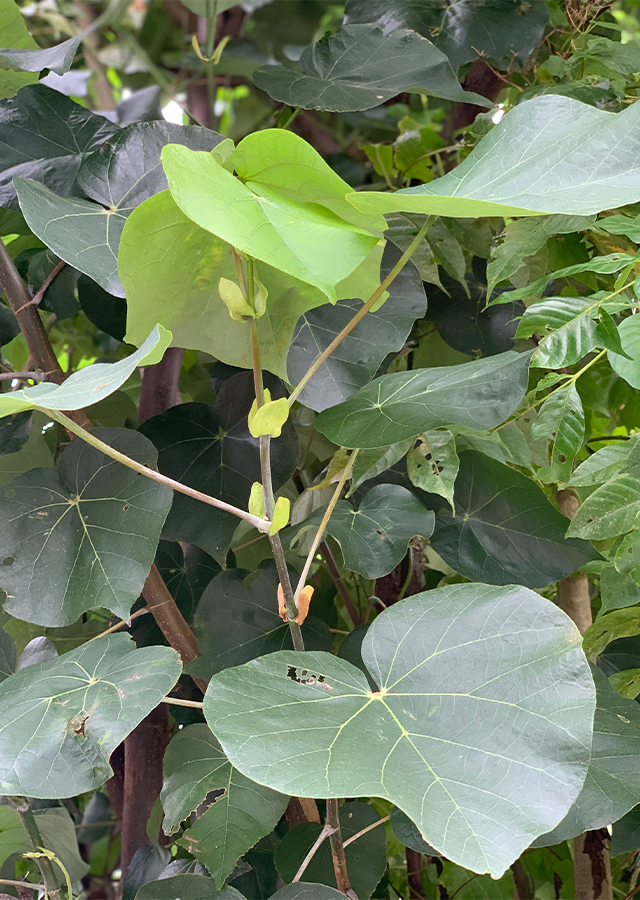
- Leaves - alternate, simple; stipules lanceolate to narrowly ovate, up to 3.5 cm long, early falling; petiole 6-15 cm long.
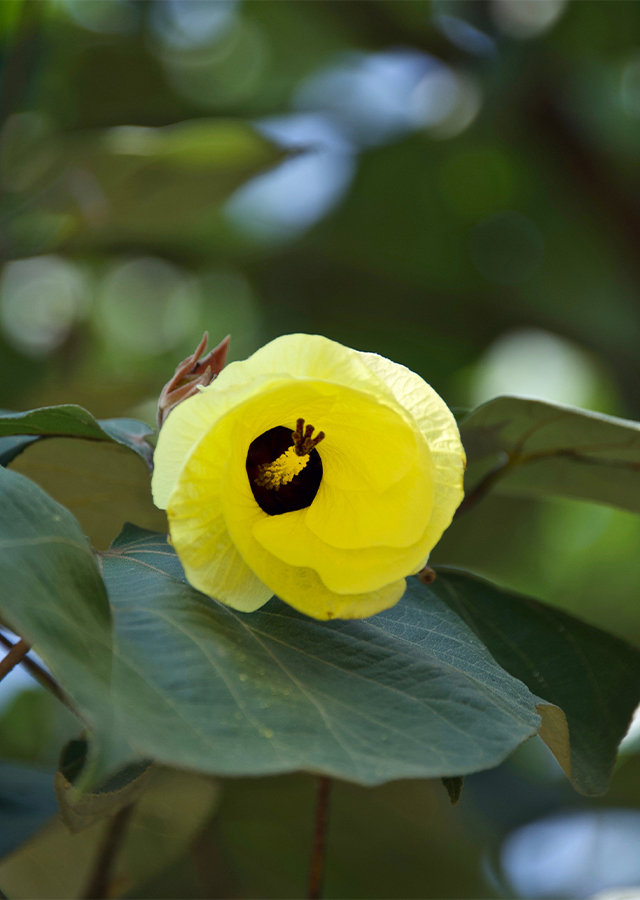
- Flowers - interminal 3-6 flowered cymes, bisexual, regular, 5-merous; pedicel 0.5-2 cm long. Corolla- yellow, dark purple at inside base, orbicular-obovate or rounded about 5 cm in length and width.
- Capsules- hairy, ovoid, 1.5 cm long, surrounded by persistent.
- Seeds- reniform, 4 mm x 2 mm, brown.
Cultivation
- By seeds - the seeds germinate 2-4 weeks after sowing in trays.
- By stem cutting - cutting establish in about 4 months, and in dry conditions they should be watered once or twice a week.
Chemical Constituents
Vanillin, syriacusin A, hibiscolactone,fumaric acid, azelaic acid, succinic acid,rutin, stigmasterol, friedelin, pachysandiol,glutinol, lupeol, β-sitosterol, tannins.
Traditional Medicinal Uses
- Roots: antitumor activity.
- Barks: diuretic/ laxative.
- Wood: anti-inflammatory.
- Leaves: antiulcer and antioxidant/antimicrobial.
- Flowers: antioxidant/antimutagenic, antidepressant and antidiabetic/hipolipidemic.
- The leaves are used in treating cough and sore throats, they are made into a paste and used as a poultice for sores ,cuts, open wounds, boils and swellings.
- Infusion of leaves is used to aid in the delivery of a child and postpartum discharges.
- An infusion of the bark is injuries, and stomach-aches, the fluid from bark is used to promote menstruation.
- In Fiji, the leaves are wrapped around fractured bones and sprained muscles, the juice from leaves is used in treating gonorrhoea.
Part Used
Reference Sources
- National Parks. Flora & Fauna Web. Hibiscus tiliaceus L. https://www.nparks.gov.sg/florafaunaweb/flora/2/9/2954. 27-01-2021.
- Stuartxchange. Philippine Medicinal Plants. Malabago. http://www.stuartxchange.com/Malabago.html. 27-01-2021.