
Snake Fruit
Salacca zalacca (Gaertn.) Voss.
Arecaceae
Location in our garden
Orchard
Synonym
Calamus salakka Wild. ex Steud.
Calamus zalacca Gaertn.
Salacca blumeana Mart.
Habitus

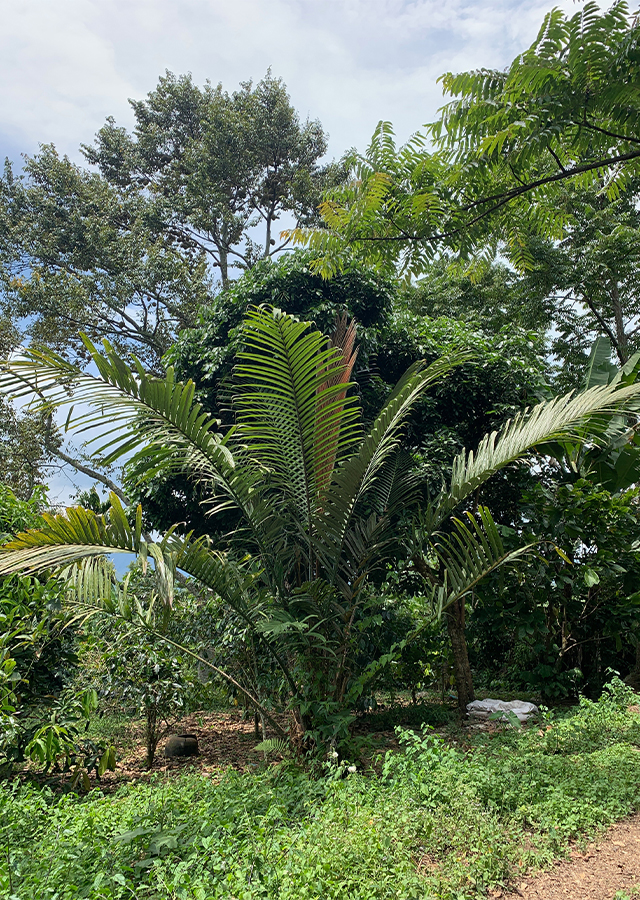
Shrubs. A dioecious, spiny palm, growing in a compact clumps.
Part Used
 Seeds
Seeds Bark
Bark Fruit
Fruit
Growing Requirements
 Need Shade
Habitat
 Wetland
 Riverbanks
 Forest
Overview
Originally, the snake fruit is wildly grown in Southern Sumatra to Java, and spreading to the eastern region of Indonesia as far as Maluku. Then, it's cultivated and introduced throughout Thailand, Malaysia, Philippines, Australia, to Fiji Island. As a smallholder crop, the snake fruit has around 20 distinguished intraspecific taxa according to the place of origin e.g. 'Pondoh', 'Bali'. Snake fruit is a strong source of nutrients, vitamins and minerals, apart from its sweet and slightly acidic flavor.
Vernacular Names
Salak (Malaysia), Yingan (Burma), Sala (Thailand).
Agroecology
Under humid tropical lowland conditions with average annual precipitation of 1,700- 3,000 mm. It occurs wild in the swampy lowland rainforest below 500 m elevation as an understorey tree: fruit yield and quality lower than 500 m altitude in Java. Young palms need shade, which, after about 1-2 years, can be reduced.
Morphology
- Roots - immediately under the crown, the deep, superficial, and fresh roots do not emerge from the stem; the internodes are short and crowded.
- Stem - mostly a subterranean stolon, with a short, 1–2 m high, 10–15 cm diameter, erect aerial part bearing the leaves .
- Leaves - pinnatipartite, 3–6 m long.
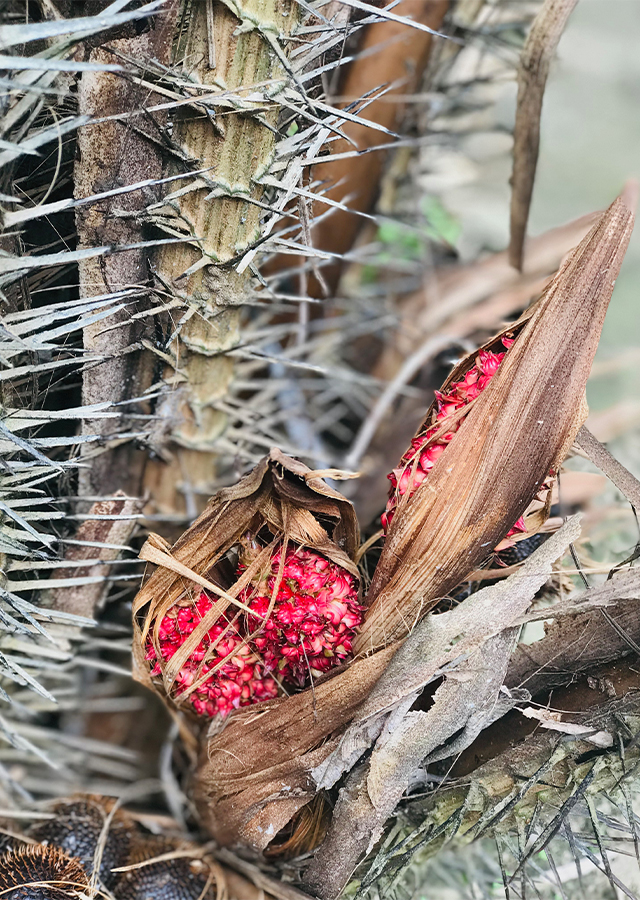
- Flowers - paired in axils of scales.
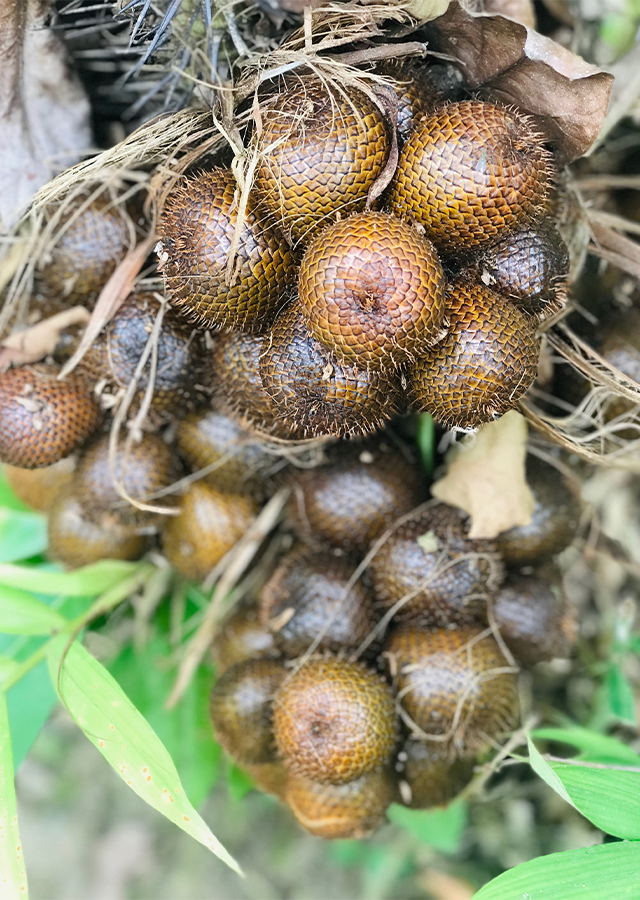
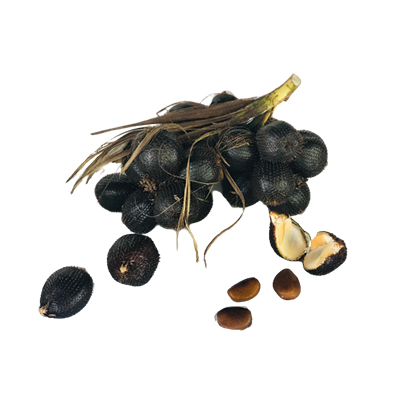
- Fruits - epicarp (skin) included various brown to orange-brown, yellow, united, imbricate scales, each scale ending in a delicate prickle, measuring 5-7 cm by 5 cm, tapered towards the base and rounded at the top.
Cultivation
Propagation is using the generative method (by seeds) and vegetative technique (grafting).
Chemical Constituents
Chlorogenic acid, epicatechin, proanthocyanidins, phenols, polyphenols, tannins, flavonoids, monoterpenoids.
Traditional Medicinal Uses
- The antioxidant, anti-cancer, anti-hyperuricemic effects of Salak.
- The fruit is made of beta-carotene, which is excellent for the skin.
- It helps to strengthen the cognitive functions of the body and improves memory.
- It helps to relieve diarrhea, to treat stomach indigestion, and to avoid constipation.
- Exceptionally effective for reducing levels of blood glucose.
- Fruit can maintain the proper functioning of the cardiovascular system and helps balance water within the body.
- Nearsightedness Cure.
- Further to reduce the likelihood of the development of hemorrhoids.
- The tea is a great astringent that is useful for weight loss.
- Suitable for young women who are pregnant and experience morning sickness.
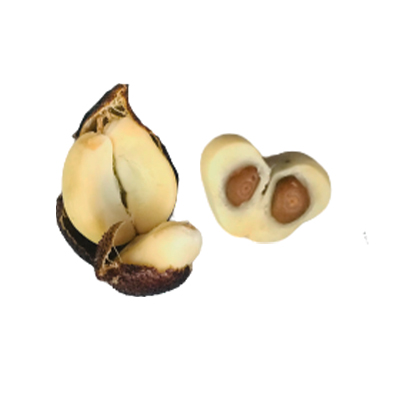
Part Used
Reference Sources
- Schuiling, D.L. and Moges, J.P. 1992. Salacca zalacca (Gaertner) Voss in: Verheij, E.W.M. and Coronel, R.E. (Editors). Plant resources of South-East Asia No.2, Edible fruits and nuts. Prosea Foundation. Bogor. Indonesia. pp 281-284.