
Saurauia bracteosa
Saurauia bracteosa DC.
Actinidiaceae
Location in our garden
Principal
Synonym
Saurauia blumeana Spreng.
Saurauia gigantea Blume
Habitus

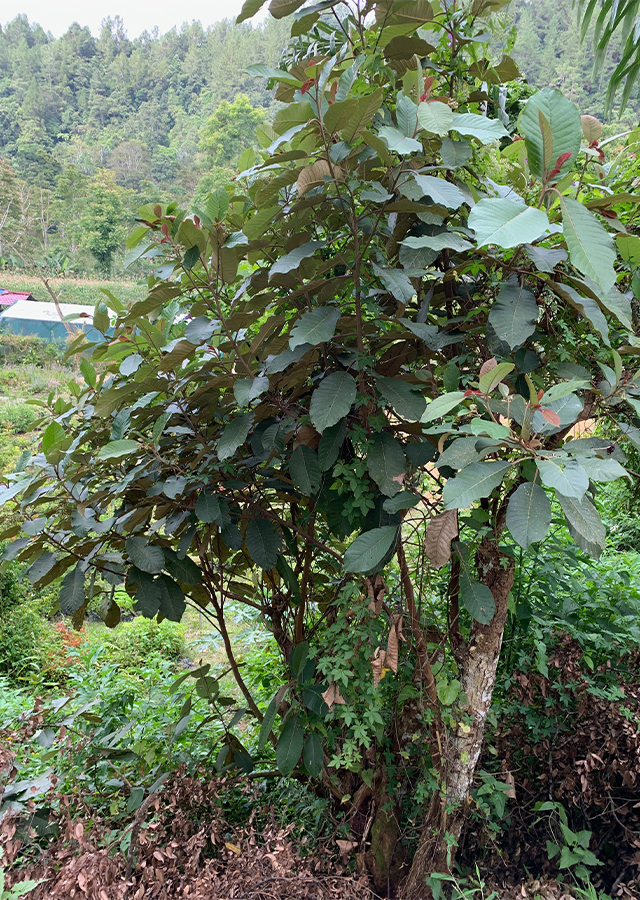
Trees. Evergreen shrubs or trees, perennial, 3-8 m tall.
Part Used
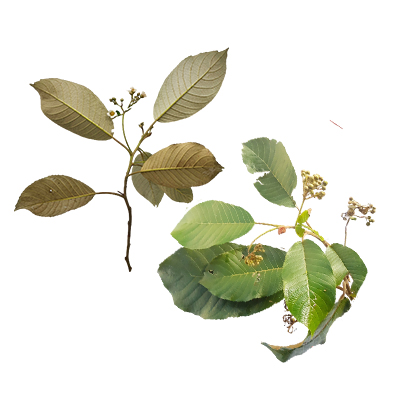
 Leaves
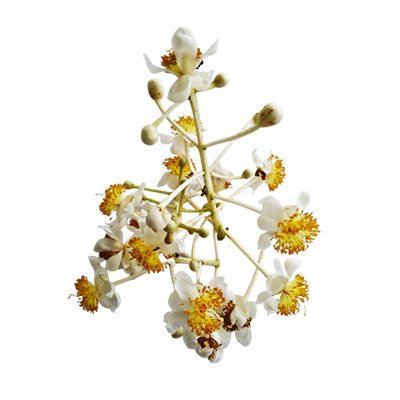
 Flowers
Growing Requirements
 Full Sunshine
 Need Shade
Habitat
 Riverbanks
 Forest
 Mountains
Overview
Saurauia bracteosa is native to Andaman Island, Nicobar Island, Jawa to Lesser Sunda Islands. It is one of the endemic plants that grows in various places in Indonesia and is used primarily by the Bataknese as a medicine. In North Sumatra Province, this tree is found in Simalungun Regency, especially in the highland, in the north to Tapanuli Selatan. It is one of forest plants that have the potential to be made into herbal tea. Even though it spreads in many places, this species is categorized as vulnerable according to IUCN (1998) and classified in critical categories.
Vernacular Names
Ki leho bentang (Sundanese), Mata ikan (Palembang), Lotrok(Javanese), Soyogik (Manado-Indonesia).
Agroecology
S. bracteosa grows in tropical evergreen forests and open area, inhumid places, and along river. It prefer altitudes of 600-1,200 m above sea level.
Morphology
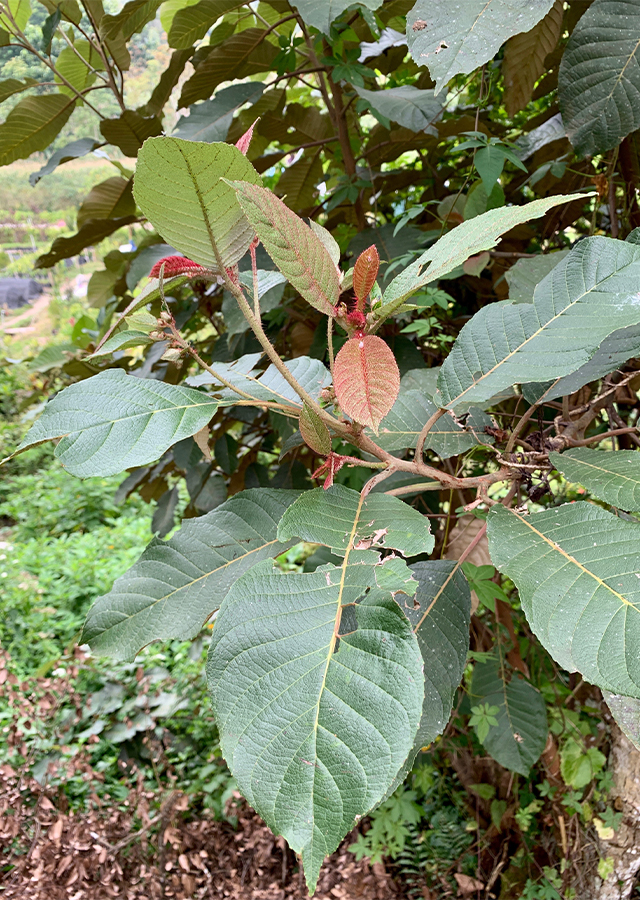
- Stems - brown, young stems and branches with subulate stiff scales.
- Leaves - simple, alternate, elliptic-obovate tooblong, about 25-40 x 10-17 cm across, base obtuse or rounded, margins dentate-serrateor subentire, apex abruptly short acuminate,petiole stout, purplish scaly above when young and silvery green beneath, densely tomentose with stiff hairs, scaly beneath.
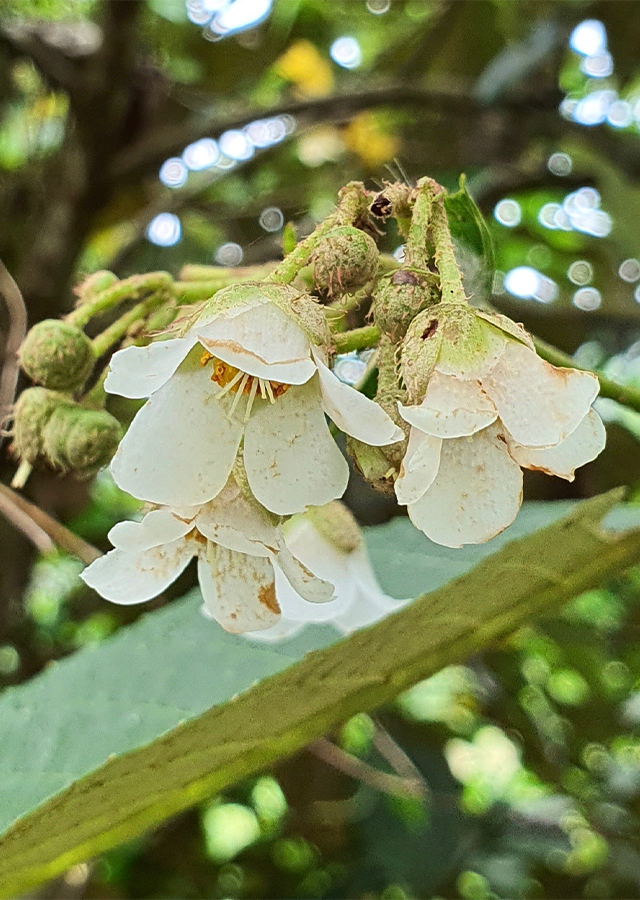
- Flowers - inflorescence axillary, in corymbs,peduncles about 5-10 cm long. Flowers bisexual, pedicel densely tomentose, about 1-4cm long, bracts, foliaceous, oblong, scaly about20 x 8 mm across, sepals 5, elliptic-orbicular, Stamens numerous, base connate, adnate to the base of the petals, about 1-2 mm long,filaments slender, anthers versatile.
- Fruits - berry, globose-ovoid, 10 x 6 mm across,densely white tomentose, usually ribbed, rarely dry and subdehiscent.
- Seeds - numerous, small, brown, reticulate,pyramidal, albuminous.
Cultivation
Generative propagation is by seeds and vegetative propagation is by shoot cuttings.
Chemical Constituents
Triterpenoid, phenolic compound, steroids, flavonoids, saponins,alkaloids, anthraquinones, tannins, coumarins, essential oil.
Traditional Medicinal Uses
- It has anti-cholesterol, antioxidant, antidiabetic, analgetic, antimicrobial, antihyperlipidemic, wound healing agent, and immunostimulatory activities.
- Especially in Toba (North Sumatra), Bataknese use pirdot as a traditional medicine to reduce blood sugar levels, prevent high blood pressure and reduce blood cholesterol levels, lymph node cancer, thyroid cancer, uterine tumors and gout.
- it used to various open wounds due to cut woundsthat occur in humans or livestock, itching and boils
Part Used
Reference Sources
- Pasaribu, G., Budianto, E., Cahyana, H., & Saepudin, E. (2020). A Review on Genus Saurauia: Chemical Compounds and their Biological Activity. Pharmacognosy Journal, 12(3):657-666
- Situmorang, R. O., & Sunandar, A. D. (2019). Pirdot (Saurauia bracteosa DC) Leaf Processing Technique for Making Herbal Tea. In IOP Conference Series: Earth and Environmental Science (Vol. 359, No. 1, p. 012004). IOP Publishing.
- World Conservation Monitoring Centre. 1998. Saurauia bracteosa. The IUCN Red List of Threatened Species 1998: e.T37401A10049827.
- https://indiabiodiversity.org/species/show/264238