
Cuban Oregano
Coleus amboinicus Lour.
Lamiaceae
Location in our garden
Principal

Synonym
Coleus aromaticus Benth.
Majana amboinica (Lour.) Kuntze
Plectranthus amboinicus (Lour.) Spreng.
Habitus

Herbaceous. A succulent and aromatic herb growing up to 1 m high.
Part Used
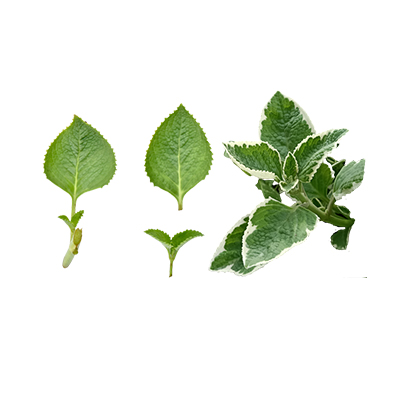
 Leaves
Growing Requirements
 Full Sunshine
 Need Shade
Habitat
 Riverbanks
 Forest
 Coastal
 Roadside
 Rocky Areas
Overview
There is no known origin of Indian borage, but it may be native to Africa and possibly India. It has been widely cultivated and naturalized in the Indo-Malesian region and other tropical regions around the world, as evidenced by some of its common names including Mexican Mint, Cuban Oregano, Spanish Thyme, and French Thyme. From Kenya South to Angola in the West and in the East, to Mozambique, Swaziland, and Northern Natal, it occurs naturally in Africa.
Vernacular Names
Jamaika thymian (German), Pashanabhedi (India), Bangun-bangun (Malaysia), Suganda (Tagalog), Can day lá (Vietnamese), Orégano (Cuba).
Agroecology
It is known to grow in soils that are loamy, rocky, or sandy. The species is shade-tolerant and prefers fertile, well-drained soils in partially shaded regions. Indian borage occurs at low altitudes, with the species rising from 0 to 800 m in Mesoamerica and 0-500 m in Bolivia.
Morphology
- Stems - fleshy, growing 30-90 cm, with long rigid (hispid to villous) or tomentose hairs (densely covered with soft, short, and erect hairs, pubescent).
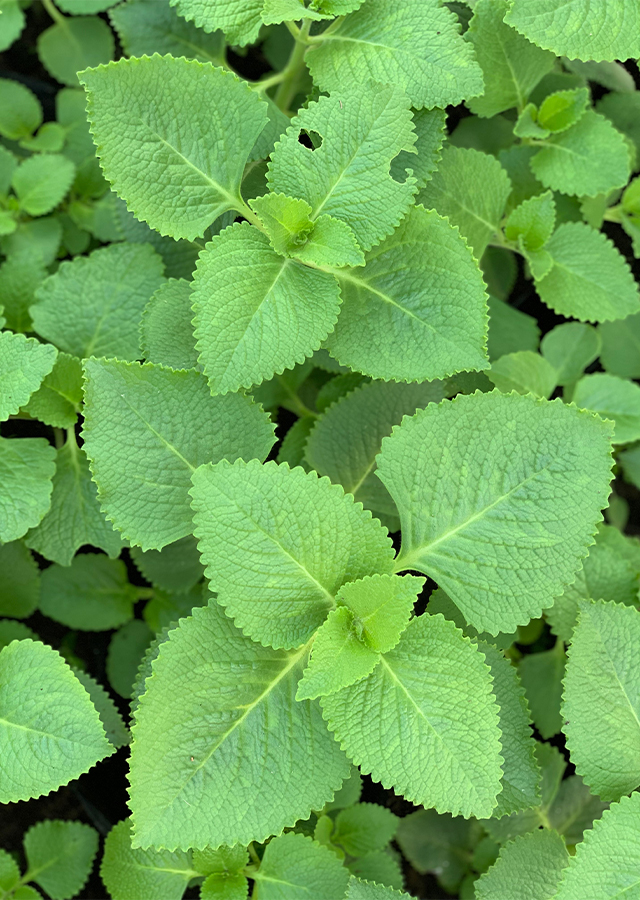
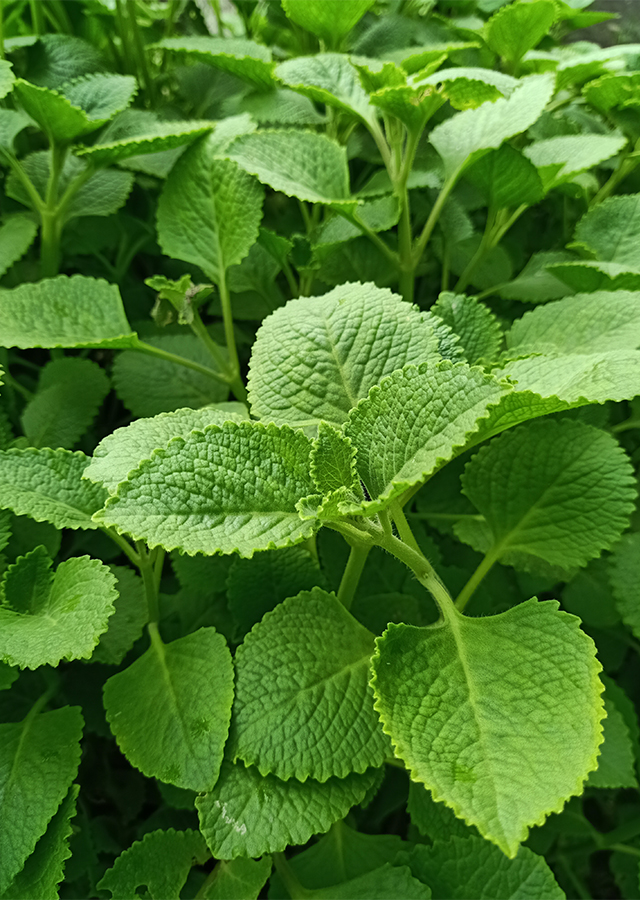
- Leaves - undivided (simple), with a tapering tip (ovate) and very thick, broadly ovate to suborbicular; they are pubescent (thickly studded with hairs), with the lower surface having the most numerous glandular hairs, giving a frosted appearance.
- Flowers - on a short stem (shortly pedicelled), pale purplish in dense whorls at distant intervals in a long slender raceme.
- Fruits - nutlets are smooth, pale brown in color, 0.7 mm long, and 0.5 mm wide.
Cultivation
Propagation is by stem cuttings as well as seeds.
Chemical Constituents
Carvacro compounds are thymol, α-humulene, undecanal, y-terpinene, p-cymene, α-terpineol, ß-selinene, caryophyllene oxide, flavonoids, phenol, luteolin, salvigenin, taxifolin, crategolic acid.
Traditional Medicinal Uses
- It is used for the treatment of skin ulcerations and urinary diseases, and for the relief of inflammation, complications of the kidneys, nervous disorders, and conditions of congestive heart failure.
- In particular, for respiratory diseases such as congestion, bronchitis, sour throat, and digestive diseases such as dysentery, diarrhea, colitis, etc., a decoction of the leaves is used.
- A wide range of other diseases, including seizures, strokes, meningitis, congestive heart failure, fever, colds, bronchitis, asthma, cholera, menstrual pain, labor pain, delayed labor, and postpartum pain, are also handled with the leaves.
- An infusion or syrup made from herbal leaves is recommended to treat coughs.
Part Used
Reference Sources
- Arumugam. Greetha, K.S. Mallappa, and R.S. Uma. (2016). Plectranthus amboinicus (Lour.) Spreng: Botanical, Phytochemical, Pharmacological and Nutritional Significance.pdf
- CABI. (2014). Invasive Species Compendium. Plectranthus amboinicus(Indian borage). https://www.cabi.org/isc/datasheet/119834. 14-08-2020
- Fern, Ken. (2019). Useful Tropical Plants. Plectranthus amboinicus. http://tropical.theferns.info/viewtropical.php?id=Plectranthus+amboinicus. 09-09-2020.
- Ncbi. (2016). Coleus aromaticus: a therapeutic herb with multiple potentials. https://www.ncbi.nlm.nih.gov/pmc/articles/PMC5052183/. 14-08-2020
- StuartXchange. (2015). Philippines Medicinal Plants: Suganda-Plectranthus amboinicus (Lour.) Spreng.. http://www.stuartxchange.org/Oregano.html.28-11-2020.