
Hibiscus
Hibiscus rosa-sinensis L.
Malvaceae
Location in our garden
Principal

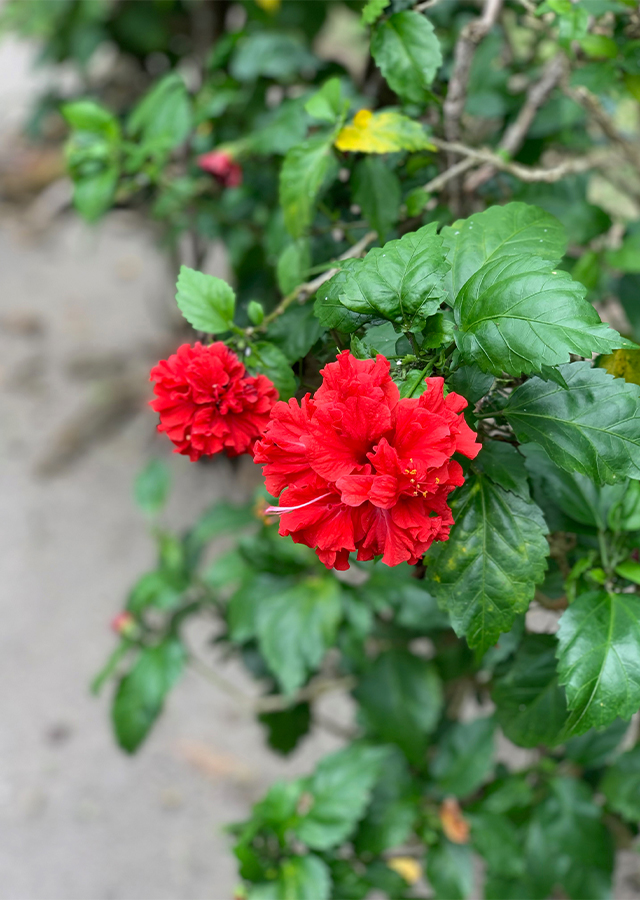
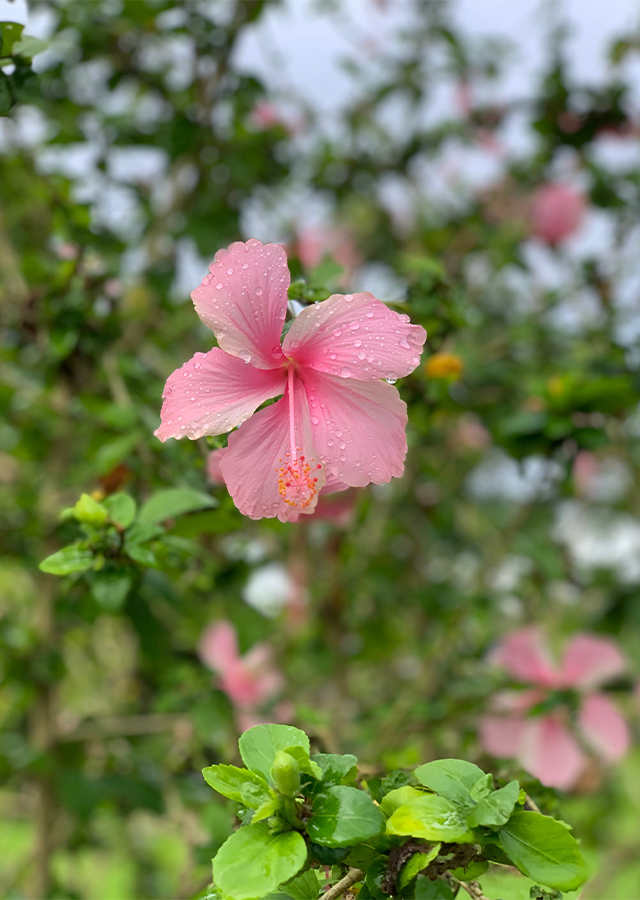
Synonym
Hibiscus arnottii Griff. ex Mast.
Hibiscus javanicus Mill.
Hibiscus tricolor Dehnh.
Habitus

Shrubs. An erect, much branched, glabrous, evergreen shrub growing 1 - 4 m tall.
Part Used
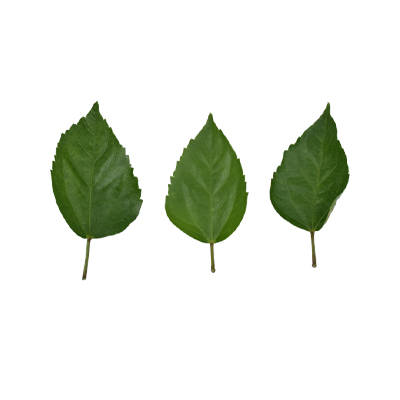
 Leaves
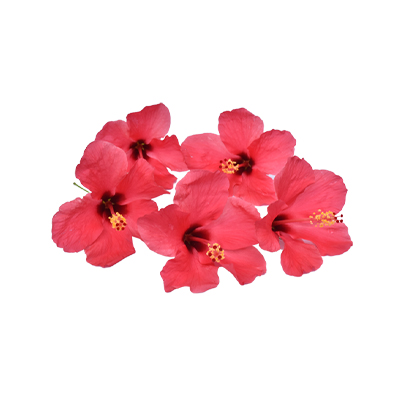
 Flowers
Growing Requirements
 Full Sunshine
Habitat
 Terrestrial
Overview
This plant was domesticated a long time ago and is native to Southeast China. It is now cultivated worldwide and has sometimes been naturalized elsewhere, such as in Japan and Southeast Asia.
Vernacular Names
China rose, Shoeflower (English), Kembang sepatu (Indonesia), Botan (Malaysia), Thul padma (India), Mapula (Tagalog), Fu rong hua (Chinese), Fu you (Japan), Bu yong (Korean), Malva rosa (Spanish).
Agroecology
It is found in thickets along streams in its native range. In frost-free, warm places, the plant is frost sensitive and thrives best. It prefers a well-drained humus rich in full sun or partial shade of fertile soil. In cold winters, plants will also lose much of their leaves, but they will usually rapidly recover as the warmer weather returns.
Morphology
- Roots - tap, light brown.
- Stems - deciduous, erect, branched, bushy, large shrub or small multi-stemmed tree, 2-5 m tall.
- Leaves - paper, bright green, narrowly ovate to orbicular ovate, 5-7 lobed, margins coarsely toothed, cordate base with acute tips.
- Flowers - on a 5-8 cm pedicel, axillary, solitary, wide, single, or double flowered. Calyx-5-lobed, acute-tip ovate; white to pink. The petals are broad, obovate, externally pubescent.
- Fruits - flatened globose capsule, 2.5 cm across, yellowish and woolly.
- Seeds - are numerous, 2-2.5 mm long, reniform, dark brown and hairy.
Cultivation
- Vegetative spread (by cuttings) and generative propagation (by seeds).
- The length of the cut should be about 10-15 cm. Dip the rooting hormone into the bottom of the cut. A 50-50 mixture of potting soil and perlite works well. Put it in well-draining soil. Transplant them, once rooted, into a larger pot.
Chemical Constituents
Flavonoids, polyphenol, antocyanin, cyaniding-diglucoside, tannins, cyclopeptide alkaloid, cyanidin chloride, hentriancontane, riboflavin, ascorbic acid, thiamine, malvalic acid.
Traditional Medicinal Uses
- Hibiscus has antianxiety, anticancer, anticonvulsant, antifertility, antioxidant, hepatoprotective, hypoglycemic, hypolipidaemic activities, and wound healing.
- Flowers and leaves are used as an emollient, anodyne, and laxative for the treatment of skin disorders, mumps, and fever relief. For prolonged menstruation, the flower is often used as an astringent.
- Leaves and flowers are pounded into a paste and poulticated into swellings and mumps that are cancerous.
- The whole plant juice is applied directly to sores in Suquang, Papua New Guinea, to relieve headaches and irregular periods. Also, the roots are washed and chewed to treat diarrhoea.
- The plant is used for treating eyesores in the Central Province, while it is used for labor induction in the Northern Province and North Solomon Province.
- In Indonesia, it is used to control menstruation as a purgative, an abortifacient.
- The juice also has a calming effect on the mucous membrane lining the digestive and respiratory tracts.
- To treat gonorrhea, its roots are used.
- The roots and leaves are crushed and the juice is drunk to treat diarrhoea in finschhafen.
Part Used
Reference Sources
- Ling, H. H., Chua, T. K., Tan, C. H. (2009). A Guide to Medicinal Plants. World Scientific Publishing. SIngapore. page 69
- Lim, T.K. (2012). Edible Medicinal and Non-Medicinal Plants. Vol 8. Springer. New York Page 306
- Fern, ken. (2019). Useful Tropical Plants Database. Hibiscus rosa sinensis. http://tropical.theferns.info/viewtropical.php?id=Hibiscus+rosa-sinensis 22-07-2020.