
Lavender-leaved-leucas
Leucas lavandulifolia Sm.
Lamiaceae
Location in our garden
Principal
Synonym
Hetrepta lavandulifolia (Sm.) Raf.
Leonurus indicus L.
Leonurus malebaricus J.Koenig ex Rottb.
Habitus

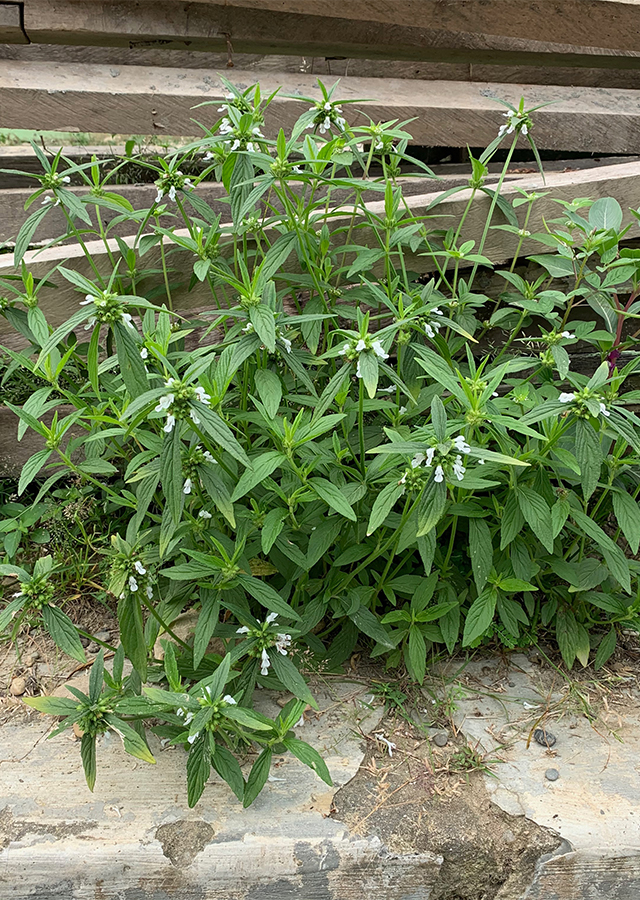
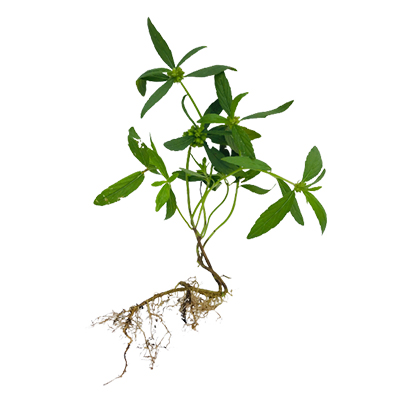
Herbaceous. An erect annual herb that can reach a heightof 30-80 cm.
Part Used
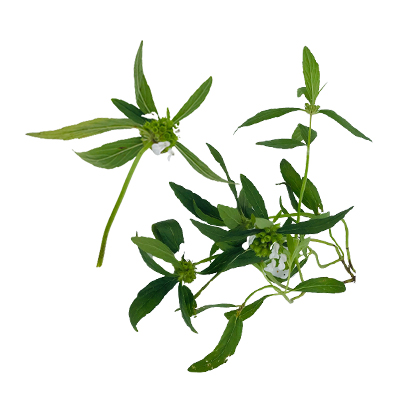
 The Whole Plant
Growing Requirements
 Full Sunshine
 Need Shade
Habitat
 Roadside
 Grassland
Overview
Lavender-leaved leucas is native to South China, India, Nepal, Northeast Pakistan, Sri Lanka, Indo-China, Malesia. The plant is harvested from the wild for local use as a food and medicine. It is sometimes cultivated in home gardens for use in local medicine and as a pot herb. The whole plant has a foetid smell.
Vernacular Names
Leucas a feuilles de lavande (French), Katumbak (Malaysia), Xian ye bai rong cao (Chinese), Chhoto halkusha (Bangladesh), Salita (Tagalog-Philippines), Dulphe jhar (Nepalese), Kadar kumbam (India).
Agroecology
A weed of open waste places, coconut and other plantations, roadsides, grassland and arable land, fallow land, paddy dams, locally often numerous. It grows at elevations from sea-level to 1,500 m.
Morphology
- Stem - less hairy, green, much branched square stems.
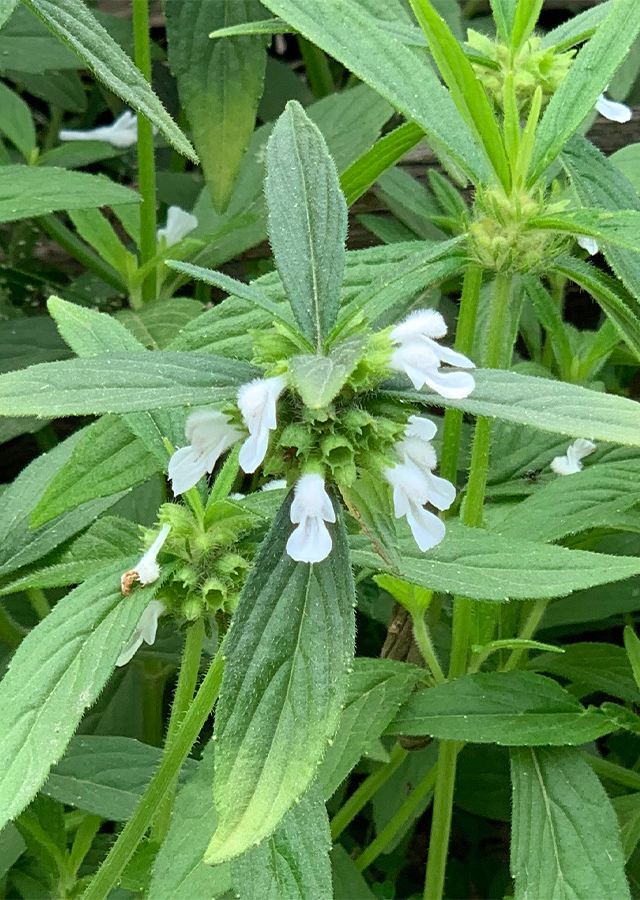
- Leaves - linear to linear-lanceolate, 5-9 cm long, 8-13 mm wide, pointed at both ends and toothed at the margins.
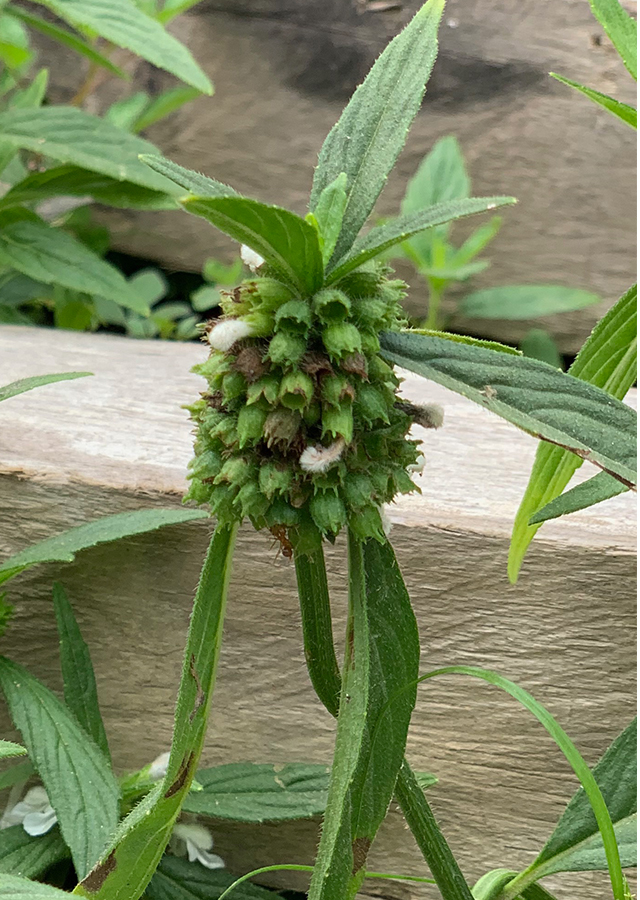
- Flowers - axillary and terminal. Calyx is about 1 cm long, green, very oblique, and sharply toothed. Corolla is white, 1.5 cm long, the central lobe of the lower lip is obovate, truncate, 8 mm wide. Ovary 4-celled, ovules 4, stigma 2-fid.
- Fruits - has 4 nutlets.
Cultivation
This plant can be propagated by seeds and stem cuttings.
Chemical Constituents
Alkaloids, saponins, tannins, phenolic, flavonoids, triterfernoid, steroids, glycoside, acacetin, chrysoeriol, linifoliside, linifoliol, lupeol, taraxerone.
Traditional Medicinal Uses
- The plant is diaphoretic and stimulant. It is used to heal chronic leg sores, dermatosis, as an anthelminthic for roundworms, as a gargle to remove mucus and for appeasing affections of the nerves.
- Studies showed significant anti-ulcer, anti-diabetes, wound healing, antitussive, anthelmintic, analgesic, and hypoglycemic properties.
- Studies suggests as a potential antibacterial agent and a potential source of valuable antioxidant products.
- The leaves are used as a poultice to treat itch, headaches and vertigo. Leaves decoction is considered a good stomachic, and is applied, internally and externally, to treat colic of children.
- The juice of the plant is used in the treatment of malarial fever.
- In India, the leaves are used for piles and sore eyes. Juice of fresh leaves applied for colds and chronic headaches.
- The plant is used as a gargle to remove mucus.
Part Used
Reference Sources
- Eflora of india. Google Group. (No date). Leucas lavandulifolia. https://sites.google.com/site/efloraofindia/species/a---l/l/lamiaceae/leucas/leucas-lavandulifolia. 06-02-2021.
- Fern, Ken. (2014.) Useful Tropical Plants: Leucas lavandulifolia. http://tropical.theferns.info/viewtropical.php?id=Leucas+lavandulifolia. 06-02-2021.
- Flowers of India. (No date). Lavender-Leaved Leucas. https://www.flowersofindia.net/catalog/slides/Lavender-Leaved%20Leucas.html. 08-02-2021.
- James Cook University. (No date). Leucas lavandulifoil. https://www.jcu.edu.au/discover-nature-atjcu/plants/nq-weeds-by-scientific-name2/leucas-lavandulifolia. 06-02-2021.
- StuartXchange. (2016). Philippine Medicinal Plants. Salita Leucas lavandulifolia Sm. LINE-LEAF LEUCAS. http://www.stuartxchange.org/Salita.html. 06-02-2021.