
Grass Jelly
Cyclea barbata Miers
Menispermaceae
Location in our garden
Principal


Synonym
Habitus

Climbers. A slender herbaceous climbing plant, can be up to 8 m long.
Part Used
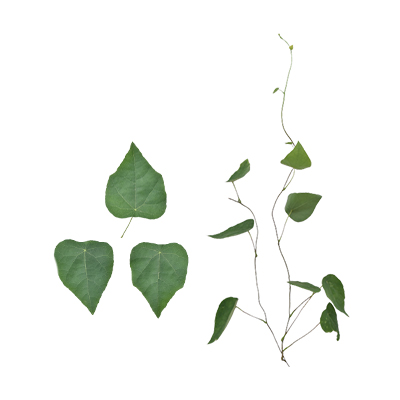
 Leaves
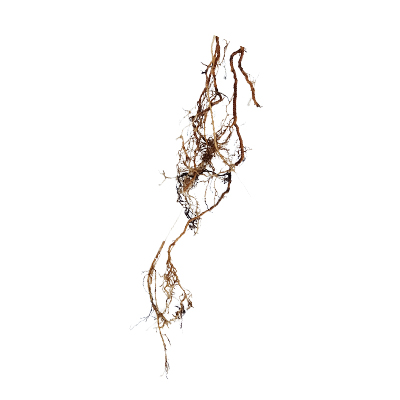
 Roots
Roots
Growing Requirements
 Need Shade
Habitat
 Forest
 Shrublands
 Grassland
Overview
Grass jelly is native from Mesona Chinensia which is easily found in Southern China with rice flour. Found in forest, including teak forest and bamboo forest, and in grassland with scrub vegetation, sometimes on limestone. It is ordinarily found growing as a wild plant, however some are intentionally cultivated in residence gardens. This species has native range in Andaman Is., Assam, Bangladesh, Cambodia, China Southeast, East Himalaya, Hainan, Jawa, Laos, Lesser Sunda Is., Myanmar, Nicobar Is., South China Sea, Sumatera, Thailand, and Vietnam.
Vernacular Names
Gulaman (Philippines), Xian cao (Taiwan), Sương sáo (Vietnamese),Chaokuai (Thailand), Cincau Hijau (Indonesia)
Agroecology
It is grows at elevations up to 1,100 metres. This plant prospers within the lowlands to the discipline with an altitude of 800 meters above sea level, the loose soil with acidity stages of 5.5 to 6.5, and the neighborhood is shady, moist and juicy shallow ground.
Morphology
- Stem - diameter of stem about 1 cm and propagates toward the correct on the host tree with a size of 5 to 16 meters.
- Leaves - the center widens oval, in order that the overall shape resembles a coronary heart. The lower surface of leaves downy and hairy higher surface difficult and sparse. The leaves fluctuate between 60-150 mm and has netted leaves the bone.
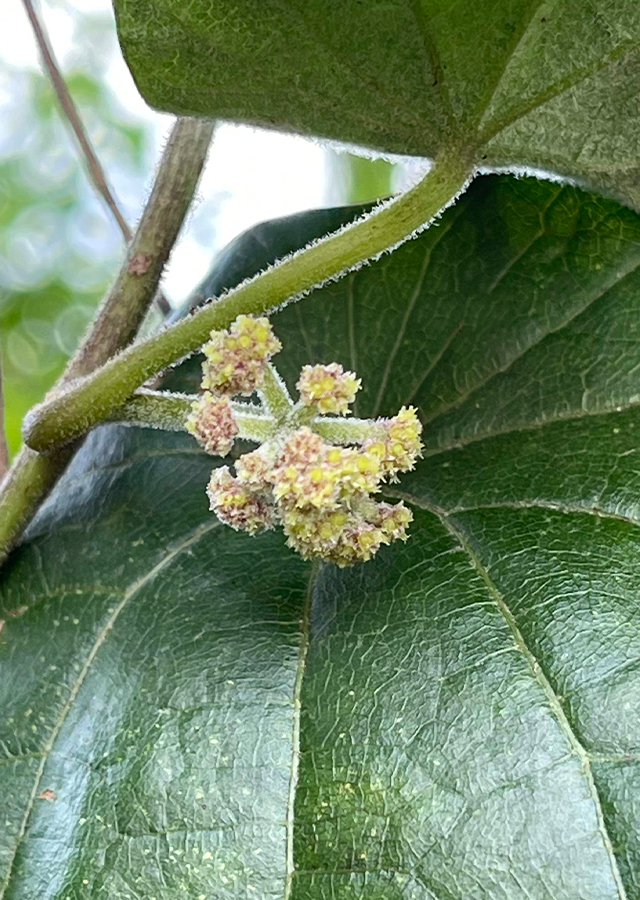
- Flowers - develop from axillary or commonly from the trunk. Male flowers have petals 4-5 pieces and female have 1-2 pieces of petals.
- Fruits - circular like a espresso and a little furry.
- Seeds - every fruit comprises 1-2 seeds are tough oval.
Cultivation
- Generative propagation is by seed and vegetative propagation is by stem cuttings or root buds.
- The leaves will be harvested in giant portions.Harvesting will also be done after the plant was once 3-4 months from the time of planting.
Chemical Constituents
Polyphenols, saponin, polygalacturonic acid, glycosides, flavonoid, cycleine, isokandrodendrin compounds, arabinosa, bisbenzylisoquinoline alkaloid (limasine, tetradine, thalrugosine, homoaromoline, cycleapeltine).
Traditional Medicinal Uses
- The health benefits of grass jelly are overcome digestive problems, good for diet, anti diabetes, as an antibiotic, treat fever, increase gastric and cure ulcer, ease muscle, make our skin smooth, prevent osteoporosis,speed up bowel movement, and reduce the risk of stroke.
- Grass jelly leaf extract is powerful to kill blood cancer cells, up to 55-90%.Furthermore, the grass jelly is also good in eradicating 3 other cancercells, namely cervical cancer, breast cancer, and lung cancer.
- The plant is diuretic, depurative, febrifuge, anti dysenteric, and to treat jaundice, eye diseases and framboesia.
- In Chinese medicine, extracts from the roots are used as an aesthesiaduring surgery.
- The leaves are used in Indonesia to prepare a jelly called 'cincau' or'cincau hijau' (green cincau), which is used as a refreshment and as a medicine against stomach complaints. The leaves are crushed in water and the mixture left to set. It is usually eaten with a sweet syrup.
- A decoction made of the roots is used in against fever.
- It is overcome cancer and tumor. We can consume chopped leaves in the form of jelly, boiling water, or powder as much as 3 times a day as anti-tumor drugs.
Part Used
Reference Sources
- Dr Health Benefits. (No date). 22 Health Benefits of Grass Jelly. https://drhealthbenefits.com/food-bevarages/beverages/health-benefits-of-grass-jelly. 30-07-2020.
- Fern, Ken. (2014). Useful Trofpical Plants. Cyclea barbata. http://tropical.theferns.info/viewtropical.php?id=Cyclea+barbata. 30-07-2020
- Herb Medicine. (No date). Diabetes use Cyclea barbata. https://www.herbs-medicine.com/2016/01/benefit-cincau-leaves-for-healing-and.html. 30-07-2020.
- Pl@nt Use. (2016). Cyclea (PROSEA). https://uses.plantnet-project.org/en/Cyclea_(PROSEA). 08-02-2021.
- https://powo.science.kew.org/taxon/urn:lsid:ipni.org:names:580678-1