
Cabbage star
Cnidoscolus aconitifolius (Mill.) I.M.Johnst.
Euphorbiaceae
Location in our garden
Orchard
Synonym
Jatropha aconitifolia Mill.
Jatropha aconitifolia var. genuina Müll.Arg.
Habitus

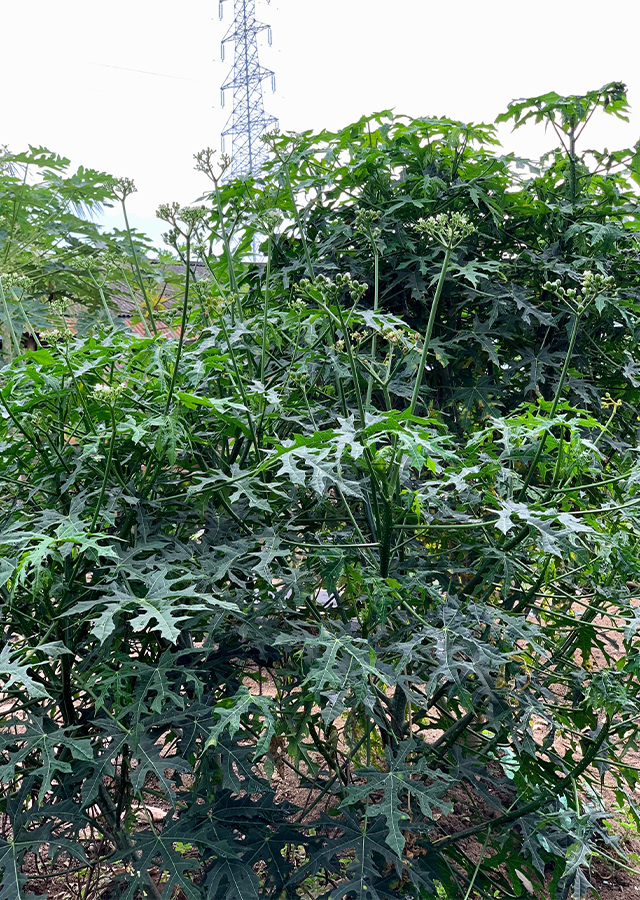
Shrubs. Shrub or small tree, growing up to 6 m tall
Part Used
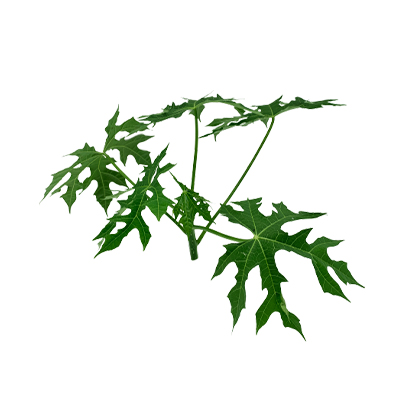
 Leaves
 Sap
Sap Stem
Stem
Growing Requirements
 Drought Resistant
Habitat
 Riverbanks
 Forest
 Roadside
 Rocky Areas
Overview
Cabbage star is native to Mexico, Central America, Belize, Costa Rica, El Salvador, Guatemala, Honduras, Nicaragua, Panama.. It is mostly used as a food source, for medicinal purposes and as living fence posts. It is believed to have its origins in the Yucatán Peninsula, spreading due to domestication. It has been widely introduced as a cultivated plant in some countries.
Vernacular Names
Picar (Spanish), Manioc bâtard (French), Manolo martínez (Colombia), Salva hombre (Cuba), Ch’inch’inchay (Mexico), Papayo macho (Puerto Rico), Chicasquil (Costa Rica).
Agroecology
The habitat is reported from open forest with moist and dry thickets. A plant of tropical regions, mean annual rainfall in the range 1,000-2,000 mm, temperatures range 20-32 °C. Prefers a sunny position, but also succeeds in deep shade. Thrives on a wide range of soils, pH in the range 5.5-6.5.
Morphology
- Stems - thick pale bole, glabrous, easily broken by wind.
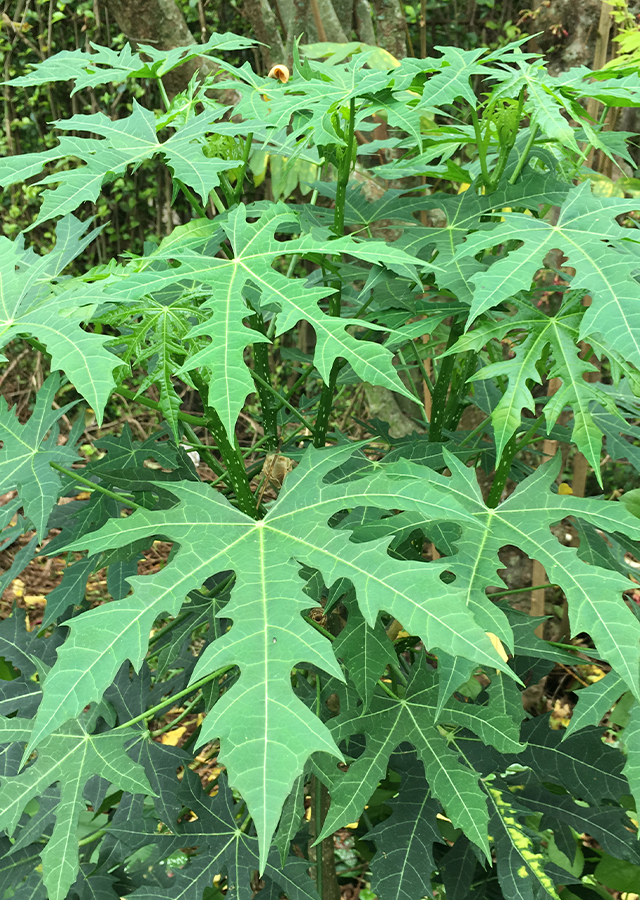
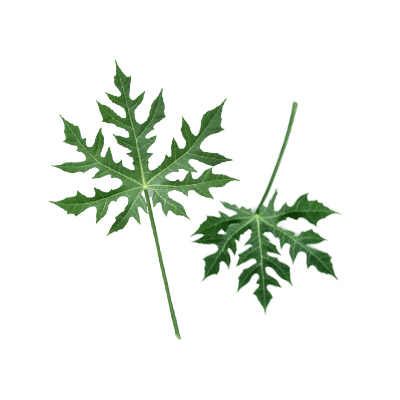
- Leaves - thinly chartaceous, usually unarmed or nearly so, petioles ca 15- 25 cm long, blades as broad as or broader than long, 15- 25 cm across, deeply cut, stipules very inconspicuous.
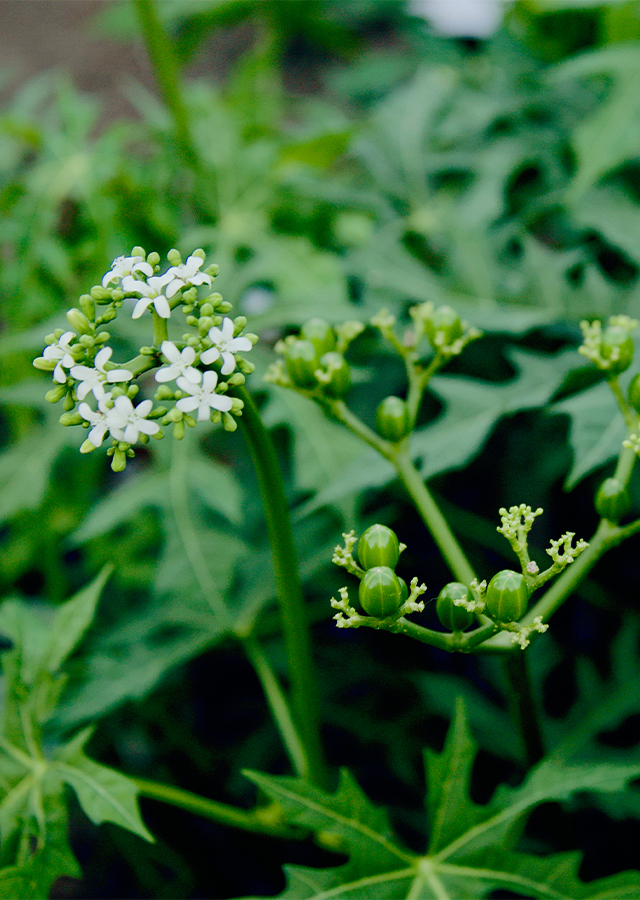
- Flowers - Flowers - Perianth greenish-white, staminate flowers subsessile, minutely pilose outside but usually unarmed, ca 10-14 mm long, the perianth tube distally dilated, 6-10 mm long, calyx-segments whitish and deciduous.
- Fruits - capsules unarmed, green, 8-12 mm long, minutely rugose..
- Seeds - elliptic, 6-8.5 mm long, compressed, 4- 5.5 mm broad, mottled and pale to dark brown, the caruncle deltoid-cordate, 2-2.8 mm broad and 1.5-2 mm high.
Cultivation
- Generative propagation is by seed.
- Vegetative propagation is by stem cuttings about 40 cm long, that are dried for 1-14 days before being planted.
- The first harvest from stem cutting can be taken 90-120 days after planting out.
Chemical Constituents
Tannins, alkaloids, saponins, anthraquinones, flavonoids, cardiac glycosides, phlobatannins, amirenone, β-amyrin acetate, and α-amyrin acetate.
Traditional Medicinal Uses
- Cabbage star is used to cure alcoholism, diabetes, insomnia, leukemia, venereal diseases, scorpion stings, gout, improve brain function and memory, and antioxidant capacity.
- The ability to strengthen fingernails and darken greying hair.
- The leaves showed a significant drop in blood sugar levels, increase in absolute liver mass, heart mass, red blood cell count.
- The plant is known to contain proteolytic enzymes for skin disorders.
- The leaves has been used in traditional medicine for various pathologies, to behormone related properties on the pituitary gonadal axis, hepatoprotective antioxidant.
- The blended leaves are treat kidney problems and diabetes.
- The sap of the plant is applied directly to the affected part to treat skin disorders and gum disease.
- Stems or leaves of the plant to treat fatigue, even rheumatism or arthritis, muscle disorders.
Part Used
Reference Sources
- Adaramoye, O. A., Aluko, A., & Oyagbemi, A. A. (2011). Cnidoscolus aconitifolius leaf extract protects against hepatic damage induced by chronic ethanol administration in Wistar rats. Alcohol and Alcoholism, 46(4), 451-458.
- Awoyinka, O. A., Balogun, I. O., & Ogunnowo, A. A. (2007). Phytochemical screening and in vitro bioactivity of Cnidoscolus aconitifolius (Euphorbiaceae). Journal of Medicinal Plants Research, 1(3), 63-65.
- Kuri-GarcÃa, A., & GuzmÃ, S. H. (2017). Phenolic profile and antioxidant capacity of Cnidoscolus chayamansa and Cnidoscolus aconitifolius: A review. Journal of Medicinal Plants Research, 11(45), 713-727.
- Ross-Ibarra, J., & Molina-Cruz, A. (2002). The ethnobotany of chaya (Cnidoscolus aconitifolius ssp. aconitifolius Breckon): a nutritious maya vegetable. Economic Botany, 56(4), 350-365.
- http://powo.science.kew.org/taxon/urn:lsid:ipni.org:names:61821-2
- https://www.cabi.org/isc/datasheet/14554