Ti plant
Cordyline fruticosa (L.) A.Chev.
Asparagaceae
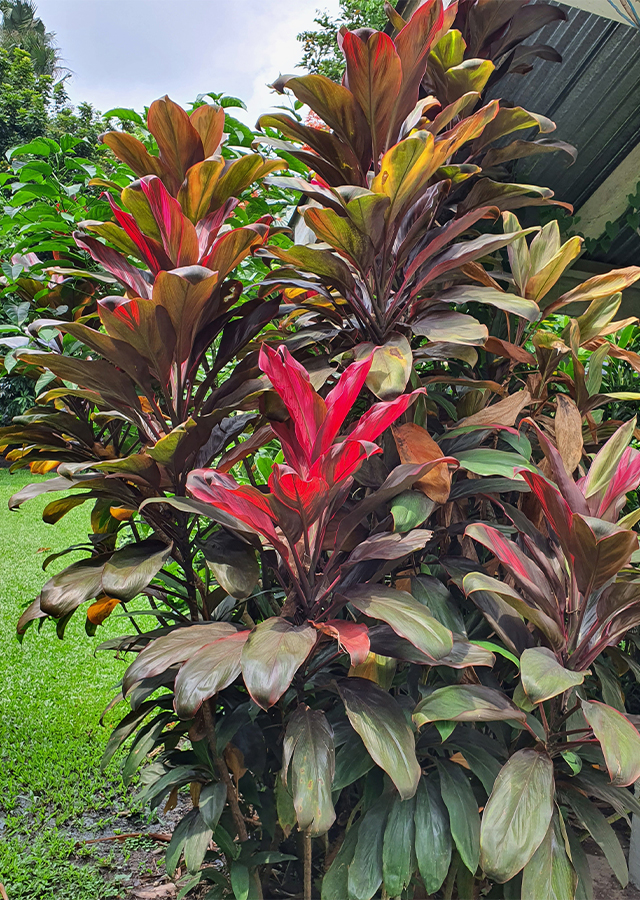
Location in our garden
Principal
Synonym
Asparagus terminalis L.
Calodracon heliconiifolia (Otto & A.Dietr.) Planch.
Calodracon jacquinii (Kunth) Planch.
Habitus

Shrubs. Herbs, erect, shrub plants can grow up 2-4 m
Part Used
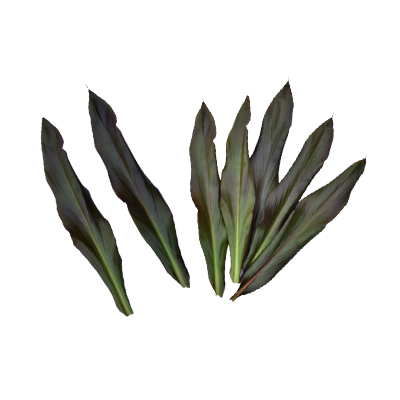
 Leaves
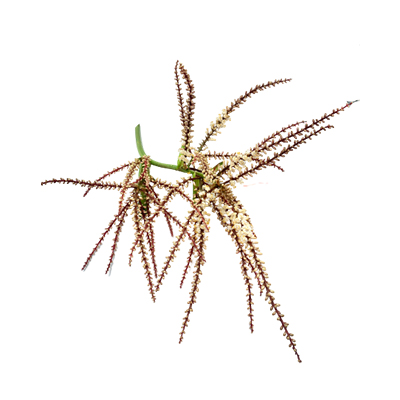
 Flowers
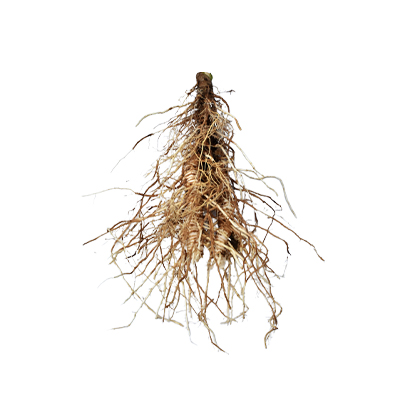
 Roots
Roots Stem
Stem
Growing Requirements
 Full Sunshine
 Need Shade
Habitat
 Forest
 Mountains
 Shrublands
Overview
Ti plant is believed to have originated in South-East Asia and Papua New Guinea, but was carried throughout much of the Pacific. It is now widely cultivated in these areas including northeastern Australia, New Zealand and the Pacific Islands. It is used as food, medicinal plant, fibre crop and for magical purposes.
Vernacular Names
Tungkod-pare (Tagalog-Philippines), Senjuang (Malaysia), Ma pu mak mia (Thai), Ya zhu na (Chinese), Huyết dụ ti (Vietnamese).
Agroecology
It grows well in well-drained, fertile sandy loams. Ti plants have been reported to develop best foliage colour in full sun or bright light. The plant thrives with mean annual temperatures of 18–30 °C.
Morphology
- Roots - white rhizome.
- Leaves - green or variously coloured, variegated with various combinations of red, pink, purple, maroon, yellow, rose, orange, glossy, 25–50 × 5–10 cm.
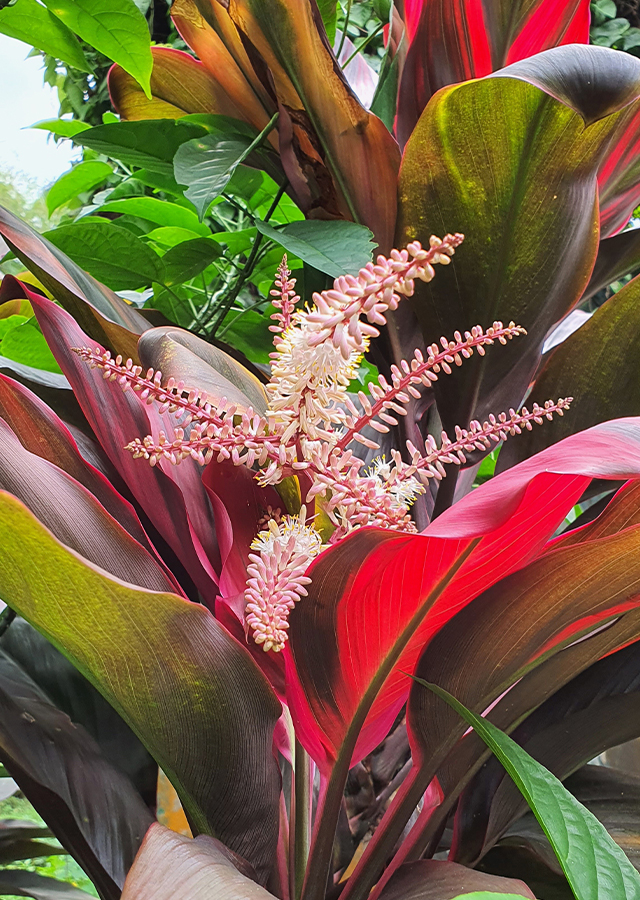
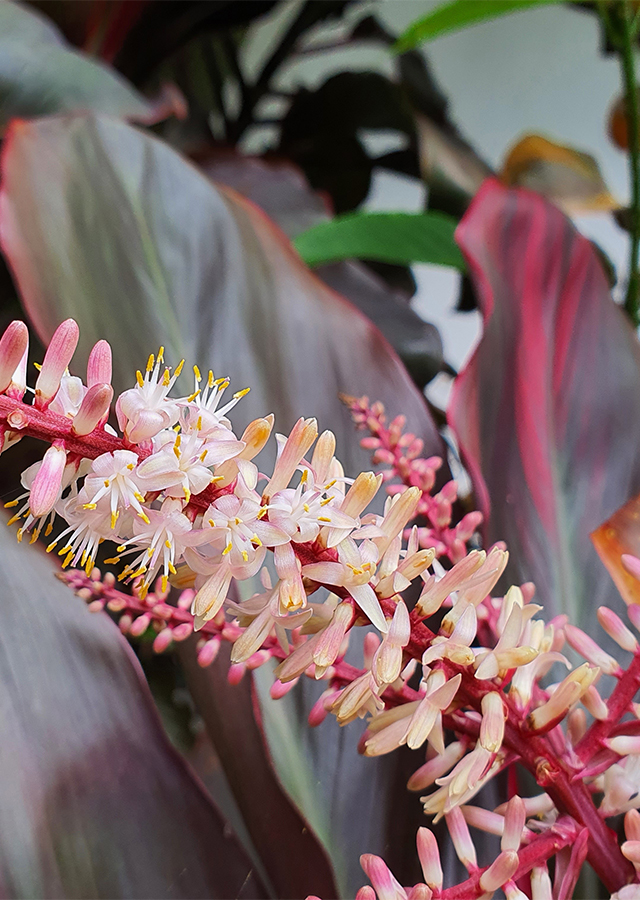
- Flowers - sweetly scented, subsessile or shortly pedicellate, reddish, yellowish or bluish purple; tube 5–6 mm, and lobes erect or recurved, nearly as long as tube.
- Fruits - reddish, round, three-parted, 1 cm diameter berries, several to many seeded.
Cultivation
- Propagated from stem sections, terminal stem cuttings and seeds and by air layering.
- Many of the highly colored named cultivars are propagated by terminal stem cuttings which are directly stuck in the pots.
Chemical Constituents
Flavonoids, steroids, saponins, alkaloids, terpenoids, calcium oxalate, polyphenol, tannins, linoleic acid, smilagenin, sterols, tyramine, cholestine glycocides, fructan, quercetin.
Traditional Medicinal Uses
Medicinal Uses
- The plant is antioxidant, and has antibacterial activity against Escherichia coli, Shigella boydii.
- Considered antiseptic, aphrodisiac, depurative, diuretic, mildly cooling, blood refrigerant, febrifuge, laxative, purgative, hemostatic, disperses contusions, analgesic, and tonic.
- An aqueous extract of Cordyline exhibited antiproliferative activity (anticancer).
- It is used for hemoptysis due to pulmonary tuberculosis, premature abortion, excessive menstruation and blood in urine, bleeding due to piles.
Traditional Uses
- The plant is used in the treatment of nasal growth, asthma, phlegm in the chest, vomiting, and in fever with absence of perspiration.
- In Polynesia and Thailand, it is used for fever, headache and diarrhoea and as disinfectant for wounds in tropical West Africa.
- In Malaysia, is used to cure cough, bloody cough, dysentery, fever, headache, inflammation of the digestive tract, kidney diseases, bloody urine and also difficulties to urinate.
- Infusion of new plant shoots is used for filariasis. Stem juice is used for postpartum illnesses and to help expel the placenta.
- In Fiji, the root is used for baldness, gum abscess, gingivitis, toothaches, leaf juice for eczema, abdominal pain, gastritis, eye infections, leaf buds used for lower chest pains. Also, leaves and stems are used as abortifacient.