
Noni
Morinda citrifolia L.
Rubiaceae
Location in our garden
Orchard
Synonym
Morinda angustifolia Roth
Morinda aspera Wight & Arn.
Morinda chachuca Buch.-Ham.
Habitus

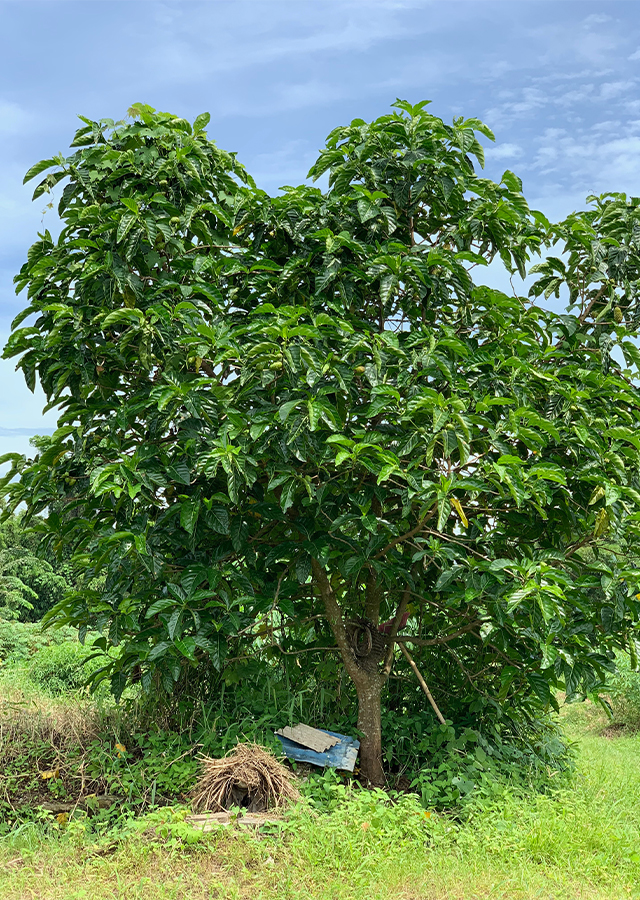
Trees. An erect, evergreen shrub or small tree perennial, 3–10 m high
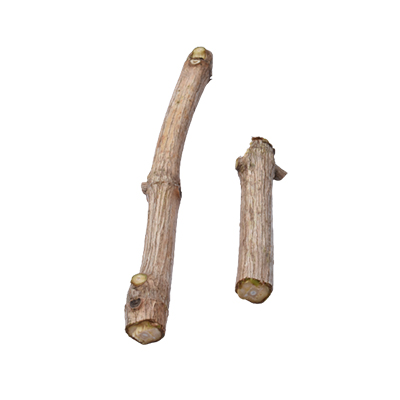
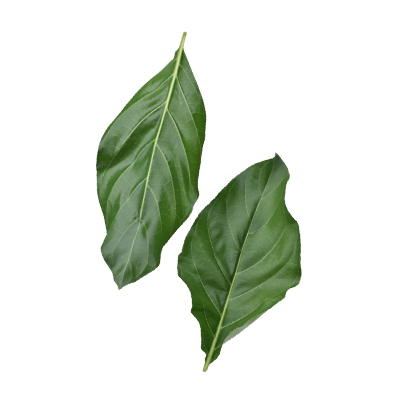
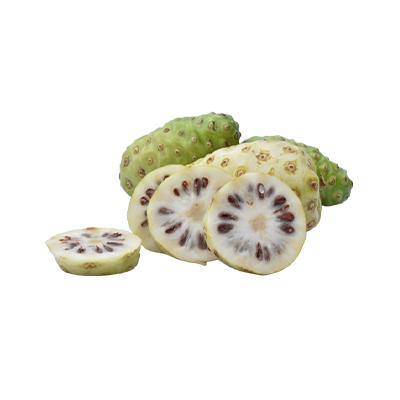
Part Used
 Leaves
 Fruit
Fruit Roots
Roots Stem
Stem
Growing Requirements
 Drought Resistant
 High Rainfall
Habitat
 Riverbanks
 Forest
 Coastal
 Grassland
Overview
Noni is native to Southeast Asia through tropical Northern Australia and Papua New Guinea. It is found distributed from Asia and the Pacific and to the Caribbean region. The species has been naturalized in many tropical regions around the world as wild plantings and is also cultivated. At the present, these species become invasive in someplace in Central America.
Vernacular Names
Hai bin mu ba ji (Chinese), Mata sue (Thailand), Aal (India), Bancudo (Tagalog-Philippines), Awl tree (Australia), Bengkudu (Malaysia), Nhàu (Vietnamese), Nuna (India), Tagase maddi (Kannada), Nono (Tahiti-French), Indian mulberry (English), Morinde (France), Pace (Indonesia), Al (Burma), Noër srôk (Cambodia), Nhoo baanz (Laos).
Agroecology
M. citrifolia can be found in a broad variety of locations and soils, and it has an exceptional ability to live in severe situations such as coral atolls and basaltic lava flows. Depending on latitude and habitat, the species grows from sea level to roughly 1500 meters. It loves temperatures of 20–35°C, but will survive temperatures as low as 5°C.
Morphology
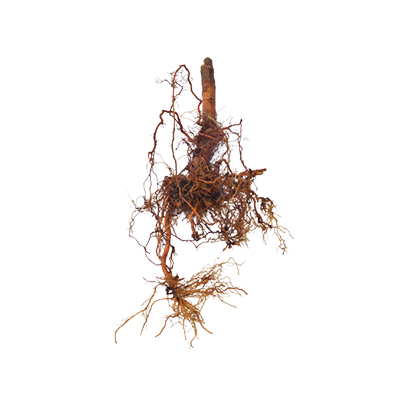
- Root - deep taproot.
- Stems - woody, round, rough skin, branching monopodial, bark greyish or yellowish-brown.
- Leaves - opposite-simple, large, 10–15 cm by 20–30 cm, decussate and stipulate. The blade is broadly elliptic to obovate, glossy, soft, and succulent.
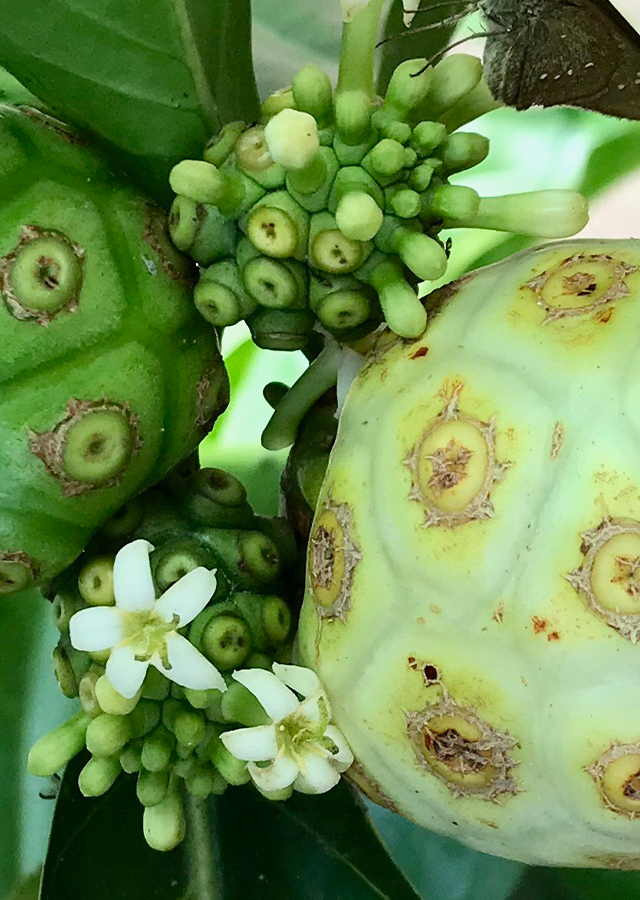
- Inflorescence- with globose heads,in the axils of stipules, opposing properly formed leaves
- Flowers - white, small, sessile, white, 1.5–2 cm across, terminal, axillary, hermaphroditic.
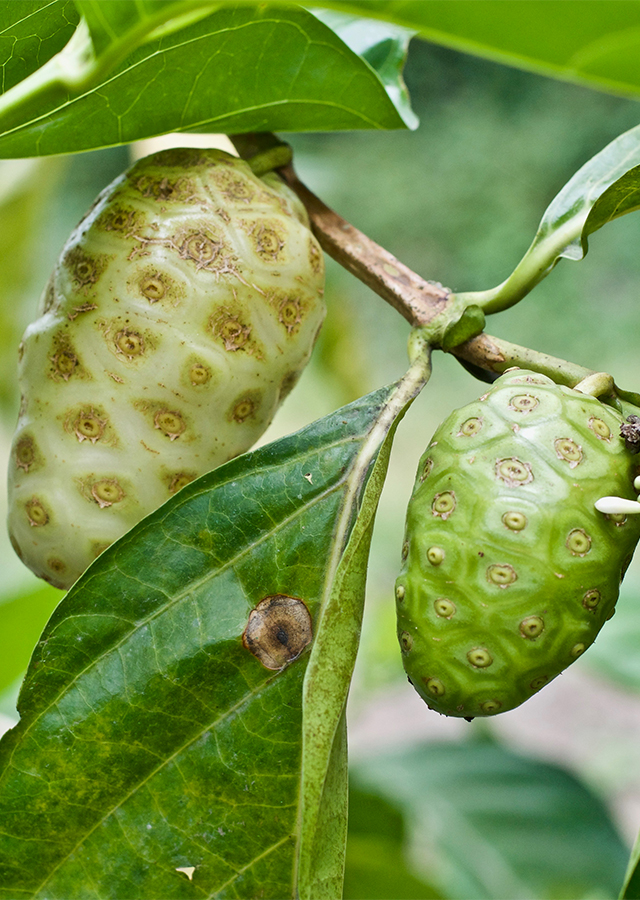
- Fruit - succulent, oval, 5–7 cm across, light greyish green and turns yellow upon maturity.
- Seeds - brown, about 4–9 mm long, the seed coat is rough.
Cultivation
- Seed - sow in nursery beds. Germination takes place 3-9 weeks after sowing. After germination, seedlings are transplanted at ca. 1.2 m x 1.2 m in well-tilled soil. The seeds remain viable for at least 6 months.
Chemical Constituents
- Morindone, glycoside morindin, synthetic alizarin, anthraquinone, capric acid, caprylic acid, vitamin A.
Traditional Medicinal Uses
- The leaves and fruits are antioxidants. It stimulates the immune system to assist the body fight cancer, applied to the chest and abdomen to treat coughs, nausea, colic, and enlarged spleen. Decoction of charred leaves with mustard for infantile diarrhea.
- The root has anti-nociceptive and anti-inflammatory effects.
- The processed fruit juice is for various ailments such as diabetes, high blood pressure, headaches, heart disease, AIDS, cancers, gastric ulcers, mental depression, senility, poor digestion, atherosclerosis, and drug addiction, used to treat fever and as a tonic, prescribed for lumbago, asthma, and dysentery. Over-ripe fruit is used as a poultice and for treating kidney diseases. Fruit is also used internally in various preparations for swollen spleen, liver diseases, beriberi, hemorrhage, and coughs.
Part Used
Reference Sources
- Plant of The World Online. 2017. Morinda citrifolia. https://powo.science.kew.org/taxon/urn:lsid:ipni.org:names:756359-1.
- Invasive Species Compendium. 2017. Morinda citrifolia. https://www.cabi.org/isc/datasheet/34854.
- Groenendijk, J.J., 1991. Morinda citrifolia L.. In: Lemmens, R.H.M.J. and Wulijarni-Soetjipto, N. (Editors): Plant Resources of South-East Asia No 3: Dye and tannin-producing plants. PROSEA Foundation, Bogor, Indonesia.
- Tap, N. & Bich, N.K., 2003. Morinda citrifolia L.. In: Lemmens, R.H.M.J. and Bunyapraphatsara, N. (Editors): Plant Resources of South-East Asia No 12(3): Medicinal and poisonous plants 3. PROSEA Foundation, Bogor, Indonesia.