
Malabar Chestnut
Pachira aquatica Aubl.
Malvaceae
Location in our garden
Principal
Synonym
Bombax aquaticum (Aubl.) K.Schum.
Bombax macrocarpum (Schltdl. & Cham.) K.Schum.
Bombax rigidifolium Ducke
Habitus

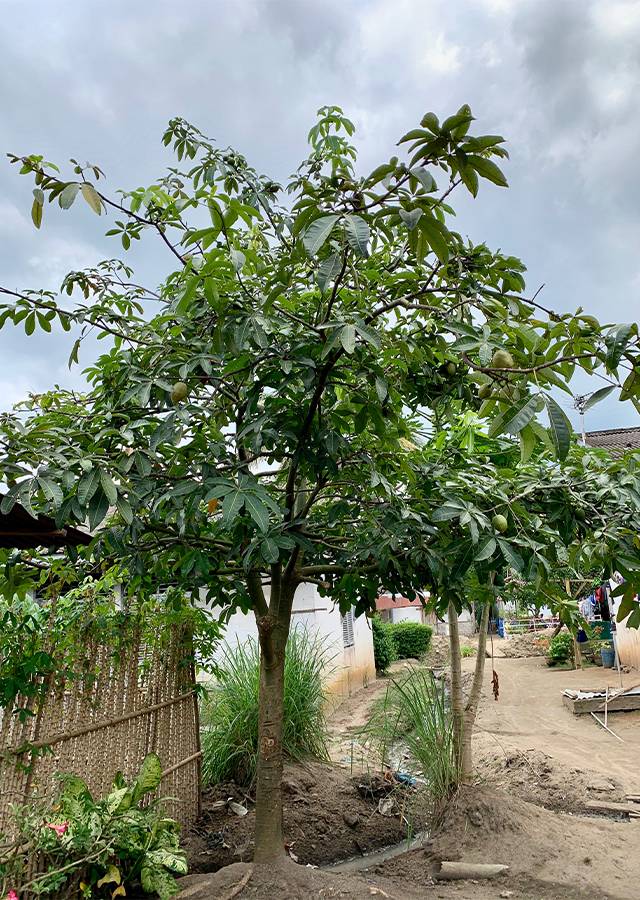
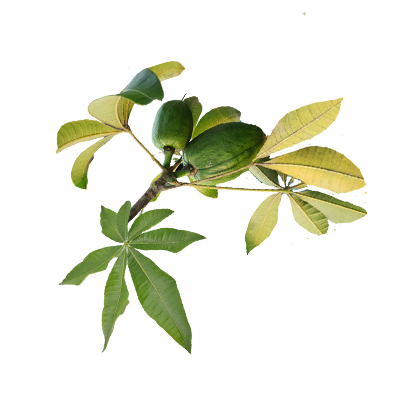
Trees. A small to medium-sized, much-branched, deciduous tree that can reach 25 m in height.
Part Used
 Leaves
 Seeds
Seeds Fruit
Fruit Roots
Roots
Growing Requirements
 Full Sunshine
 Need Shade
 Drought Resistant
Habitat
 Wetland
 Forest
Overview
The species is endemic to Tropical America from Northern Peru and Northern Brazil in the southern parts of Mexico. Across the tropics and sub-tropics, it has been introduced and cultivated. It is grown as an ornamental plant for its edible parts, medicinal uses and The tree is used as a good luck sign and is known as the money tree.
Vernacular Names
Cacau-selvagem (Brazil), Gua li (Chinese), Bombakopsis vodní (Czech), Châtaigner Sauvage (French), Wilder Cacobaum (German), Zapote bobo (Mexico).
Agroecology
This species is a tropical wetland tree that grows along rivers and estuaries. It preferring an average annual rainfall of 2000-5000 mm, a pH of 6-8.5 and an average annual temperature of 22-28°C. It can be started flowering and fruiting when it reaches 2 m in height. This species is very drought-and-shade tolerant.
Morphology
- Stem - branched, small to medium-sized, heavily branched deciduous tree which with a 90 cm diameter stout trunk and buttress base, can reach 17 m in height.
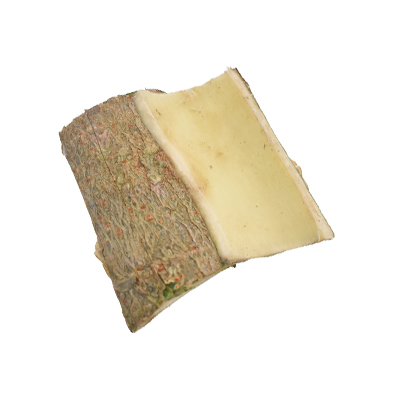
- Bark - greenish when young, grey when mature. Petiole 11–15 cm long, tomentose.
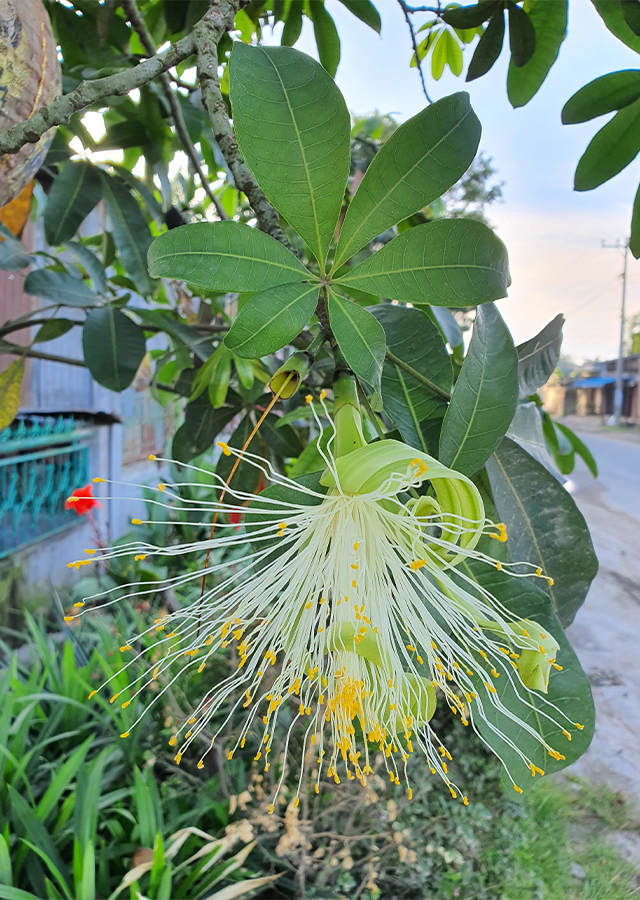
- Leaves - palmately compound, with 5–11 leaflets and 11–15 cm long and arranged spirally. Leaflets are ovate-elliptical or elliptic oblong, 13–28 cm long by 5–8 cm wide
- Flowers - solitary, bisexual, large, up to 31 cm long, showy, olive green, axillary to leaf near the shoot and sweetly aromatic.
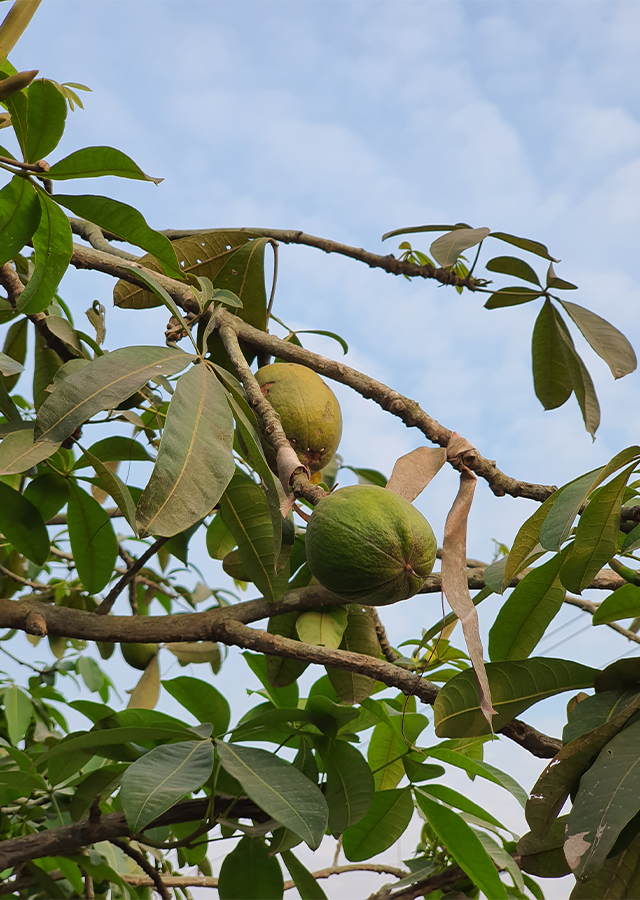
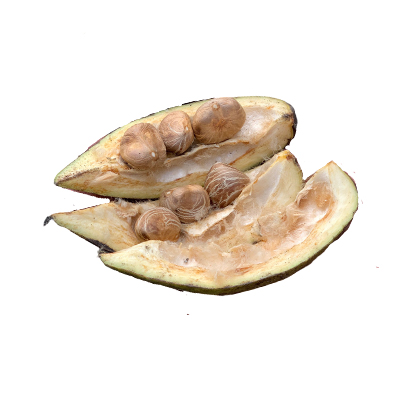
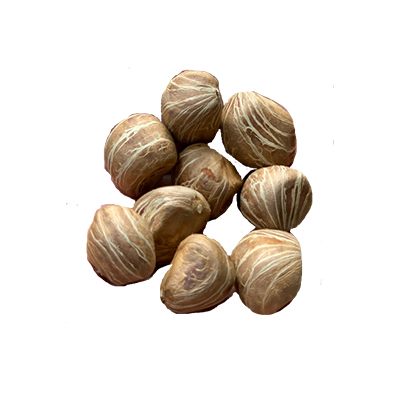
- Seed - angular, large, 2.2-6 x 2-3.2 cm, brownish, edible.
Cultivation
- Generative transmission occurs by seeds. Seeds are best planted in individual containers as soon as they are ripe in a partially shaded location.
- Vegetative transmission is by cuttings and layering.
Chemical Constituents
- In the scent were identified and classified as terpenoids, benzenoids, fatty acid derivatives or nitrogen containing compounds.
- Leaves major components were 9-octadecenamide, photolytic, and methyl palmate.
Traditional Medicinal Uses
- The seeds is used as a cure for eye diseases.
- The skin of an immature green fruit is used for the treatment of hepatitis.
- The bark and immature fruits to treat liver afflictions. In addition, it is also used as medicinally to treat diabetes, headaches and stomach problems. Whereas the bark decoction is used in the treatment of anemia, high blood pressure, tiredness and general weakness.
Part Used
Reference Sources
- https://uses.plantnet-project.org/en/Pachira_aquatica_(PROSEA) diakses tanggal 24 November 2021.
- Wulijarni-Soetjipto, N. & Jansen, P.C.M., 2001. Pachira aquatica Aubl.. In: van der Vossen, H.A.M. and Umali, B.E. (Editors): Plant Resources of South-East Asia No 14: Vegetable oils and fats. PROSEA Foundation, Bogor, Indonesia. Database record: prota4u.org/prosea