
Indonesian Bay Leaf
Syzygium polyanthum (Wight) Walp.
Myrtaceae
Location in our garden
Green House

Synonym
Eugenia atropunctata C.B.Rob.
Eugenia holmanii Elmer
Eugenia junghuhniana Miq.
Habitus

Trees. An evergreen, perennial tree with a dense crown that can grow up to 30 m tall
Part Used
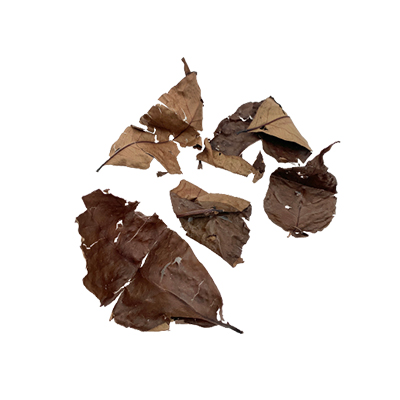
 Leaves
 Bark
Bark Fruit
Fruit Roots
Roots
Growing Requirements
 Full Sunshine
Habitat
 Forest
 Shrublands
 Grassland
Overview
It is widely distributed in Burma (Myanmar), Indo-China, Thailand, Malaysia, and Indonesia (Java, Sumatra, Kalimantan). The leaves are widely used in Indonesia as a flavouring in food, whilst the plant also supplies an edible fruit, medicinal uses, wood and dyes. It is a common home-garden tree.
Vernacular Names
Dok maeo (Thailand), Kelat samak (Malaysia), Sắn thuyền (Vietnamese), Pring srâtoab (Cambodian).
Agroecology
Syzygium polyanthum is widely distributed and locally common in lowland primary and secondary forest, also in thickets, bamboo forest and teak plantations. In Java up to 1,000 m, in Sabah up to 1,200 m, in Thailand up to 1,300 m altitude.
Morphology
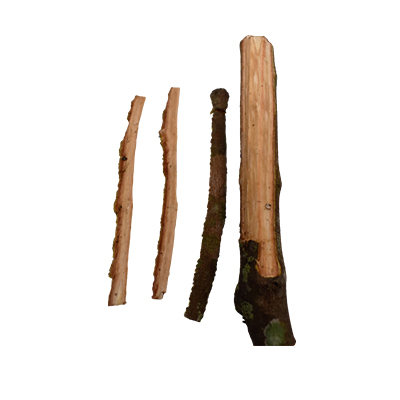
- Stem - greyish brown twigs, grey flaky bark.
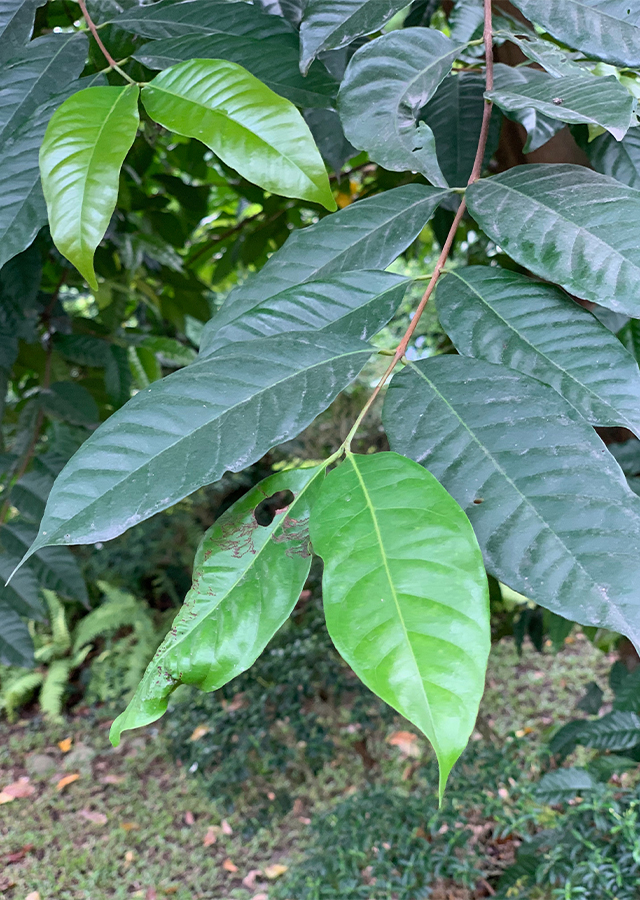
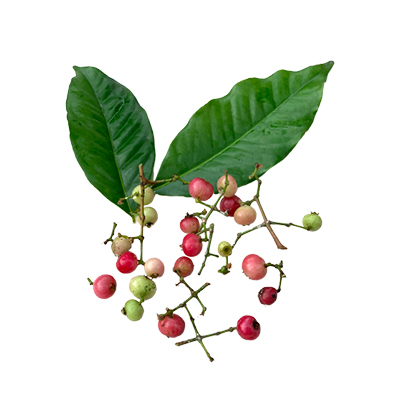
- Leaves - opposite, stalked leaves that are thinly leathery, elliptic or lance shaped, 5–16 cm long by 2.2–7 cm wide, and each has a pointed leaf tip.
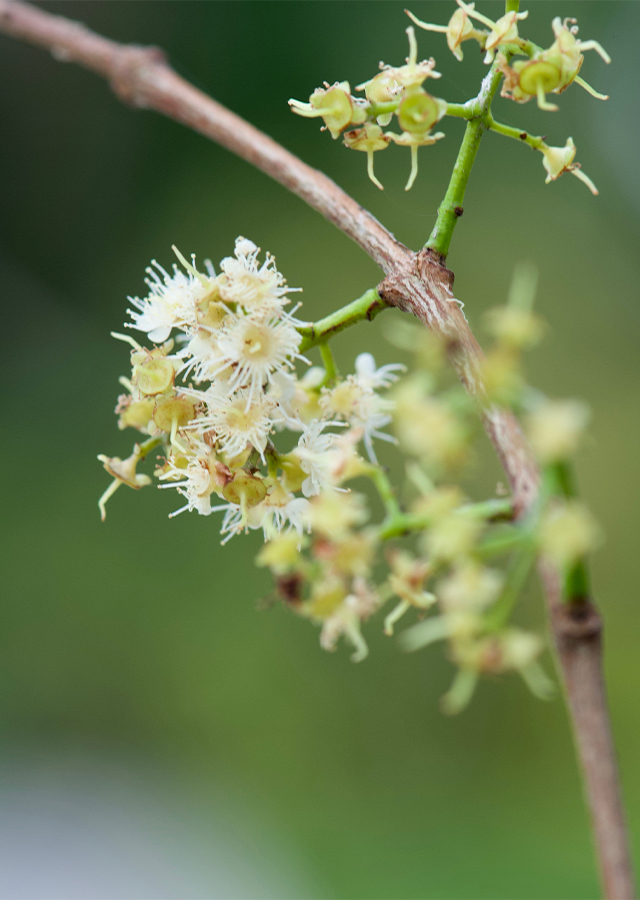
- Flowers - bisexual flowers that are creamy white, turning pink or reddish, faintly fragrant, about 0.8–1.3 cm, and found in up to 10 cm long, located at ends of its branches.
- Fruits - round to flattened round, 0.4–1.2 cm across, red to purplish black when ripe, each contains 1 seed.
- Seeds - brown, round with a diameter of 1 mm.
Cultivation
- Vegetative propagation is by cuttings, air-layering.
- Generative propagation is by seed. Should be sown fresh from the fruit, on the surface of loose soil and under shade. Germination is rapid, complete after 5-12 weeks. The seed loses its viability very rapidly.
Chemical Constituents
Tannins, flavonoids, essential oils, caffeic acid, eugenol, linalool, β-sitosterol, α-pinene, squalene, phytol, gallic acid, β-tocopherol hentriacontane, nerolidol, α-tocopherol, sesquiterpenes, phenol, steroids, saponins, coumarins, terpenoids.
Traditional Medicinal Uses
- The leaves, the ripe and unripe fruits, as well as the bark can scavenge free radicals, which is known to contribute in the development of cancer and atherosclerosis. The leaves reduced the blood glucose levels.
- Ethanolic extract of leaves has demonstrated antidiarrheal activity which was induced by castor oil.
- Ethanolic extracts of leaves and stem have antibacterial activity against Staphylococcus aureus.
- Leaf and bark extracts are used medicinally against diarrhoea.
- The leaves are traditionally consumed for treating various illnesses such as diabetes mellitus, gastritis, ulcers, diarrhea, skin diseases, as well as infections.
- In Riau (Sumatra, Indonesia), the leaves are used as one of the ingredients in their soups, and it is consumed for treating hypertension.
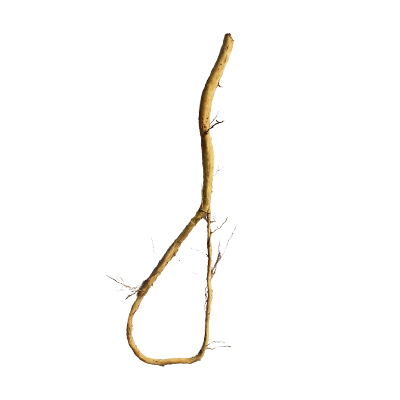
- The pounded leaves, bark and roots are applied as poultices against itches.
Part Used
Reference Sources
- Fern, Ken. (2019). Useful Tropical Plants Database. Syzygium polyanthum. http://tropical.theferns.info/viewtropical.php?id=Syzygium+polyanthum. 25-08-2020.
- Global Information Hub On Integrated Medicine (Globinmed). (No date). Salam Leaf. https://www.globinmed.com/index.php?option=com_content&view=article&id=106297:syzygium-polyanthum-wight-walp&catid=209&Itemid=143. 25-08-2020.
- Ismail, A., & Ahmad, W.A.N.W. (2019). Syzygium polyanthum (Wight) Walp: A Potential Phytomedicine. Pharmacogn Journal vol. 11(2): 429-438. https://pdfs.semanticscholar.org/5c20/ecacfb594192e3dac7267e847d6685a052fc.pdf. 25-08-2020.
- National Parks. (No date). Flora Fauna Web. Syzygium polyanthum (Wight) Walp. https://www.nparks.gov.sg/florafaunaweb/flora/3/1/3164. 25-08-2020.
- Prosea. (No date). Syzygium polyanthum. https://uses.plantnet-project.org/en/Syzygium_polyanthum_(PROSEA). 25-08-2020.