
Shield aralia
Polyscias scutellaria (Burm.f.) Fosberg
Araliaceae
Location in our garden
Principal
Synonym
Aralia cochleata Lam.
Aralia latifolia Wight & Arn.
Hedera cochleata (Lam.) Sweet
Habitus

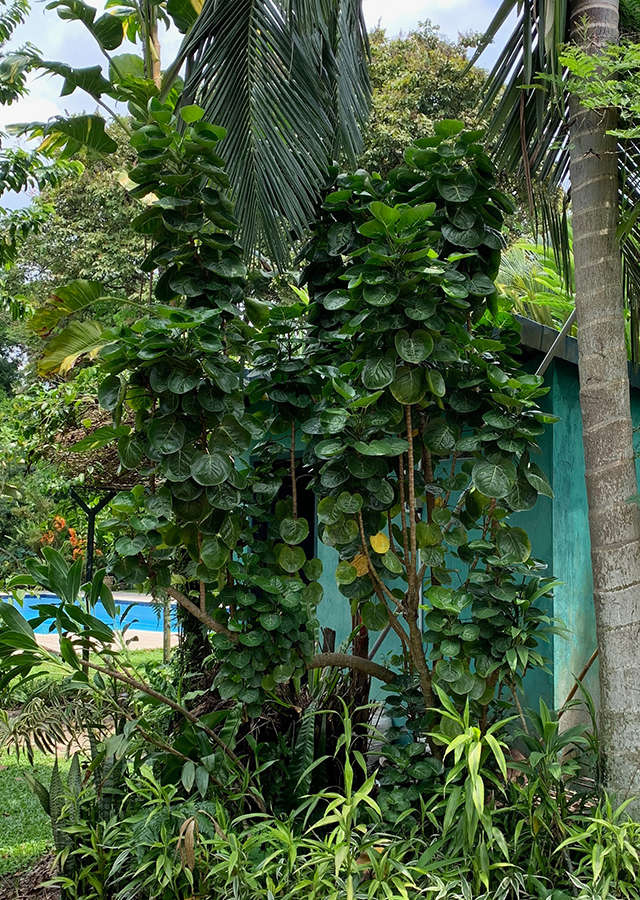
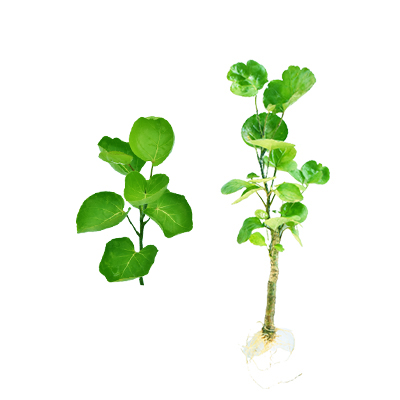
Shrubs. A much-branched evergreen shrub or small tree growing from 1-3 m tall
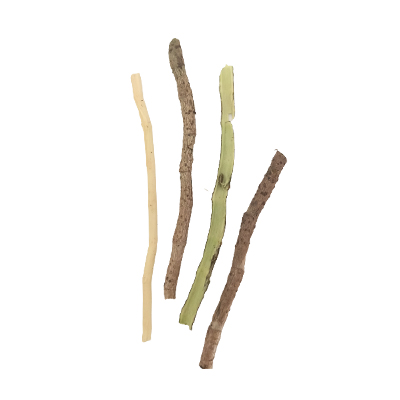
Part Used
 Leaves
 Bark
Bark Roots
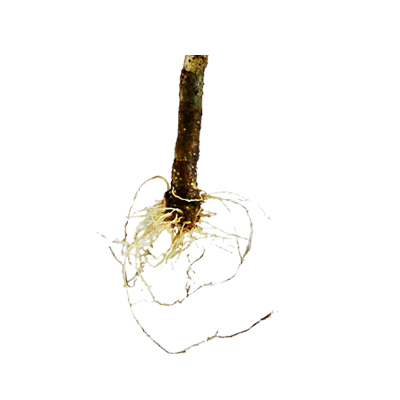
Roots
Growing Requirements
 Full Sunshine
 Need Shade
Habitat
 Terrestrial
Overview
Shield aralia is originated from Malayan. This plant is rarely flowers in South East Asia. It is commonly planted as ornamental plant, valued especially for its showy foliage. The plant is harvested from the wild for local use as food and medicine.
Vernacular Names
Yuan ye nan yang shen (Chinese), Semangkok (Malaysia), Krut kra thong (Thailand), Dinh lang dia (Vietnamese), Danidani (Fiji Island), Platito (Philippines).
Agroecology
This plant succeeds in full sun to partial shade. Adaptable to most soils as long as they are well-drained. It prefers a fairly sunny to half-shady situation in fairly moist soil, although they do not actually need a high light environment, leaf edges may turn brown in too much sunlight.
Morphology
- Stems - woody, branched, round, long and straight.
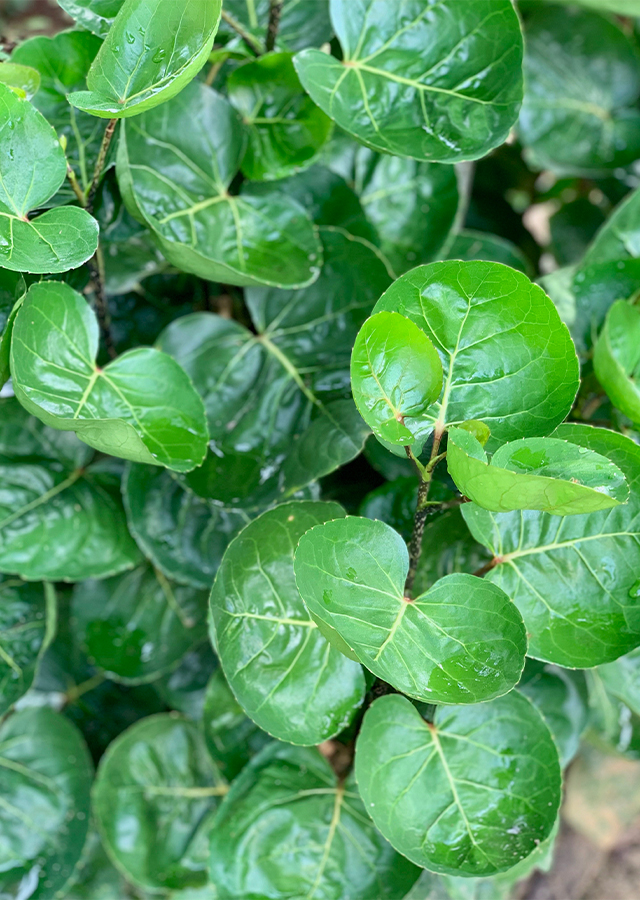
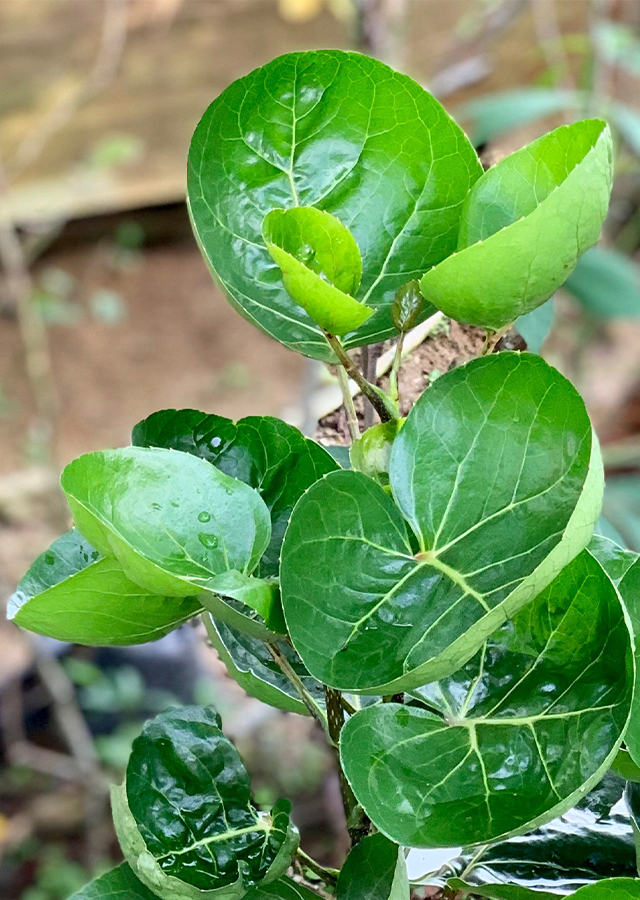
- Leaves - simple, somewhat rounded and concave, saucer-like, 6 to 12 cm wide, heart-shaped at the base and distantly toothed in the margins.
- The inflorescence - terminal, erect, a panicle of umbels; primary axis 30-100 cm; secondary axes 15-30, in 2-4 verticils, 15-50 cm.
- Fruits - infrequently seen, subglobose to depressed-globose (somewhat triangular to quadrangular when 3 or 4-carpellate), 4-6 mm high.
Cultivation
Propagation by stem tip cuttings.
Chemical Constituents
Ascorbic acid, phenol, carotenoids, beta carotene, polyciasaponin, alkaloids, flavonoid, tannin, proxidase, anthocyanin.
Traditional Medicinal Uses
- Studies have shown hair growth activity, wound healing, lipid peroxidation inhibition, and antibacterial/acinetobacter/body odor.
- The leaves and the roots, combined with parsley, are used as a diuretic.
- The juice of the leaves has been used to relieve stomach aches and facilitate childbirth.
- In Indonesia, leaf juice mixed with coconut oil and turmeric, applied over breast engorgement. Coconut oil with leaf juice of N. scutellarium is gently massaged to the scalp to promote hair growth. Shoots and leaves used for urinary problems.
- In the Western Pacific, macerated bark used for treatment of ciguatera poisoning.
- In Papua New Guinea, leaves are used as stimulant.
Part Used
Reference Sources
- Fern, Ken. (2014). Useful Tropical Plants Database. Polyscias scutellaria. http://tropical.theferns.info/viewtropical.php?id=Polyscias+scutellaria. 27-01-2021.
- Globinmed. (No date). Polyscias scutellaria (Burm.f.) Fosberg. https://www.globinmed.com/index.php?option=com_content&view=article&id=105877:polyscias-scutellaria-burm-f-fosberg&catid=286&Itemid=357. 27-01-2021.
- Some Magnetic Island Plants. (No date). Polyscias scutellaria. https://somemagneticislandplants.com.au/dinner-plate-aralia. 27-01-2021.
- Stuart Xchange. (2016). Philippine Medicinal Plants. Platito. http://www.stuartxchange.org/Platito.html. 27-01-2021.