Agathi
Sesbania grandiflora (L.) Poir.
Fabaceae
Location in our garden
Principal

Synonym
Aeschynomene grandiflora (L.) L.
Agati grandiflora (L.) Desv.
Agati grandiflora var. albiflora Wight & Arn.
Habitus

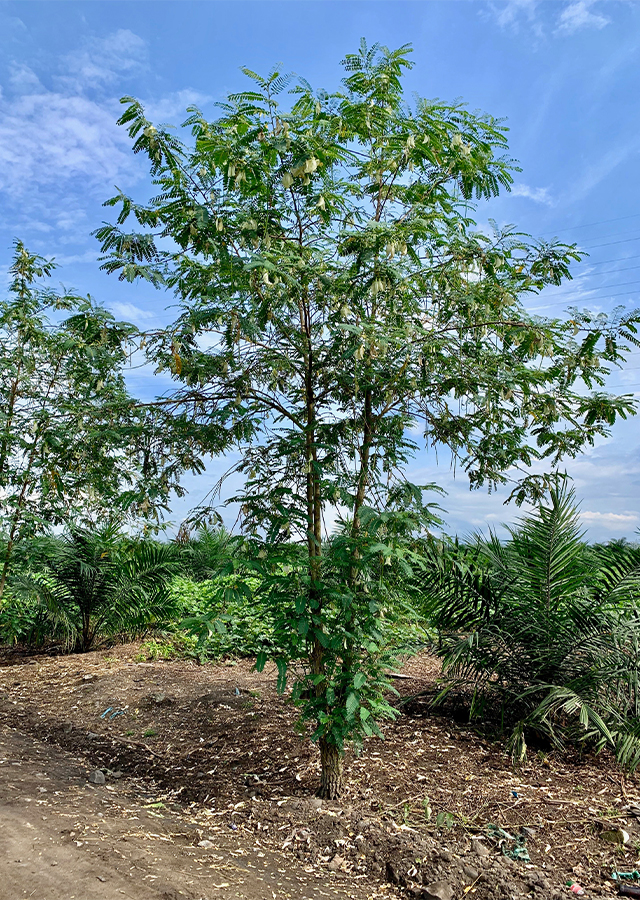
Trees. A perennial tree, loosely-branching tree with a rather open crown that can grow 8 -15 m tall.
Part Used
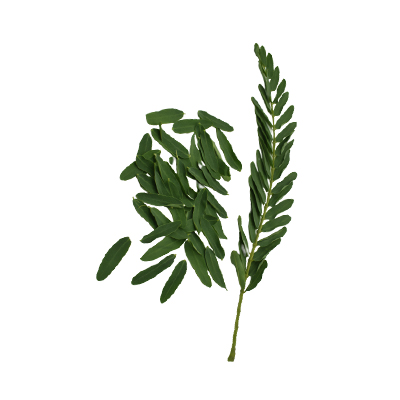
 Leaves
 Seeds
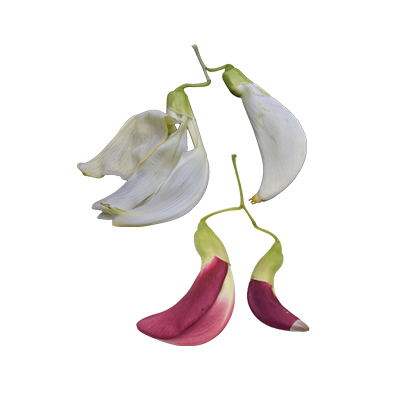
Seeds Flowers
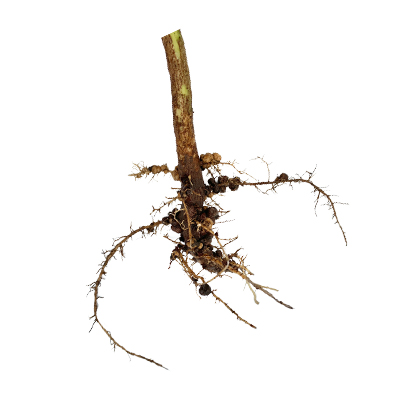
 Roots
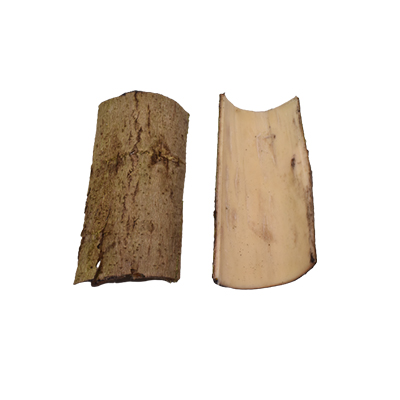
Roots Stem
Stem
Growing Requirements
 Full Sunshine
Habitat
 Forest
 Coastal
 Roadside
 Shrublands
 Grassland
Overview
The species is native to South Asia and South-East Asia with possibly Indonesia as the centre of diversity. A true multi purpose tree, providing a range of foods, medicines, timber, and gum. The plant is cultivated in many tropical areas as an ornamental, a green manure crop, and in soil reclamation schemes.
Vernacular Names
Saysabān (Arabic), Mu tian jing (Chinese), Agati (Dutch), Kolibribaum (German), Hadaga (Indian), Agachi (Japanese), A ga ti (Korean), Katuray (Philippines), Dok khae (Thai), So đũa (Vietnamese).
Agroecology
It succeeds at elevations below 1,000 m with a mean annual temperature in the range 22-30 °C, and a mean annual rainfall of 2,000 - 4,000 mm. Requires a sunny position for best growth. It succeeds in light sandy, medium, heavy clayey, pH in the range 5.5-8.5.
Morphology
- Roots - heavily nodulate.
- Stems - straight, cylindrical bole can be 25 to 30 cm in diameter, open-branched, softwooded.
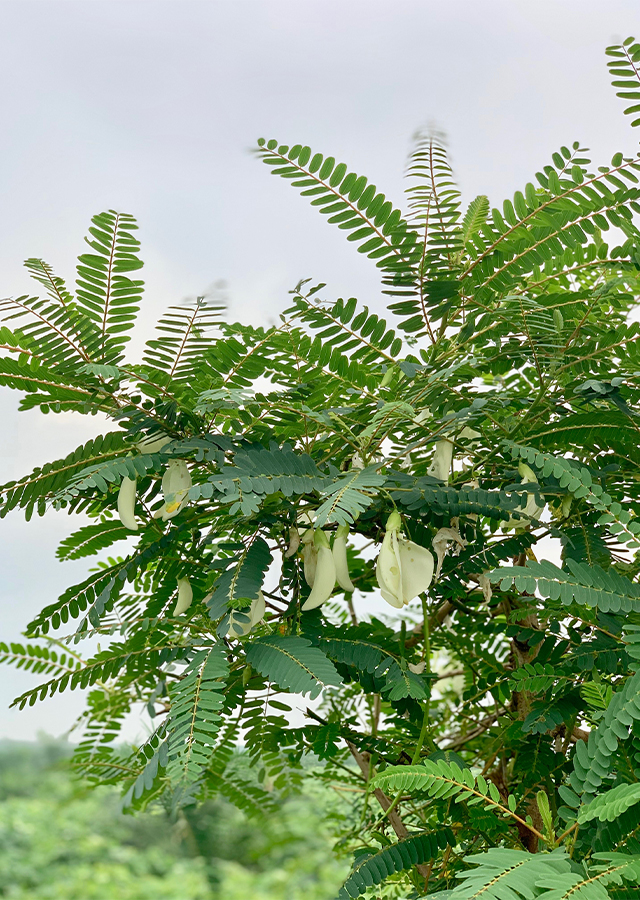
- Leaves - pinnate, 20 to 30 cm long, with 20 to 40 pairs of leaflets which are 2.5 to 3.5 cm long.
- Flowers - white, 7 to 9 cm long.
- Pods - linear, 20 to 60 cm long, 7 to 8 mm wide, green, containing 15 to 50 seeds.
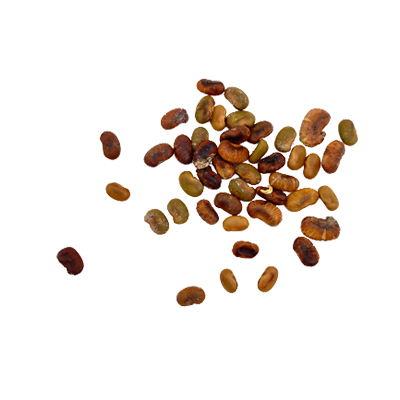
- Seeds - sub-reniform, 6.5 mm × 5 mm × 3 mm, dark brown.
Cultivation
- Generative propagation is by seed.
- It has a hard seedcoat and may benefit from scarification before sowing to speed up germination.
- Vegetative propagation is by cuttings of half-ripe wood.
Chemical Constituents
- Leaves and flowers: fibre, Ca, β-carotene, thiamine, riboflavin, niacin, and ascorbic acid.
- Seeds: palmitic, stearic, oleic, linoleic acids, saponin, and galactomannan.
- Bark contains tannin and gum.
- Flower yields tannins, oleanolic acid, kaempferol, cystine, isoleucine, aspargine, phenylalanine, valine, nicotinic acid.
- Flavonoids, alkaloids, tannins, glycosides, amino acids, saponins.
Traditional Medicinal Uses
- The leaves extract showed significant decrease in blood glucose, glycosylated hemoglobin, uric acid, and diminised activities of liver enzymes.
- The methanol flower extract exhibited maximum radical scavenging activity.
- Flowers inhibited cell proliferation and induced apoptosis in Dalton’s lymphoma ascites (DLA) and colon cancer cells.
- Flower extract exhibited into antibacterial activity against Bacillus cereus, Escherichia coli and Staphylococcus aureus.
- The flower exhibited growth-promoting effect on the common probiotic bacterium Lactobacillus acidophilus.
- In Java, bark is used for thrush.
- In Bombay, juice of leaves and flowers used for nasal catarrh and headaches.
- In India, flower extract used for nasal catarrh, headaches, gout, eczema, bronchitis, and pain; also as laxative and aperitif.