
Lawn pennywort
Hydrocotyle sibthorpioides Lam.
Araliaceae
Location in our garden
Principal
Synonym
Chondrocarpus sibthorpioides (Lam.) Sweet
Hydrocotyle confusa H.Wolff
Hydrocotyle ecostata Collett & Hemsl.
Habitus

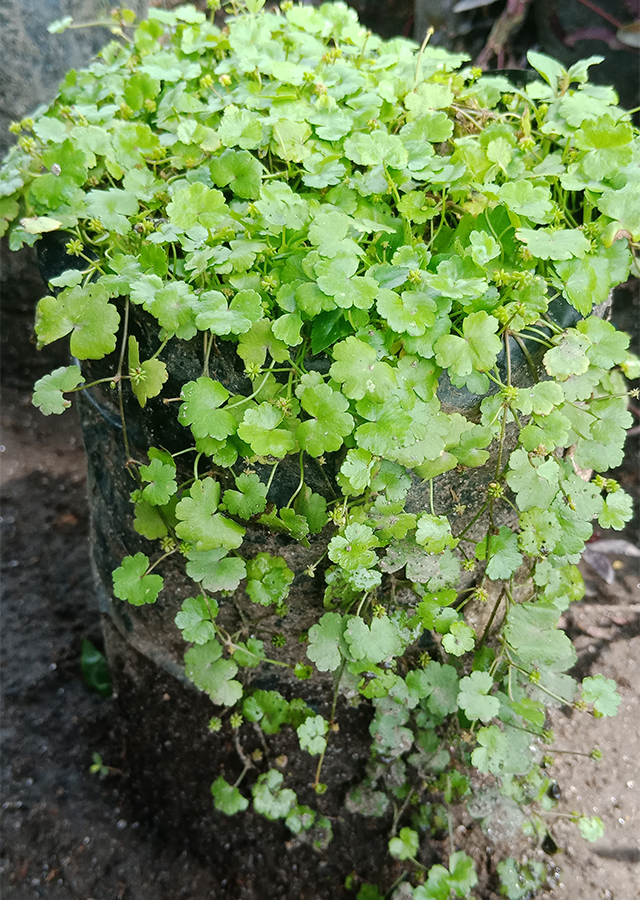
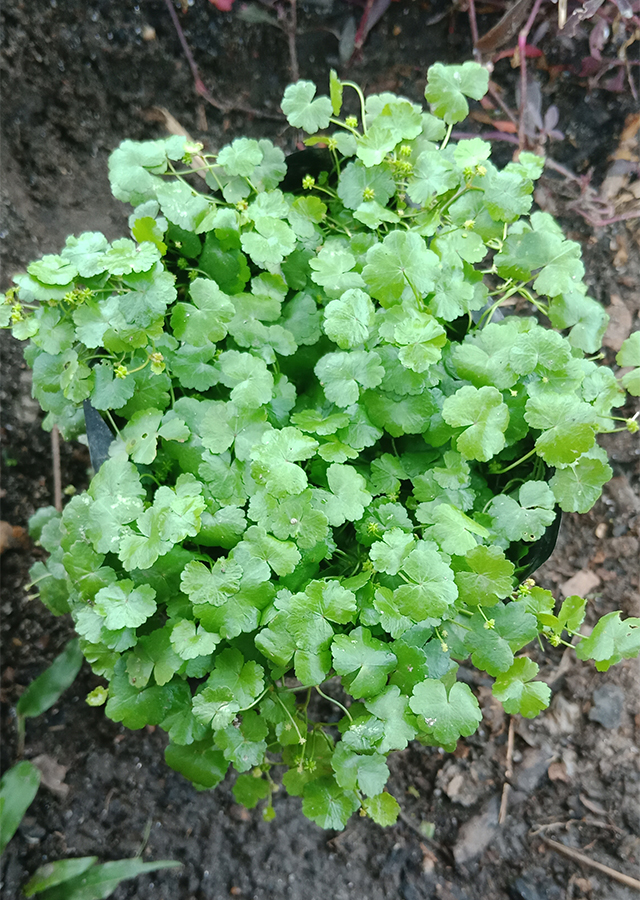
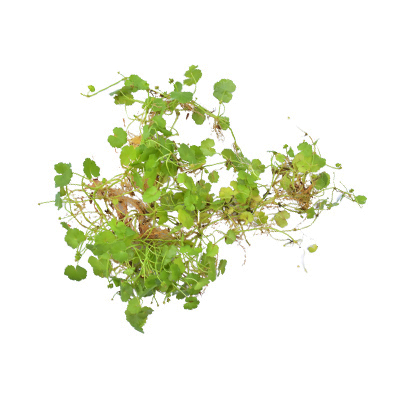
Climbers. Low-growing perennial plant, only reaches a height of 10 cm, slender, stoloniferous stems.
Part Used
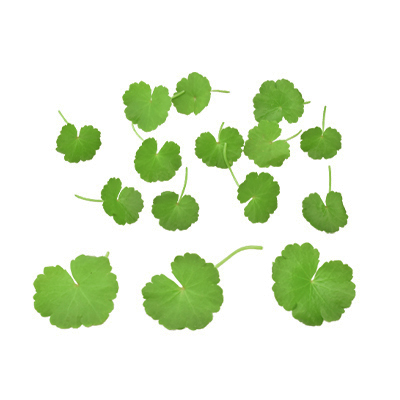
 Leaves
 Roots
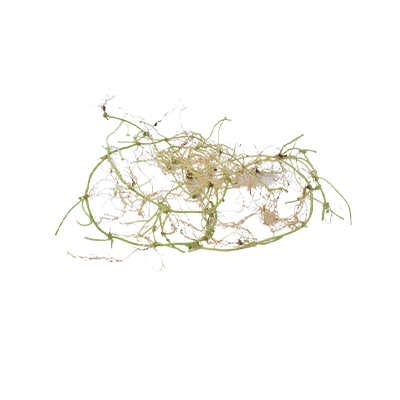
Roots Stem
Stem
Growing Requirements
 Need Shade
Habitat
 Riverbanks
 Forest
Overview
It is probably of Asiatic origin, its native range in tropical & subtropical old world. It is very common all over South-East Asia. Due to its limited dimensions, it is an insignificant weed in agriculture, but is sometimes used to bind topsoil. This plant is both eaten and used in traditional medicine.
Vernacular Names
Ulam gunung (Malaysia), Tomtomon (Philippines), Ya-klethoi (Thai), Rau má mơ (Vietnamese).
Agroecology
H. sibthorpioides is commonly found in slightly shaded or sunny area, moist localities, such as along stream banks, between stones in pathways, alongside walls, but also found in plantations of tree crops and in meadows. It has a wide altitudinal adaptation, occurring from sea-level up to 4,000 m. Natural dispersal is by water animals and water
Morphology
- Stems -stoloniferous, slender filiform, whitish to brownish.
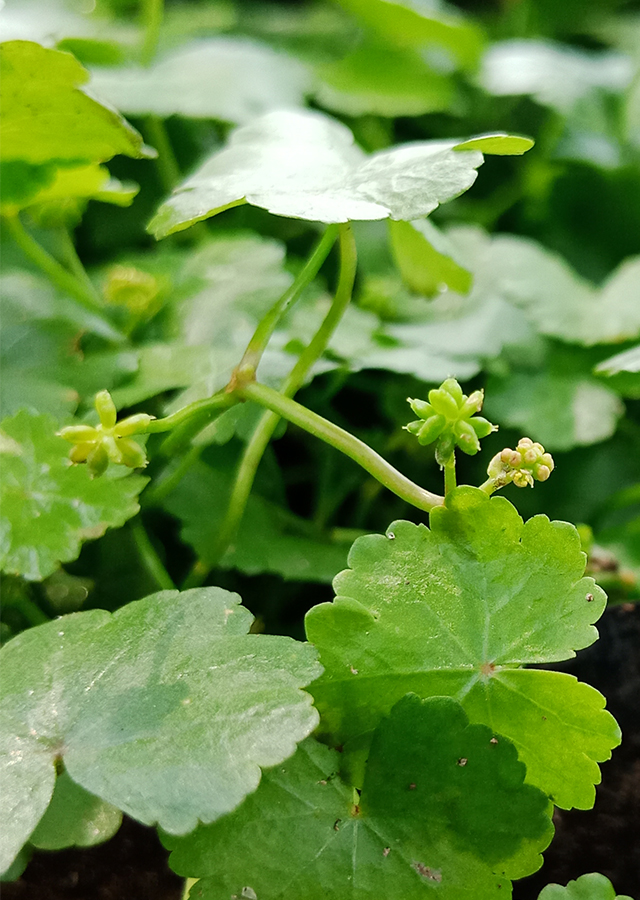
- Leaves - alternate, glabrous or with scattered flexuous hairs near the tip, petiole up to 6 cm long, leaf-blade roundish to 5-angular in outline, stipules ovate to obovate, not sheathing at base, glabrous, segments serrate to crenate.
- Flowers - solitary, opposite the leaves, bisexual, subsessile, calyx teeth 5, minute or obsolete, petals 5, ovate, greenish-white, disk flat, margin elevated, ovary inferior; stamens 5, alternate. Styles 2.
- Fruits - greenish to yellowish-brown sometimes red-punctulate, broadly ellipsoid, base broadly and shallowly cordate, apex deeply emarginate, laterally compressed schizocarp, mericarp 1-1.3 mm × 0.8 mm, with 2 one-seeded mericarps, with short stiff hairs or glabrous.
Cultivation
- Generative propagation is by seeds - sowing it in a cold frame. When they are large enough to handle, prick the seedlings out into individual pots and grow them on in the greenhouse.
- Vegetative propagation is by division - division of rooted runners can be done at any time in the growing season if the plants are kept moist.
Chemical Constituents
- Phenolics, flavonoid, alkaloid, terpenoid (A lignan, L-sesamin, caffeoylgalactoside), daucosterol, genistein, coumarin, hyperin, saponins, hydrocotylosides, stigmasterol, hibalactone, daidzein, protocatechuic acid, caffeic acid, isorhamnetin, quercetin, catechin, epicatechin, and chlorogenic acid
Traditional Medicinal Uses
Medicinal Uses
- The plant is considered depurative, febrifuge, expectorant, antitussive, antifebrile, and diuretic.
- Studies have suggested antioxidant, antiproliferative, immunomodulatory, hepatoprotective properties, anti-cancer, antiviral, antibacterial, anti-fungal and hepatoprotective.
Traditional Uses
- The juice of the plant is used in the treatment of fevers.
- A paste made from the plant is applied externally to wounds and boils.
- The plant is decocted and used in the treatment of abscesses, boils, bruises, cirrhosis, colds, coughs, hepatitis, hepatoma, influenza, itch, jaundice, sinusitis, and sore throat.
- It is a Chinese herbal drug for hepatoma.
Part Used
Reference Sources
- Hazarika, I., Mukundan, G. K., Sundari, P. S., & Laloo, D. (2021). Journey of Hydrocotyle sibthorpioides Lam.: From traditional utilization to modern therapeutics—A review. Phytotherapy Research, 35(4), 1847-1871.
- Kumari, S., Elancheran, R., Kotoky, J., & Devi, R. (2016). Rapid screening and identification of phenolic antioxidants in Hydrocotyle sibthorpioides Lam. by UPLC–ESI-MS/MS. Food chemistry, 203, 521-529.
- https://powo.science.kew.org/taxon/urn:lsid:ipni.org:names:843698-1
- https://uses.plantnet-project.org/en/Hydrocotyle_sibthorpioides_(PROSEA)