
Cacao tree
Theobroma cacao L.
Malvaceae
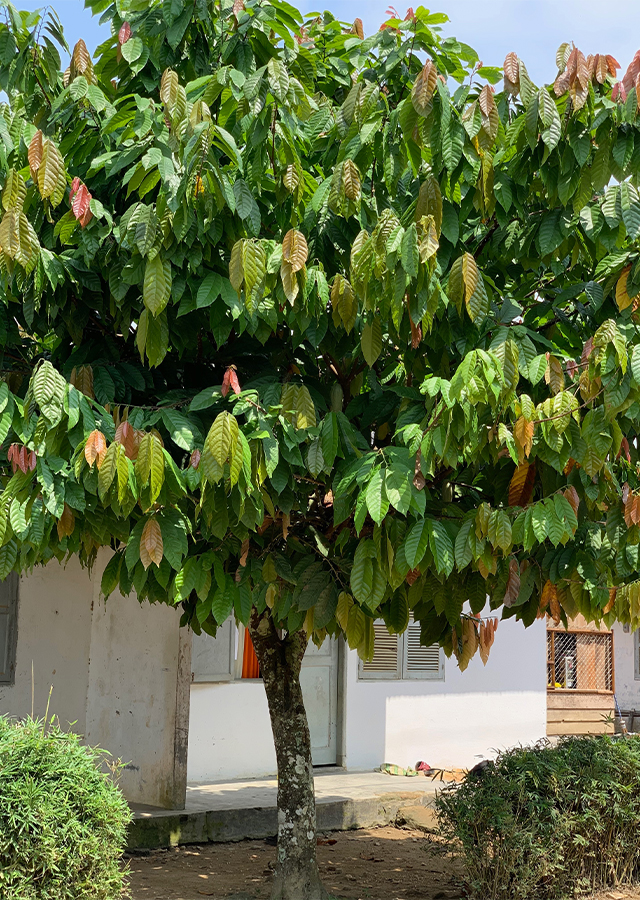
Location in our garden
Orchard
Synonym
Cacao minus Gaertn.
Cacao sativa Aubl.
Cacao theobroma Tussac
Habitus

Trees. An evergreen perennial tree, usually growing about 8 m tall, can reach 20 m in heights.
Part Used
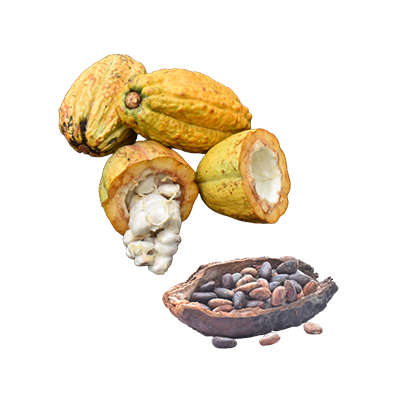
 Young pods
 Shoots
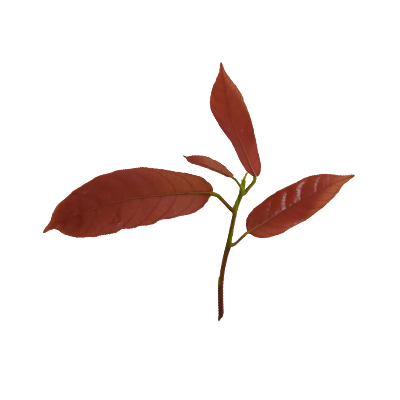
 Leaves
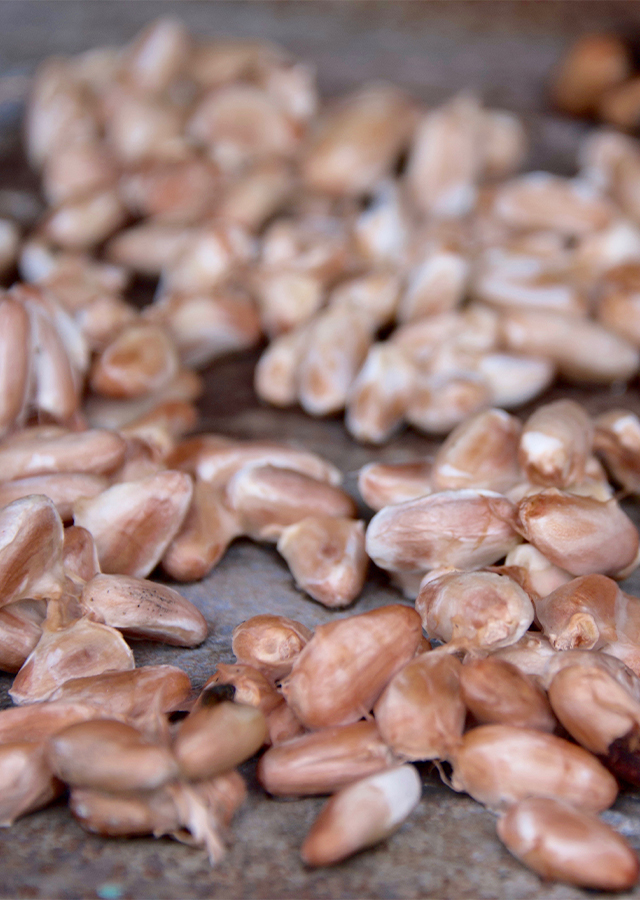
 Seeds
Seeds
Growing Requirements
 Need Shade
Habitat
 Forest
Overview
Cacao tree is native to tropical South and Central America, where since prehistoric times it has been cultivated. It was first cultivated in 250-900 AD by the ancient civilization in the Mesoamerican region of the Mayas and Aztecs, and from there the cultivation of cacao spread throughout the tropics. Due to the scarcity and importance of the seeds, the cacao tree is known worldwide for being the raw material of chocolate and the main fruit of the genus cultivated.
Vernacular Names
Ke ke shu (Chinese), Cacaotier (French), Kakaobaum (German), Cacao (Italian), Pohon coklat (Malaysia), Kokoe (Myanmar), Kakaw (Philippines), Kho kho (Thai), Pohon cokelat (Indonesia)
Agroecology
Cocoa is a tree of the lowland tropics, usually found below 300 m but occasionally found as high as 900 m. It succeeds where the mean annual temperature is in the range of 18-28.5 °C. An annual rainfall level between 1,5002,000 mm is suitable, though it is reported to tolerate an annual precipitation of 480-4,300 mm. Cacao requires a fertile, moisture retentive but well-drained soil, in sun or part shade in a position, sheltered from the wind. Prefers on acid soil, with pH in the range of 5-6.5, but tolerating 4-8.
Morphology
- Roots - taproot, consists of pivoting root, can grow up to 2 m.
- Stems - erect, in the first years presents smooth stems bark, then becomes rough and rugged.
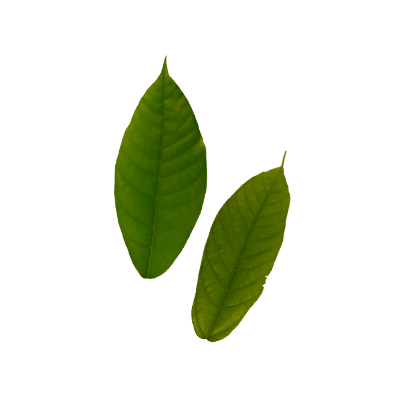
- Leaves - alternate, entire, oblong-ovate to oblong, 15-40 cm long, 5-20 cm wide with pointed tip and rounded base.
- Flowers - solitary or fascicled on the trunk and branches, yellowish or nearly white, about 1 cm in diameter.
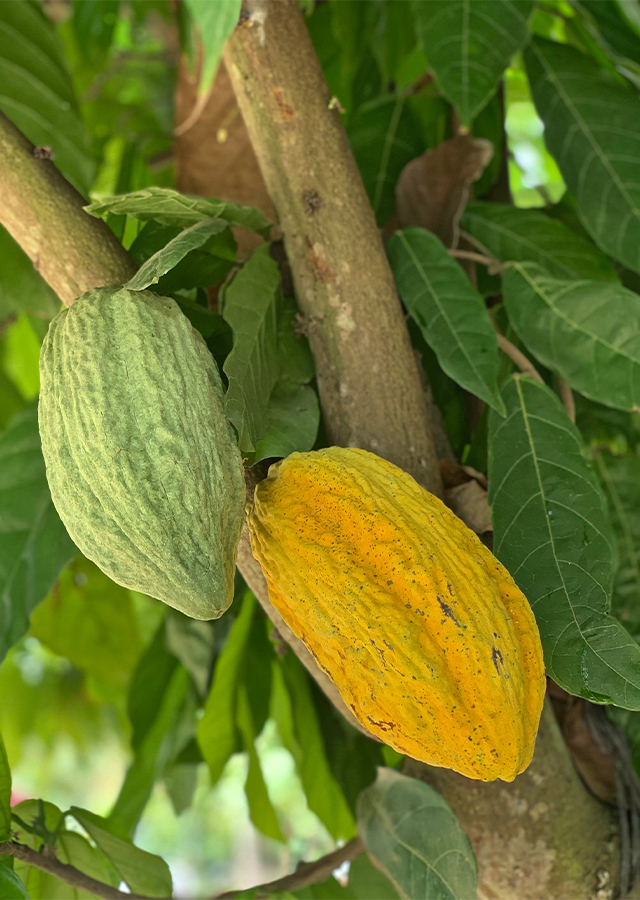
- Fruits - oblong, 10-15 cm long, prominently wrinkled, yellow or purplish.
- Seeds - numerous and embedded in whitish pulp.
Cultivation
- By seeds.
- Vegetative propagation is by air layering, cutting of leaf-bud and grafting.
Chemical Constituents
Thiamin, riboflavin, pyridoxine, nicotinamide, amino acid, p-hydroxybenzoic acid, p-coumaric acid, vanillic acid, ferulic acid, protocatechuic, phenylacetic, phenylethylamine, theophylline, volatile compounds, theobromine, caffeine, triglyserida, linoleic acid, sterolpoli, phenol and flavonoids.
Traditional Medicinal Uses
- The seed contains a number of medically active constituents that activate the nervous system, lower blood pressure and dilate the coronary arteries, fixed oil and endorphins.
- It will help to counter the bacteria.
- Oil or cacao butter is used to soften and preserve damaged skin, is an excellent emollient and nutrient (chapped hands and lips).
- Cacao powder is taken internally in the treatment of angina and high blood pressure.
- An infusion of the dry pods is used to decrease leprosy spots.
Part Used
Reference Sources
- CABI. (No date). Invasive Species Compendium. Theobroma cacao (cocoa). https://www.cabi.org/isc/datasheet/53662. 26-07-2020.
- Fern, Ken, (2014). Useful Tropical Plants: Theobroma cacao. http://tropical.theferns.info/viewtropical.php?id=Theobroma+cacao. 11-12-2020.
- Nair, K.P. (2010). The Agronomy and Economy of Important Tree Crops of the Developing World, Chapter 5: Cocoa (Theobroma cacao L), (pp131-180). 27-07-2020.
- PROSEA. Theobroma cacao (PROSEA) - PlantUse English. https://uses.planet-project.org/en/Theobroma_cacao_(PROSEA). 27-07-2020.
- Souza, P.A. (2018). Exotic Fruits, Cacao-Theobroma cacao. (pp69-76). https://www.sciencedirect,com/science/article/pii/B9780128031384000101. 27-07-2020.
- Stuart Xchange. (2016). Philippine Medicinal Herbs: Kakaw/Theobroma cacao. http://www.stuartxchange.com/Kakaw.html. 27-07-2020.