
Chili pepper
Capsicum annuum L.
Solanaceae
Location in our garden
Vegetable
Synonym
Piper indicum Garsault
Capsicum abyssinicum A.Rich.
Capsicum angulosum Mill.
Habitus

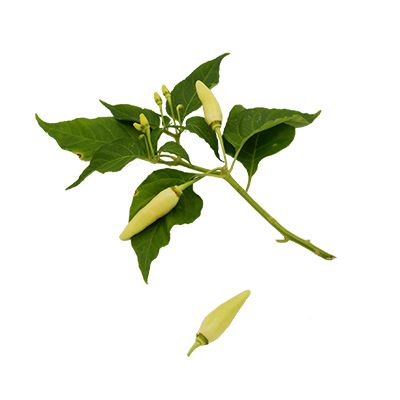
Shrubs. A small, branched, annual or perennial herbaceous shrub, 30 to 80 cm tall
Part Used
 Leaves
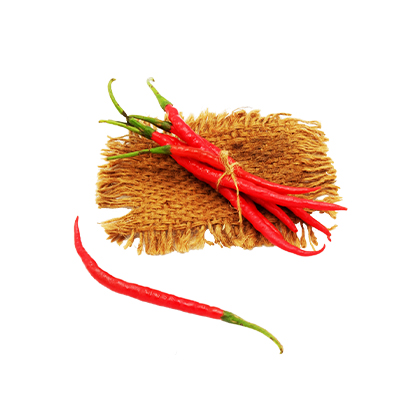
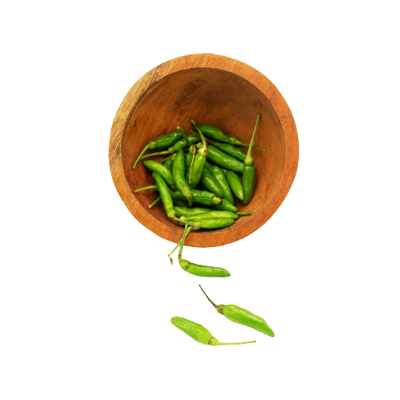
 Fruit
Fruit
Growing Requirements
 Full Sunshine
Habitat
 Terrestrial
Overview
In Mexico and Northern Latin America, chili pepper has its center of diversity. It was spread around the world, where it is now commonly cultivated as a spice and medicine.
Vernacular Names
Cabe (Indonesia), Chiao-tzu (Chinese), Paprika (Dutch), Piment annuel (French), Cayennepfeffer (German), Molar (India), Banshō (Japanese), and Cili (Malaysia).
Agroecology
They prefer a temperature about 21-25 °C, not growing well if temperatures is above 32 °C. Plants generally require constant warm weather if they are to perform well. An annual rainfall of 600-1,200 mm is considered to be sufficient. Excessive precipitation can decrease flowering and fruit setting, as well as promote diseases.
Morphology
- Roots - a short or deep tap root.
- Stems - glabrescent and densely branched.
- Leaves - with a complete margin are ovate, oblong-ovate, or ovate-lanceolate, 4-13 cm by 1.5-4 cm.
- Flowers - small, white or purple-tinted.
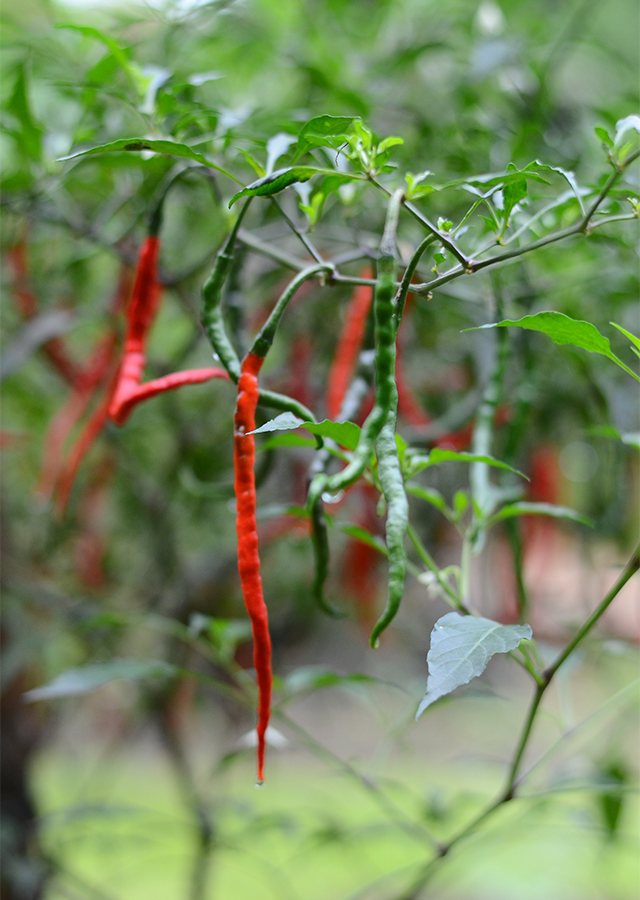
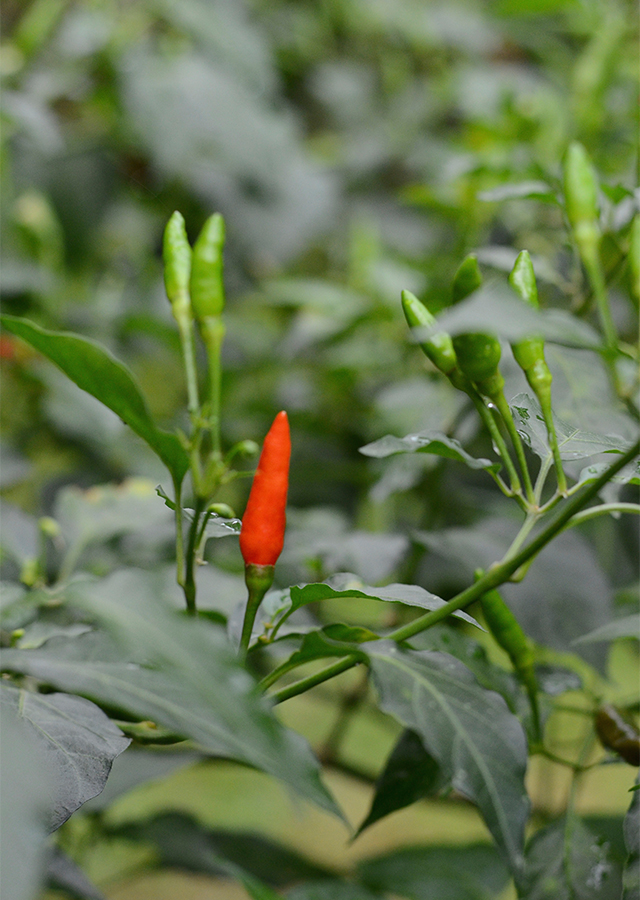
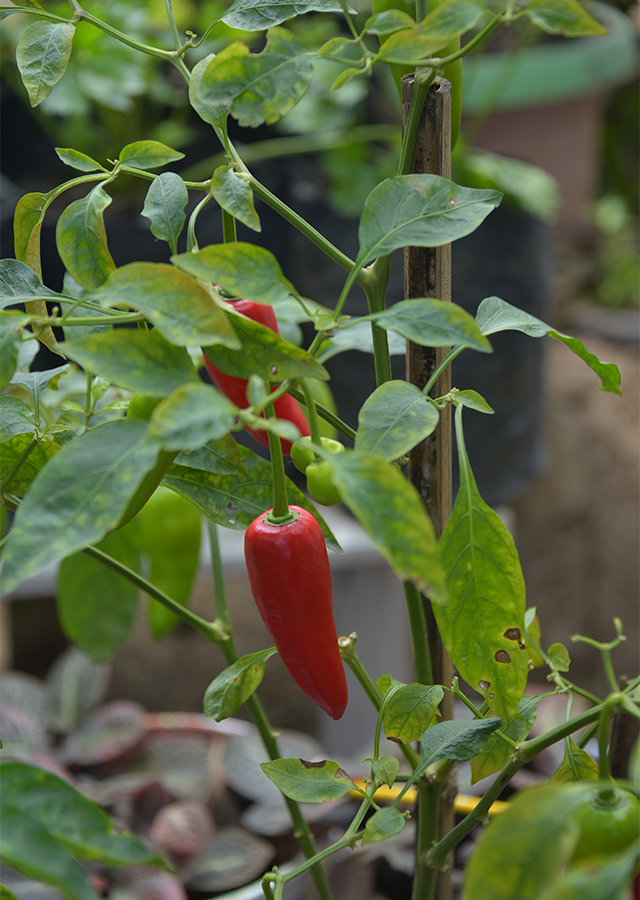
- Fruits - most of them are red, but they can be green, orange, yellow and up to 15 cm tall.
- Seeds - color are pale yellow, discoid or reniform and 3 to 5 mm.
Cultivation
- By seeds - the seed usually germinates in 3-4 weeks at 20 °C. Plant out into permanent positions when about 8-10 cm tall.
- By cuttings - rooting of cuttings was possible in a wide range of cultivars of sweet peppers, even if they were from mature plants that branched repeatedly. Medium sized shoots with a terminal internode shorter than 2 cm and the second internode longer than 4 cm, cut at the bottom of the second internode, rooted and grew most vigorously.
Chemical Constituents
Capsaicin, dihidrocapsaicin, flavonoids, caroten, capsarubin, zeasanthin, criptosantin, phenolic (lutein, capsaicinoids, quercetin), alkaloids, terpenoids, steroids, saponins.
Traditional Medicinal Uses
- Internally, it is used to treat the cold stage of fevers, convalescent or old age fatigue, varicose veins, asthma and digestive problems.
- It is used externally to treat sprains, unbroken chills, neuralgia, pleurisy, arthritis, lumbago.
- Effective to reduce sea-sickness.
- The fruits are used to enhance gastric tasks and improve blood circulation. It is also a carminative stimulant and is used locally for neuralgia, rheumatism, antihaemorrhoidal, antiseptic, diaphoretic, irritant, rubefacient, sialagogue.
- It has been approved for painful muscle spasms in the areas of the back, arm and spine.
- Childbirth-related uterine pain is treated with broth containing berries. The leaves are used to treat toothache.
- In Peninsular Malaysia, the root has been recorded as a decoction for treating gonorrhoea.
Part Used
Reference Sources
- CABI. (No date). Invasive Species Compendium. Capsicum annuum. https://www.cabi.org/isc/datasheet/15784. 19-01-2021
- Lim, T.K. (2013). Edible Medicinal and Non-Medicinal Plants: Fruits. Vol. 6: 161-196. Springer.19-01-2021
- Ling, K. H., Kian, C. T., and Hoon, T. C. (2009). A Guide to Medicinal Plants, An Illustrated, Scientific and Medicinal Approach. World Scientific Publishing Co. Pte. Ltd. (pp.36-37). 19-01-2021
- Fern, Ken (2019). Useful Tropical Plants Database. Capsicum annuum. http://tropical.theferns.info/viewtropical.php?id=Capsicum+annuum. 19-01-2021
- Researchgate. (2004). Capsicum annuum. https://www.researchgate.net/publication/251010124_A_Multiplication_Method_of_Sweet_Pepper_Capsicum_annuum_L_by_Vegetative_Propagation. 19-01-2021
- Stuarxchange. (2020). Philippine Medicinal Plants. Siling-labuyo. http://www.stuartxchange.org/SilingLabuyo. 19-01-2021