
Redflower ragleaf
Crassocephalum crepidioides (Benth.) S.Moore
Asteraceae
Location in our garden
Principal


Synonym
Crassocephalum diversifolium Hiern
Gynura crepidioides Benth.
Gynura diversifolia Sch.Bip. ex Asch.
Habitus

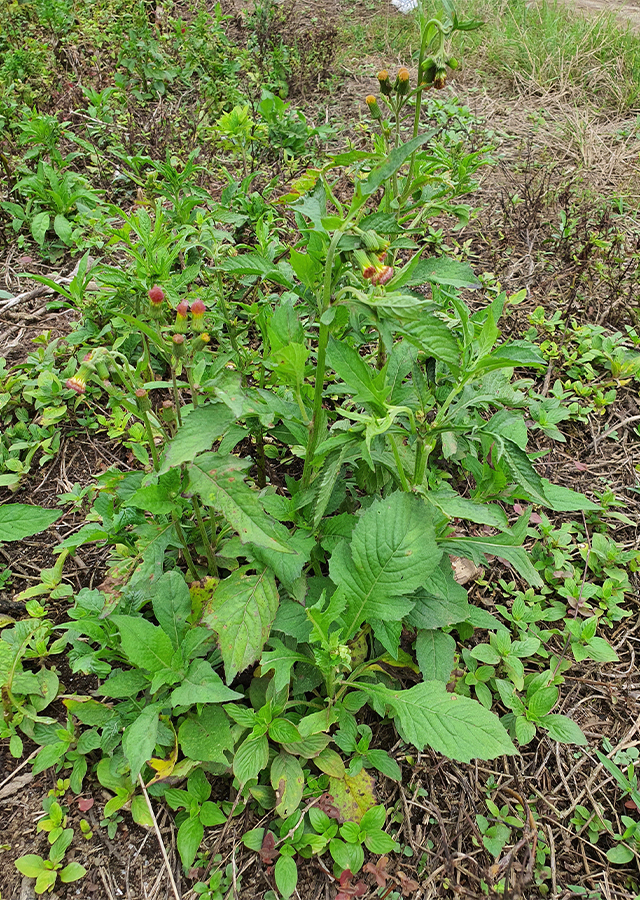
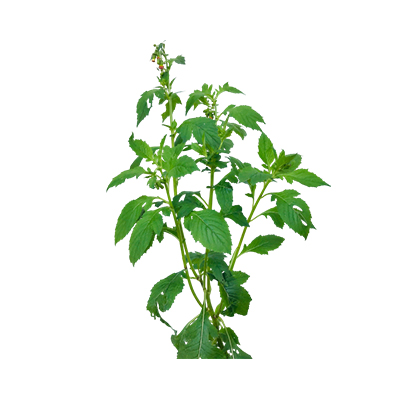
Herbaceous. An erect, sparingly branched, aromatic annual or rarely a short-lived perennial herb, growing up to 150 cm tall.
Part Used
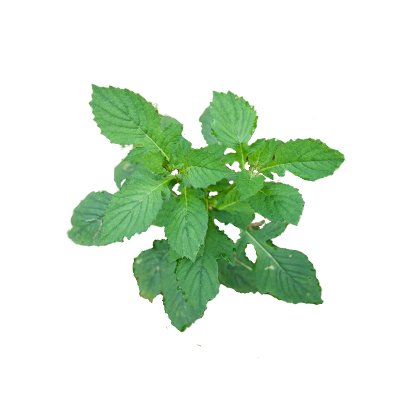
 Leaves
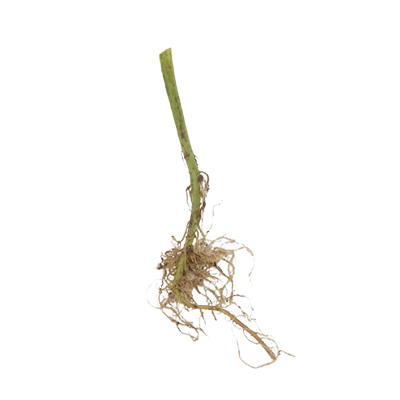
 Roots
Roots Sap
Sap Stem
Stem
Growing Requirements
 Full Sunshine
Habitat
 Riverbanks
 Roadside
 Rocky Areas
 Shrublands
 Grassland
Overview
Redflower ragleaf is native to tropical Africa and become widely distributed eastwards out of Africa and Madagascar into the East Indies, India, South-East Asia, and the Philippines. It is a pioneer species with the capability to produce large amounts of hairy wind-dispersed seeds. Sometimes, in the tropics this plant cultivated and consumed as a nutraceutical vegetable and also used as traditional medicine.
Vernacular Names
Sintrong (Indonesian), Ye tong hao (Chinese), Ebolo (French, Nigerian), Benibanaborogiku (Japanese), Borbotak, Bulak manok (Philippines), Eyukula (Portuguese), Phak pet maeo (Thai), Thick head (Papua New Guinea).
Agroecology
This plant often cultivated as a food crop in the tropics, it has light, plumed seeds that are easily distributed by the wind. Especially suited to shady localities in home gardens and tree plantations. It grows well in soils that are rich in organic matter, light (sandy) and medium (loamy) soils and prefers well-drained soil, with suitable pH: acid, neutral and basic (alkaline) soils. It can grow in full shade (deep woodland), semi-shade (light woodland) or no shade.
Morphology
- Stems - rather stout, soft, ribbed, apically with short, thick hairs, lower down glabrescent, branches densely pubescent.
- Leaves - fleshy and mucilaginous, base tapered and often long-decurrent into the petiole, uppermost leaves smaller, sessile.
- Flowers - heads are cylindrical, green, with red florets visible on top.
- Fruits - dark brown, achenes 1.8–2.7 mm long, ribbed, shortly hairy between the ribs; pappus 7–13 mm long.
Cultivation
- Propagation is done by seeds and cuttings. The seedlings are planted in beds with a height of 8–10 cm with a spacing of 30 cm × 30 cm.
Chemical Constituents
- Tannins, coumarins, combined anthracene derivatives, c-heterosides, flavonoids, mucilage, steroids, pyrrolizidine alkaloids jacobine, jacoline, and myrcene.
Traditional Medicinal Uses
- Studies have shown anti-tumour, antioxidant, antidiabetic, hepatoprotective, radical scavenging properties, antimicrobial, and anti- inflammatory.
- The leaves are used to treat indigestion. Leaf lotion or plant decoction is used to treat headaches and stomach pains.
- The dried leaf powder is applied as a snuff to stop nose bleeding and smoked to treat sleeping sickness.
- The leaf sap used to treat stomach upsets and fresh wounds. a mixture of the leaf sap, combined with Cymbopogon giganteus, is used orally and externally for the treatment of epilepsy.
- The roots used to treat swollen lips.
- In India, Nepal and China, plant is used for wound healing and diarrhea.
Part Used
Reference Sources
- Adjatin, A., Dansi, A., Badoussi, E., Loko, Y.L., Dansi, M., Azokpota, P., Gbaguidi, F., Ahissou, H., Akoègninou, A., Akpagana, K. & Sanni, A. (2013). Phytochemical screening and toxicity studies of Crassocephalum rubens (Juss. ex Jacq.) S. Moore and Crassocephalum crepidioides (Benth.) S. Moore consumed as vegetable in Benin. International Journal of Current Microbiology and Applied Sciences. 2(8):1-13.
- Hung, N.H., Satyal, P., Dai, D.N., Tai, T.A., Huong, L.T., Hong Chuong, N.T., Hieu, H.V., Tuan, P.A., Vuong, P.V. & Setzer, W.N. (2019). Chemical Compositions of Crassocephalum crepidioides Essential Oils and Larvicidal Activities Against Aedes aegypti, Aedes albopictus, and Culex quinquefasciatus. Natural Product Communications. https://doi.org/10.1177/1934578X19850033