
Rodent Tuber
Typhonium flagelliforme (G.Lodd.) Blume
Araceae
Location in our garden
Principal

Synonym
Arum angulatum Griff.
Arum cuspidatum Blume
Arum divaricatum L.
Habitus

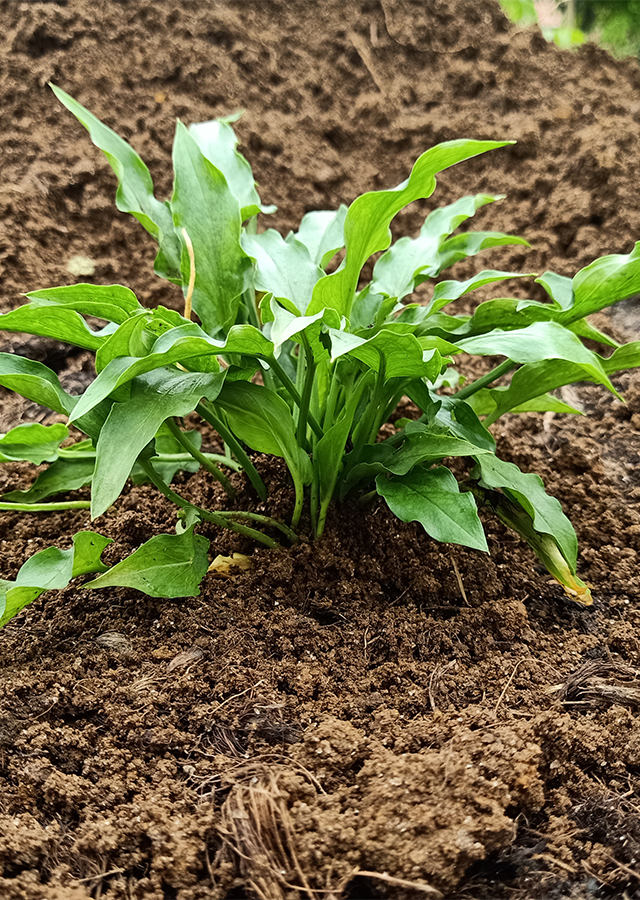
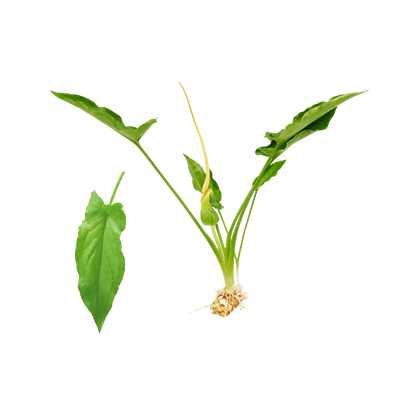
Herbaceous. A tuberous, erect, herbaceous, that grows up to 30 cm in height.
Part Used
 Leaves
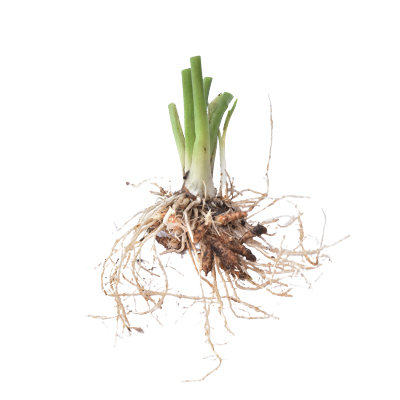
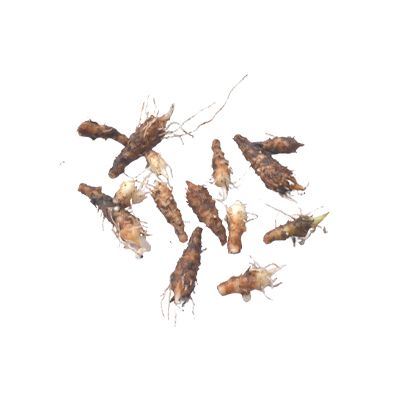
 Tuber
Tuber The Whole Plant
Growing Requirements
 Need Shade
Habitat
 Aquatic
 Wetland
 Riverbanks
 Terrestrial
Overview
Rodent tuber (Typhonium flagelliforme) is often used as a traditional remedy for alternative cancer therapies, including leukemia, by various ethnic populations. Native to Southeast Asian countries, also distributed from southern India, Thailand, Bangladesh, Cambodia, Philippines, Myanmar, Sri Lanka, N. Australia. It is now commercially available as a healthcare supplement to cure breast, lung, rectum, liver, prostate, pancreas, and cervical cancers and leukemias.
Vernacular Names
Keladi tikus (Indonesia), Lao shu yu (Chinese), Nalenschena major (India), and Birah taecchil (Singapore).
Agroecology
Found in disturbed wastelands and damp shady habitats; in shallow water by streams, water fields, and moist meadows, often in ditches and along field margins, less often in wet open forest, 0 to 350 m asl.
Morphology
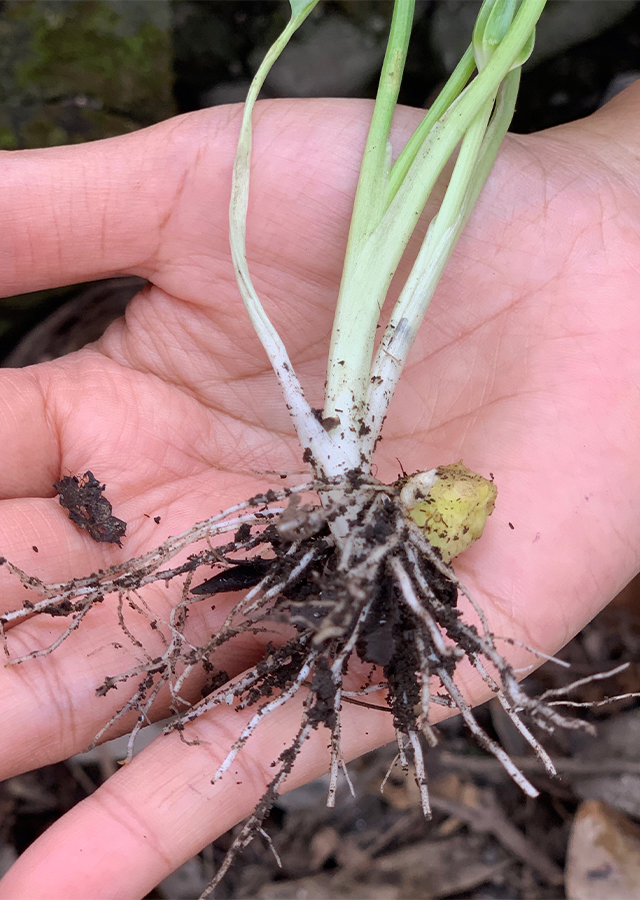
- Rhizome - short, tuberous, whitish, depressed, 1-2 cm long.
- Leaves - variable, 5 to 25 by 0.5 to 18 cm, linear, lanceolate, elliptic, or hastate.
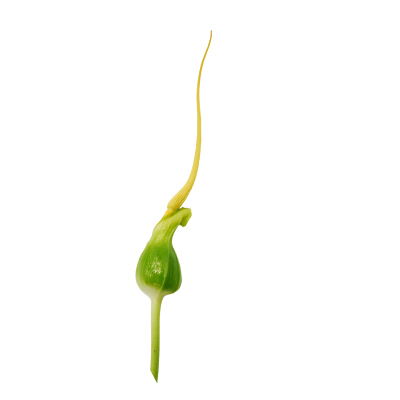
- Flowers - appears alongside leaves, with 5 to 20 cm peduncle. The spathe is convolute at the base, green, ovoid, globose, or depressed, 1.5 to 3.5 by 1.2 to 2 cm. The spadix is divided into four portions, terminated with a lemon yellow rodent tail-like appendix.
- Berries - pale greenish, two - or three-seeded.
Cultivation
Propagation is by dividing tubers and seeds.
Chemical Constituents
Stigmasterols, saponins, steroids or triterpenoid, coumarins, terpenoid compounds, kaempferol, β-sitosterol, pheophorbide-a, pheophorbide-a, pyropheophorbide-a, methyl pyropheophorbide-a, oleic acid, linoleic acid, linolenic acid.
Traditional Medicinal Uses
- Studies have suggested anti-cancer, anti-leukemic, apoptotic, anti-tussive, anti-asthmatic, analgesic, anti-inflammatory, sedative, immunomodulatory, antioxidant, antibacterial, phytoremediation properties.
- In the Philippines, it is used to stop bleeding.
- It is traditionally used as a treatment for cancer, including leukemia.
- Used as a cough suppressant, treatment of asthma, and respiratory ailments.
- Used for traumatic injuries and abscesses.
Part Used
Reference Sources
- Imelda, M. (2003). Perbanyakan in-vitro Keladi tikus (Typhonium flagelliforme (Lodd) Bl.), tanaman yang berpotensi sebagai obat kanker. Berita Biologi 6(4): 569-573.
- Mohan, S., Bustamam, A., & Ibrahim, S., et al. (2011). In vitro ultramorphological assessment of apoptosis on CEMss Induced by linoleic acid-rich fraction from Typhonium flagelliforme tuber. Evidence-Based Complementary and Alternative Medicine 2011: 421894.
- Plants of the World Online. (2021). Plants of the World Online Database: Typhonium flagelliforme. Kew Royal Botanic Gardens. https://powo.science.kew.org/taxon/urn:lsid:ipni.org:names:89233-1 (Accessed 19-01-2021).
- StuartXchange. (2019). Philippines Medicinal Plants: Rodent tuber. StuartXchange Web. http://www.stuartxchange.com/RodentTuber (Accessed 19-01-2021).