Javanese turmeric
Curcuma zanthorrhiza Roxb.
Zingiberaceae
Location in our garden
Principal

Synonym
Habitus

Herbaceous. An erect plant, robust, tillering and herbaceous perennial up to 1–2 m tall.
Part Used
 Rhizome
Growing Requirements
 Need Shade
Habitat
 Riverbanks
 Forest
 Shrublands
Overview
The species is native to Indonesia—Java, Bali, and Moluccas. Commonly cultivated in Java, Malaysia, Thailand, Vietnam, the Philippines, Yunnan in China, and also in India and Surinam. The plant has been used as a traditional medicinal plant; in some tropical countries, such as Indonesia and Malaysia, for food and medicinal purposes.
Vernacular Names
Curcuma (French), Kurkuma (German), Temu Raya (Malaysia), Temoe-lawak (Spanish), Wan-chak-mod-luk (Thai), Temulawak (Indonesia), Koneng Gede (Sundanese), Temu Lawak (Javanese), Temo Labak (Madurese).
Agroecology
In its native tropical range, it is found in thickets and teak forest in moist fertile, well-drained, humus-rich soil up to 750 m elevation.
Plants are adapted to growing in areas of seasonal drought in monsoonal forests. Prefers slightly shady conditions and demands a moist, fertile soil rich in humus.
Morphology
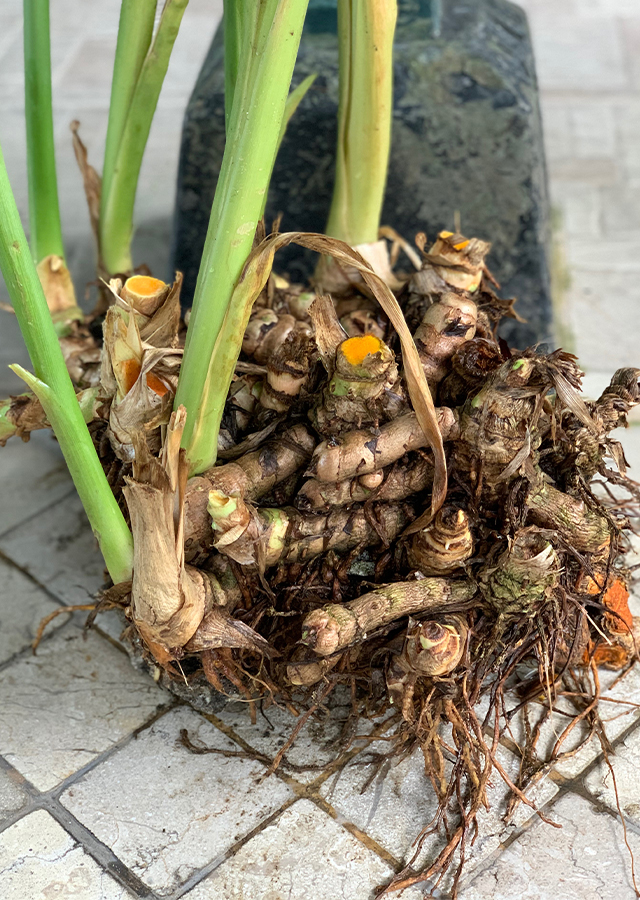
- Roots - short with large tubers, shape of root stock oblong, short, colour reddish-yellow.
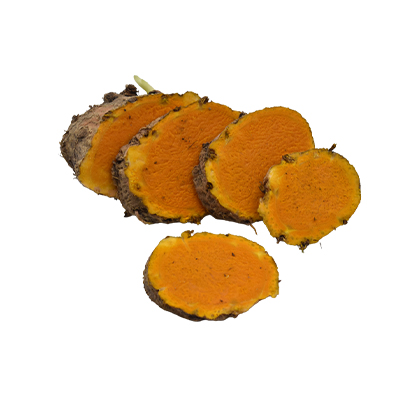
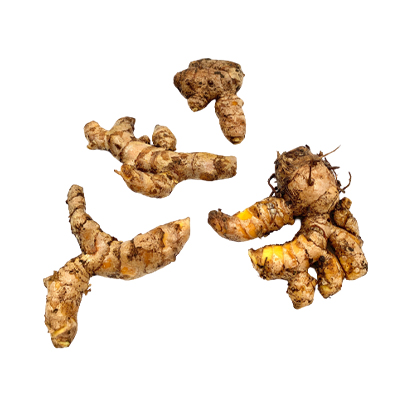
- Rhizome - branched, ovate, with both palmate and pendulous tubers deep/dark yellow, orange or orange-red inside, paler on younger parts, has pungent smell and bitter taste.
- Leaves - leaf sheats up to 75cm long. Blades elliptical-oblong to oblong lanceolate, 25-100cm x 8-20 cm, green with reddish-brown band along the midrib.
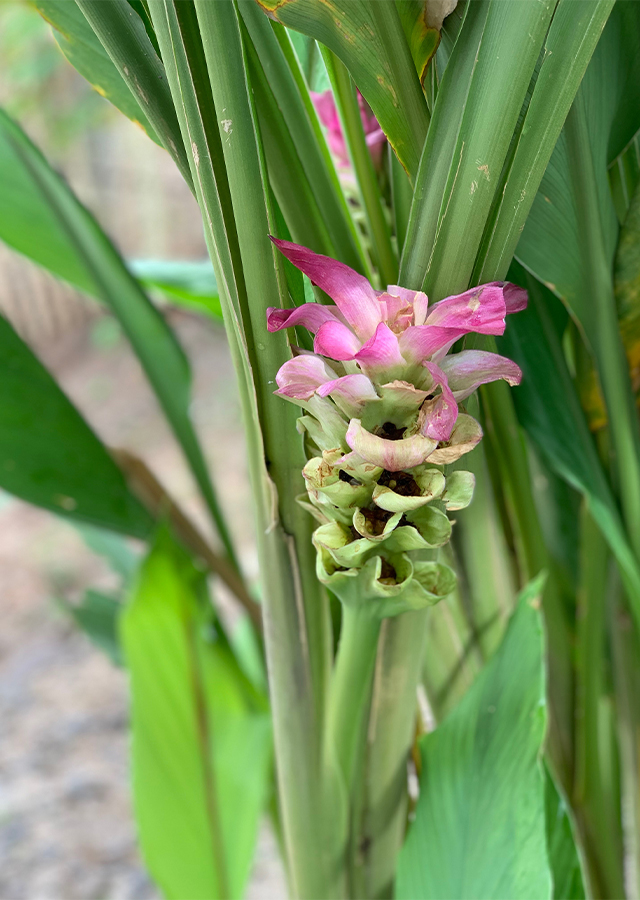
- Flowers - inflorescence on a separate shoot, bracts pale green, coma bracts purple. Corolla 4-6cm long, pale red. Labellum 2-2.5cm x 1.5-2cm, yellowish-white, anther with long spurs.
Cultivation
- Propagation by seed - best sown as soon as it ripe. Germinates best at temperatures around 20 °C.
- Division of the rhizome when the plant is dormant.
Chemical Constituents
- Xanthorizol, curcumin, 𝛽-curcumene, carbinol, turmerol, fenolik, saponin, flavonoid, alkaloid, tannin, isoborneol.
Traditional Medicinal Uses
- The methanol extract of C. zanthorrhiza possesses cancer chemopreventive potential.
- It has antioxidant, anti-inflammatory, antimicrobial, analgesic, gastroprotective, neuroprotective, antiviral, and diuretic effects.
- A decoction of the rhizome is also used as a remedy for fever and constipation, and taken by women to lessen uterine inflammation after giving birth.
- Against bloody diarrhea, dysentery, inflammation of the rectum, hemorrhoids, stomach disorders caused by cold, infected wounds, skin eruptions, acne vulgaris, eczema, smallpox, and anorexia.