
Cinnamon
Cinnamomum burmanni (Nees & T.Nees) Blume
Lauraceae
Location in our garden
Shading Area

Synonym
Cinnamomum ammannii Lukman.
Cinnamomum cassia Siebold
Cinnamomum chinense Blume
Habitus

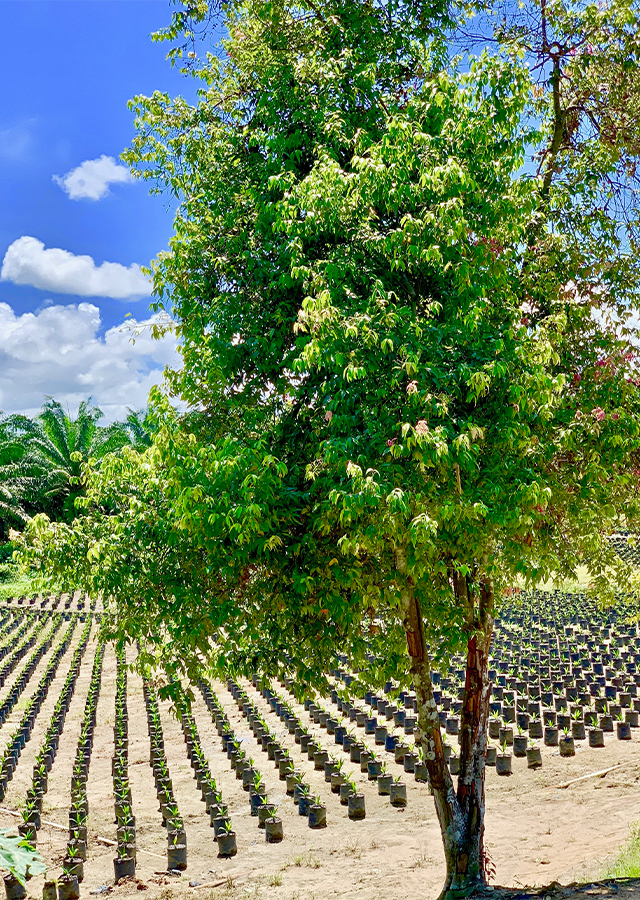
Trees. Evergreen perennial tree, growing up to 18 m tall
Part Used
 Leaves
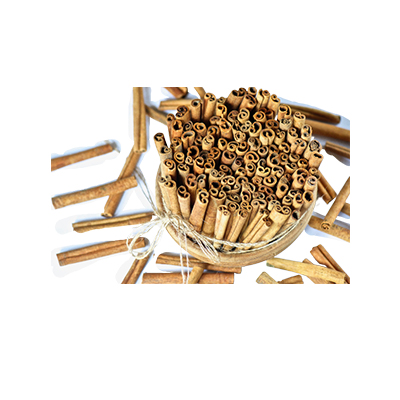
 Bark
Bark
Growing Requirements
 Full Sunshine
 Need Shade
 High Rainfall
Habitat
 Forest
Overview
Cinnamon tree is native to Bangladesh, Borneo, China South-Central, China Southeast, Hainan, Jawa, Lesser Sunda Is., Myanmar, Philippines, Sulawesi, Sumatera, Taiwan, and Vietnam. It is introduced to Cuba, Gulf of Guinea Is., Hawaii, and Mauritius. Cinnamon is native to sparse or dense forests and thickets, often along streams. The tree is harvested from the wild and also cultivated for a range of uses, including as spice, medicine and source of essential oils and wood. The bark is traded, both locally and internationally.
Vernacular Names
Dalcini (India), Yin xiang (Chinese), Jawa nikkei (Japanese), Canelle de Padang (French), Indonesischer Zimt (German), Indonesische Kaneel (Dutch), Suramarit (Thai)
Agroecology
Cinnamon is commonly found in moist tropical forest where the elevations is up to 2,000 m, it grows best between 500 and 1500 m. The tree grows best in areas where annual daytime temperatures are within the range 20-28 °C and a mean annual rainfall in the range 2,000-2,500 mm. Prefers a fertile, sandy, moisture-retentive in full sun or partial shade, with pH in the range of 5.5–6.
Morphology
- Stems - with an aromatic bark and smooth, angular branches.
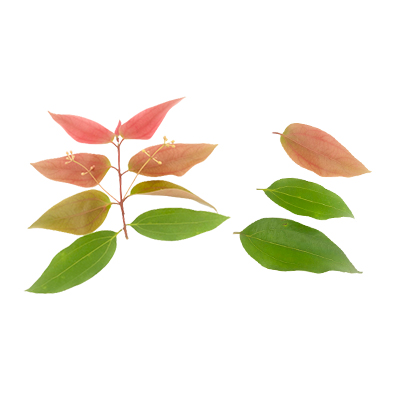
- Leaves - opposite or sub-opposite, pale red and finely hairy when young, when older glabrous and glossy green above, glaucous pruinose below, 7 to 15 cm long, 3 cm wide, pointed at both ends, on petioles less than 1 cm long.
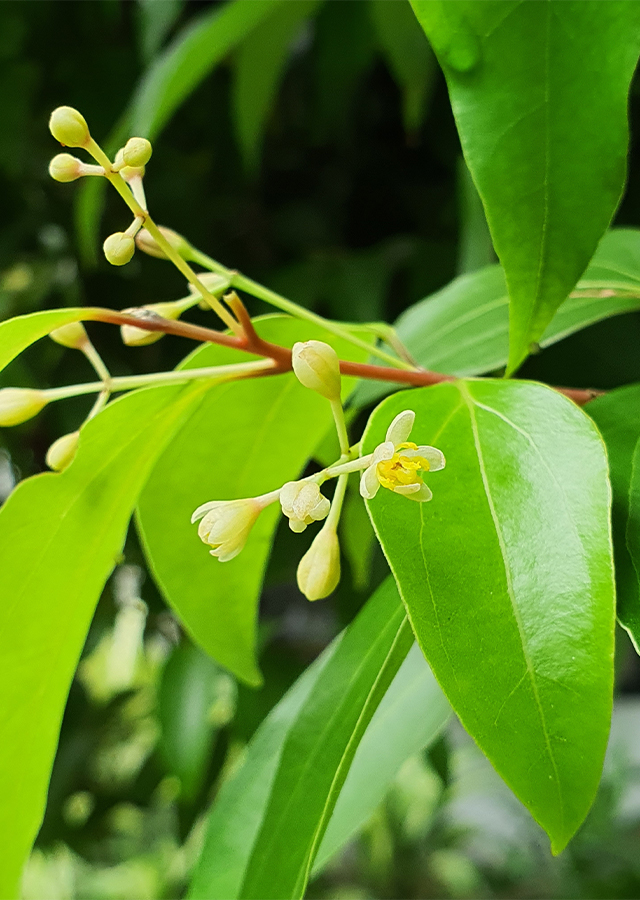
- Flowers - Inflorescence a short axillary raceme, yellowish white and followed by round drupes of about 8 mm in diameter
- Fruits - obovately ellipsoid with pointed tips, about 1.25 cm long and 7.5 mm wide, lucid green with minute whitish spots when unripe and a shinning steel blue when ripe.
Cultivation
- Propagation from seeds and cuttings of young shoots.
- Seeds take 1 to 6 months to germinate.
- After two to three years trees are cut back to produce shoots.
- First harvest about 4 to 5 years after planting
Chemical Constituents
Bark: tannins, cinnamaldehyde, benzalde-hyde and cuminaldehyde, phenols, eugenol. The plant: cinnamyl alcohol, coumarin, cinnamic acid, cinnamaldehyde, anthocyanin, essential oils.
Traditional Medicinal Uses
- Bark: lower blood sugar levels, relieve stomach cramps, relieve flatulence, increase appetite, treat diarrhea, antimicrobial, antiseptic, anaesthetic, treatment against parasites.
- In European phytomedicine, cassia oil (0.05-0.2 g daily intake) is used in teas and other galenicals for its antibacterial, carminative, and fungistatic properties, and also for loss of appetite and dyspeptic disturbances.
- Bark is also used in powder form to treat anorexia, common cold, influenza, dyspepsia with nausea, dental treatment, analgesic, blood circulation promotion, and tumors treatment.
- In Hawaii, it is used as a tonic and stimulant.
Part Used
Reference Sources
- J. Barnes et al. (2007). Herbal Medicines, Third Edition, pg162
- Rebecca L. Johnson, Steven Foster, Tieraona Low Dog, David Kiefer. (2012). A Guide to Medicinal Herbs
- Ben-Erik van Wyk, Michael Wink. (2017). Medicinal Plants of the world.
- Al-Dhubiabi, B.E. (2012). Pharmaceutical applications and phytochemical profile of Cinnamomum burmannii. https://www.ncbi.nlm.nih.gov/pmc/articles/PMC3459454/ (Accessed 05-01-2021).
- Fern, Ken. (2019). Useful Tropical Plants. Cinnamomum burmannii. http://tropical.theferns.info/viewtropical.php?id=Cinnamomum+burmannii (Accessed 05-01-2021).
- Buddenhagen, C.E. (2015). Cinnamomum burmannii. https://www.cabi.org/isc/datasheet/13516 (Accessed 18-11-21).