
Caesarweed
Urena lobata L.
Malvaceae
Location in our garden
Principal
Synonym
Hibiscus americanus (L.) Mabb.
Malachra urena DC.
Urena aculeata Mill.
Habitus

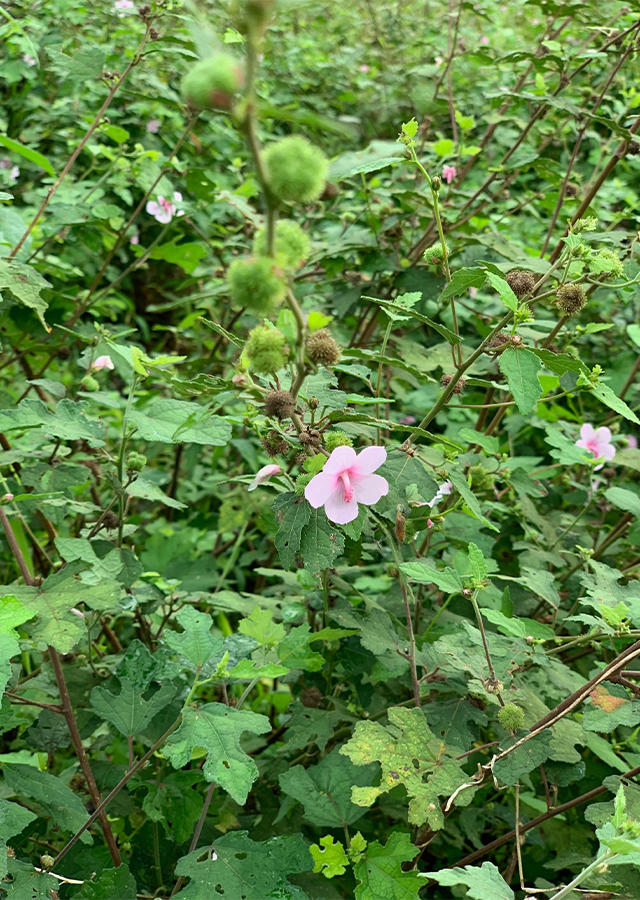
Shrubs. A fast-growing, spreading, and branching plant, with a height of up to 4-5 m.
Part Used
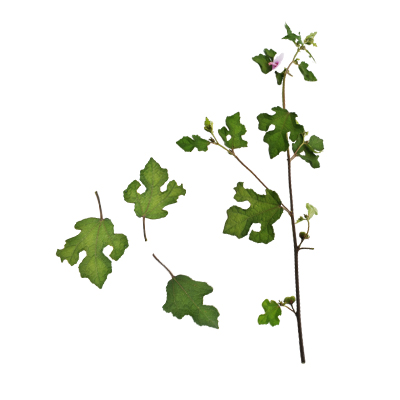
 Leaves
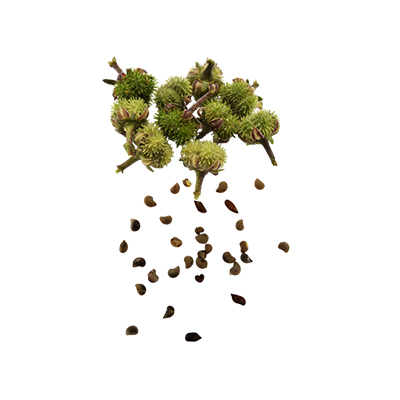
 Seeds
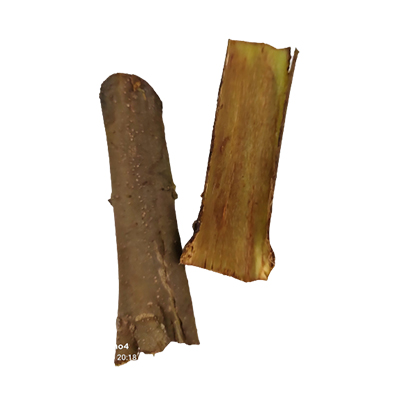
Seeds Bark
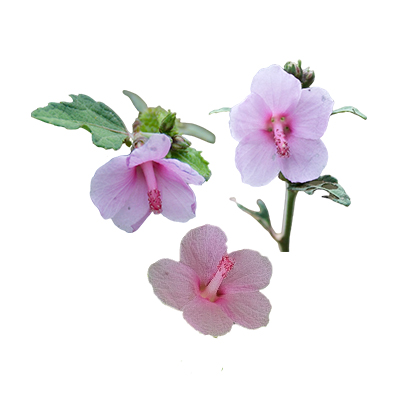
Bark Flowers
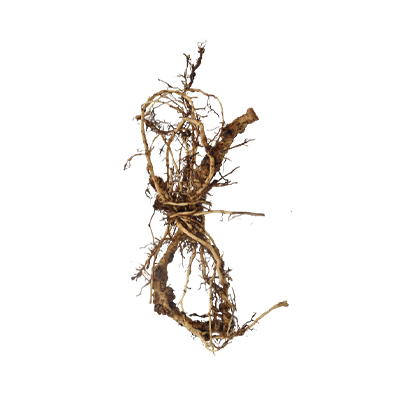
 Roots
Roots
Growing Requirements
 Full Sunshine
Habitat
 Roadside
 Grassland
Overview
This plant's origin is uncertain, probably of Asiatic or African origin. It is now widely distributed in wild or naturalized states throughout the tropics and subtropics, including South-East Asia.
Vernacular Names
Anonongkot (Philippines), Gataya (India), Di tao hua (Chinese), Cousin petit (French), Urena (Italian), Oobondekwa (Japanese), Carrapicho-de-mato (Portugalese).
Agroecology
Can be found on roadsides, waste places, fallow fields, plantations, secondary growth, teak forests, often naturalized as a noxious weed. It is found at elevations from sea level up to 2,000 m. Prefers humus-rich, medium-textured soils but can succeed in a range of conditions as long as the soil is well-drained.
Morphology
- Stems - covered with star-shaped (stellate) hairs; often many branched at the base.
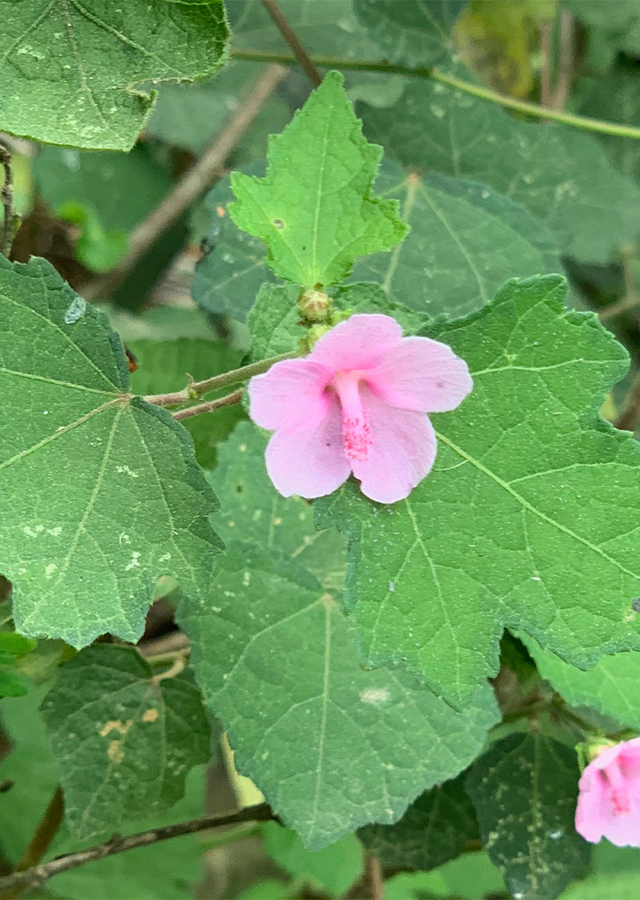
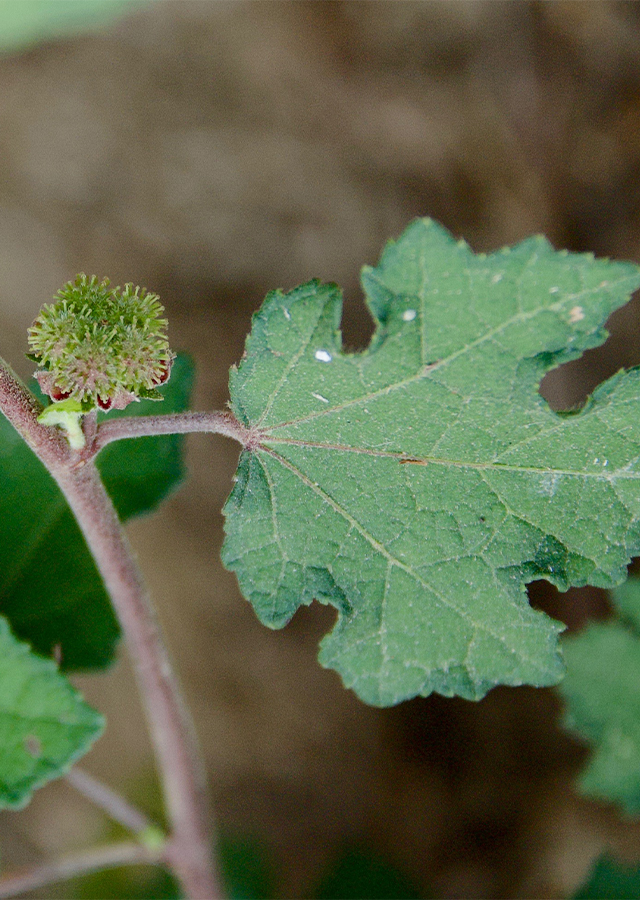
- Leaves - simple, alternate, with the upper surface rough and the lower surface grayish, broadly ovate, often with 3-5 shallow, angular lobes at apex, up to 10 cm long; margins finely toothed, bases heart shaped, petioles up to 5 cm long; stipules tiny.
- Flowers - small, showy, hibiscus-like, solitary on short stalks in leaf axils, subtended by 5 basally united (involucral) bracts up to 0.7 cm, calyx 5-lobed, hairy.
- Fruits - subglobular schizocarp, composed of 5 trigonous, indehiscent, 1-seeded mericarps, 4-5 mm long, covered with barbed bristles and athick cover of stellate hairs.
- Seeds - reniform, 2.5-3.5 mm long, minutely hairy to glabrous, brown.
Cultivation
Propagated generatively by seeds. Germination rates and time are much improved if the seed is scarified prior to sowing. It is usually sown at the beginning of the rainy season up to 2 cm deep in a well-prepared seedbed. Plants are closely spaced to prevent branching. Sowing may be done in rows (1-2 cm deep) or the seed may be broadcast.
Chemical Constituents
Alkaloid, tannin, terpenoid, flavonoid, saponin, steroid phlobataninsterol, glycosides.
Traditional Medicinal Uses
Its reported pharmacological activities include antioxidant, antimicrobial, antidiarrheal, wound-healing, immunomodulatory, antidiabetic, antihyperlipidemic, and antiproliferative properties.
- The juice of the leaves or roots is used widely to treat bowel complaints, especially colic, stomachache, diarrhoea and dysentery, and also to treat gonorrhoea and persistent fever from malaria.
- A decoction from the leaves and roots is drunk to relieve pains all over the body due to excessive exertion.
- A decoction of a very old plant, boiled with eggs, is said to induce abortion.
- A lotion made from the plant is used to treat yaws and headaches.
- The whole plant is macerated and used externally for treating fractures, wounds, mastitis and snake bites.
- The leaves are used externally as a poultice on wounds and skin diseases.
- The roots are used to treat rheumatism and lumbago. A decoction of the root is used to treat colds, dysentery, enteritis, goitre, indigestion, leucorrhoea, malaria, rheumatism and tonsillitis. Used externally, they are chewed and applied to swellings caused by filariasis.
- An infusion of the flowers is used as a gargle for aphthae and a sore throat.
- A decoction of the seeds is taken as a vermifuge.
- The twigs are chewed to treat toothache. The bark is used to heal cuts.
Part Used
Reference Sources
- Brink, M., Escobin, R.P., eds. (2003). Plant Resources of South-East Asia, No. 17 - Fibre plants. Backhuys Publishers, Leiden.
- van Valkenburg, J.L.C.H., Bunyapraphatsara, N.., eds. (2002). Plant Resources of South-East Asia, No. 12(2) - Medicinal and poisonous plants 2. Prosea Foundation, Bogor.
- Tang, Y., Gilbert, M.G., Dorr, L.J. (2007). Malvaceae - Flora of China 12: 280