Wild Poinsettia
Euphorbia heterophylla L.
Euphorbiaceae
Location in our garden
Principal
Synonym
Cyathophora heterophyla (L.) Raf.
Euphorbia heterophylla var. genuina Boiss.
Poinsettia heterophylla (L.) Klotzsch & Garcke
Habitus

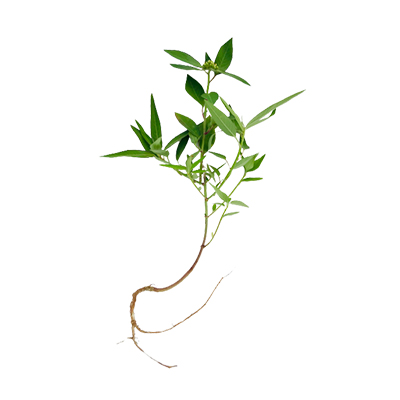
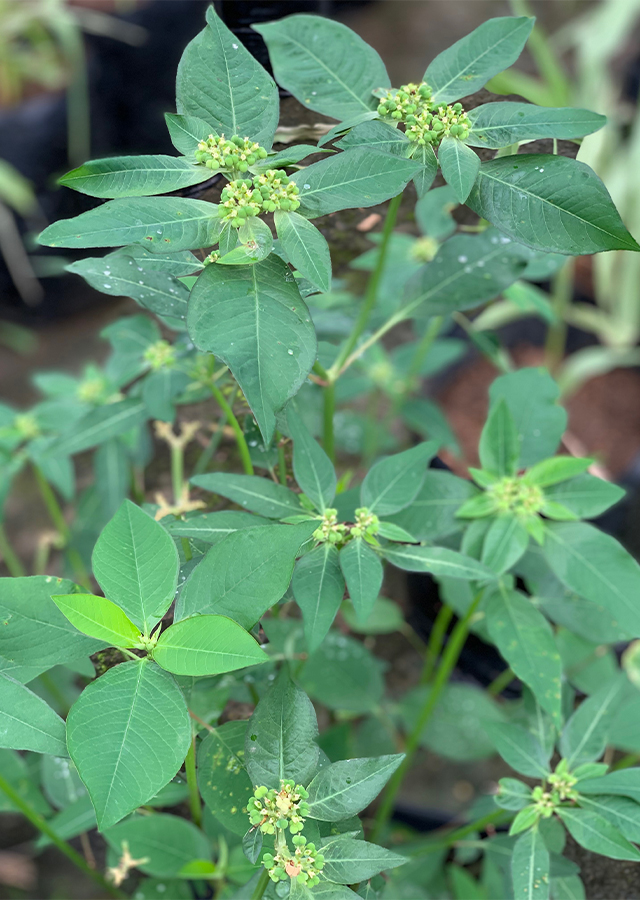
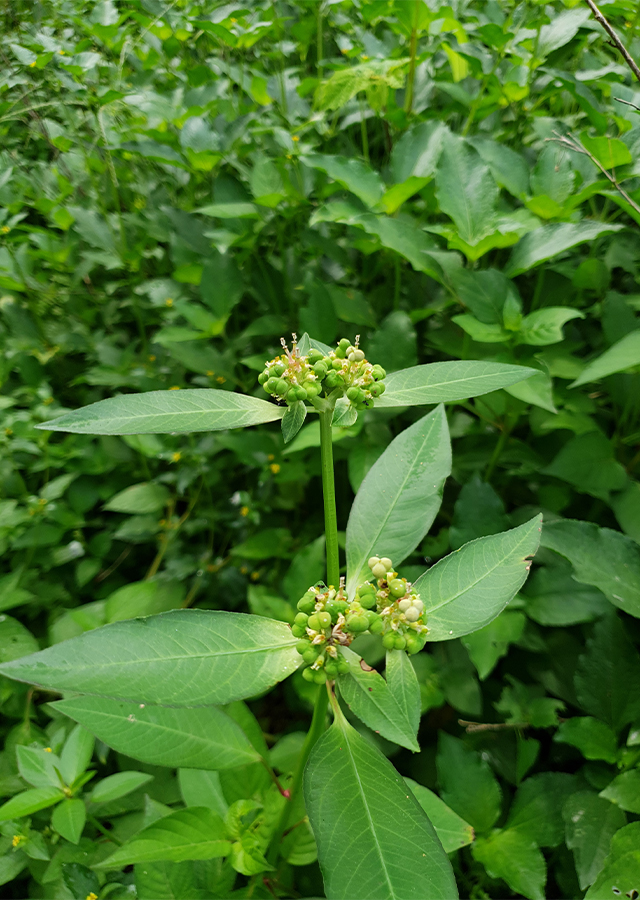
Herbaceous. Sparsely-branched, annual plant, shrubs, growing up to 30-100 cm tall.
Part Used
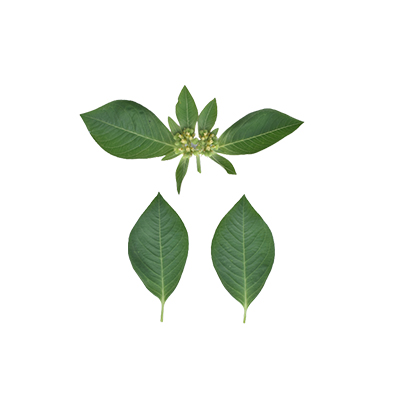
 Leaves
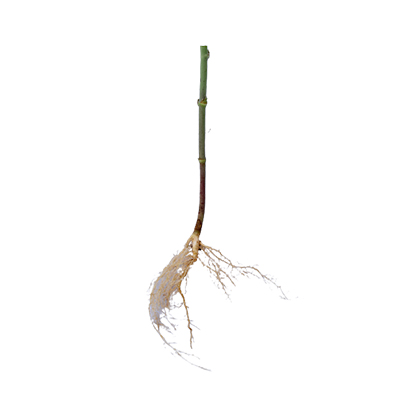
 Roots
Roots Twigs
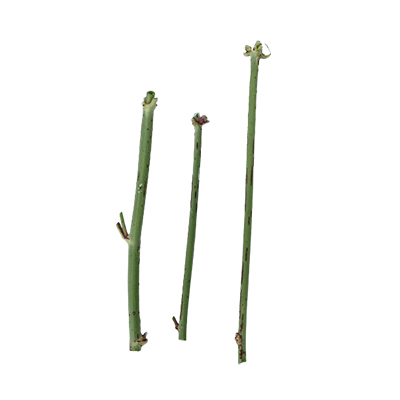
Twigs
Growing Requirements
 Full Sunshine
 Need Shade
Habitat
 Roadside
 Grassland
Overview
Originated in the tropical and subtropical regions of America but is now distributed throughout tropical Africa, Asia and the Pacific in a total of at least 65
countries. The plant has at times been used for the production of rubber. It is occasionally grown as an ornamental.
Vernacular Names
Poinsettia d'Amerique (French), Café-do-diabo (Brazil), Poinsettia d'America (Italy), Shoujou sou (Japanese), Bai bao xing xing cao (Chinese).
Agroecology
Disturbed localities, as a weed of cultivation and waste land, in gardens and along roadsides, at elevations from sea-level up to 3,000 m. Prefers
a position in full sun, but is shade-tolerant. Grows in moist tropical and subtropical regions on a wide range of soils.
Morphology
- Roots - tap root system, contain latex.
- Stems - branched and cylindrical, with nodes. at regular intervals. The surface is smooth and reddish-green.
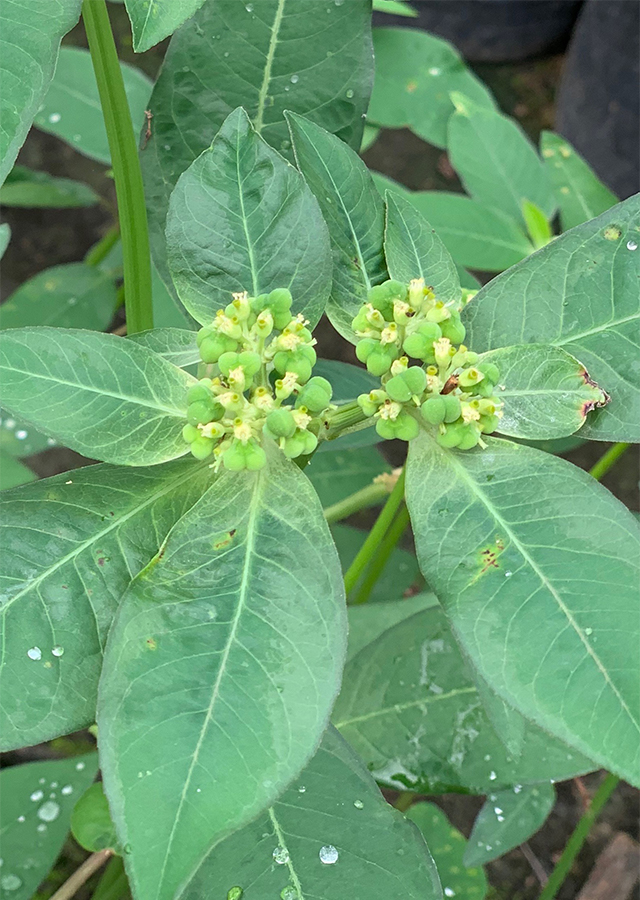
- Leaves - obovate to lanceolate. Basal leaves are long-petiolate and alternate. Upper leaves are sessile and opposite or verticillate, forming a cluster of bracts. often with a pale patch at the base, subtending the terminal inflorescence.
- Flowers - male flowers produce a single stamen only, female flower, without sepals or petals, producing a 3-lobed.
- Fruits - unripen colour light green, ripen colour brown.
- Seeds - 2.5-3 mm wide and 2.5 mm long, oblong to oboval and dark brown to black. The surface is pitted with transverse ridges.
Cultivation
- By seeds - if sown fresh it germinates readily under tropical conditions, but remains dormant under temperate circumstances. The turning of soil favours germination and seeds germinate even when at a depth of 10 cm in the soil.
Chemical Constituents
- Alkaloids, flavonoids, saponins, anthocyanins, terpenoid, cyanide, glicoside, sterol, isoflavan, lignan, coumarin, anthraquinones, phenolic acid, tannins.
Traditional Medicinal Uses
- It is laxative, purgative, lactogenic.
- Studies have suggest wound healing, antimicrobial, antinociceptive, antiinflammatory, antioxidant, and anthelmintic properties.
- The latex is irritant to the skin and eyes and may be employed as a rubefacient and to remove warts and corns. However, the latex is also used as an antidote against the irritation caused by the latex of other Euphorbia species.
- A decoction or infusion of the stems and fresh or dried leaves is taken as a purgative and laxative to treat stomach-ache and constipation, and to expel intestinal worms.
- A leaf infusion is used as a wash to treat skin problems, including fungal diseases, and abscesses. The leaf extract is taken to treat body pain.
- The latex and preparations of the leaves and root are applied to treat skin tumours.
- The roots are cathartic, emetic and galactogogue. They are used in small doses in the treatment of gonorrhoea and to increase milk production in breast-feeding women.