Heart Pea
Cardiospermum halicacabum L.
Sapindaceae
Location in our garden
Principal


Synonym
Cardiospermum acuminatum Miq.
Cardiospermum glabrum Schumach. & Thonn.
Cardiospermum inflatum Salisb.
Habitus

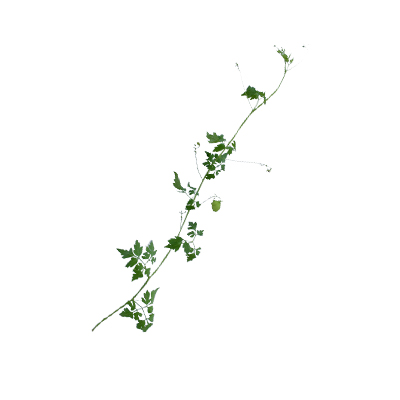
Climbers. Deciduous climbing shrub, perennial growing about 3 m tall.
Part Used
 Leaves
 Fruit
Fruit Roots
Roots Stem
Stem The Whole Plant
Growing Requirements
 Full Sunshine
 High Rainfall
Habitat
 Riverbanks
 Forest
 Coastal
 Roadside
 Grassland
Overview
It is probably native to the Neotropics, but is also distributed in the tropics of the Old World. The plant is harvested from the wild, mainly for local use as a medicine, food and source of various commodities.
Vernacular Names
Peria bulan (Malaysia), Paria-aso (Philippines), Kok kra om (Thailand), Dao di ling (China), Pois de merveille (France), Vesicaria del cuore (Italy), Amor en bolsita (Spain).
Agroecology
Grows in many tropical and subtropical areas, prefering moist thickets and waste grounds. Found under a wide range of ecological conditions: in everwet or seasonal climates, on acid and basic soils, and in dry, marshy or periodically flooded places. Succeeds in the tropics, subtropics and warmer regions of the temperate zone.
Morphology
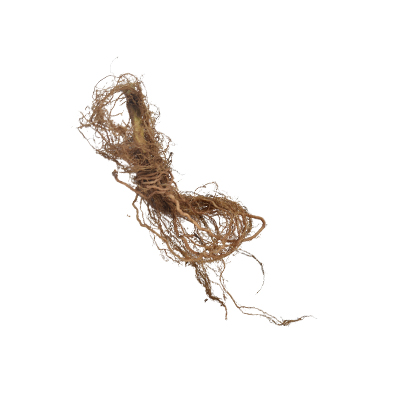
- Roots - underground, tap root, fibrous.
- Stems - stems with 5 longitudinal ribs, glabrous or puberulent, cross section with a single vascular cylinder.
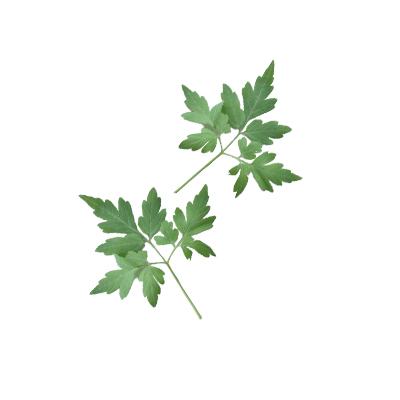
- Leaves - alternate, biternate, leaflets , acute, chartaceous, puberulent or sparsely pubescent, the apex obtuse, or acuminate, the base attenuate, the margins lobate or laciniate, terminal leaflet lanceolate or triangular, rhombic or narrowly lanceolate in outline, 2- 3.5(5) cm long.
- Flowers - unisexual, zygomorphic, calyx light green, petals white, obovate, stamens 8, the filaments unequal, pubescent, ovary trilocular, with one style and 3 stigmas.
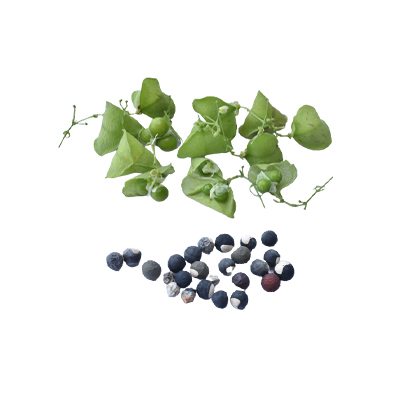
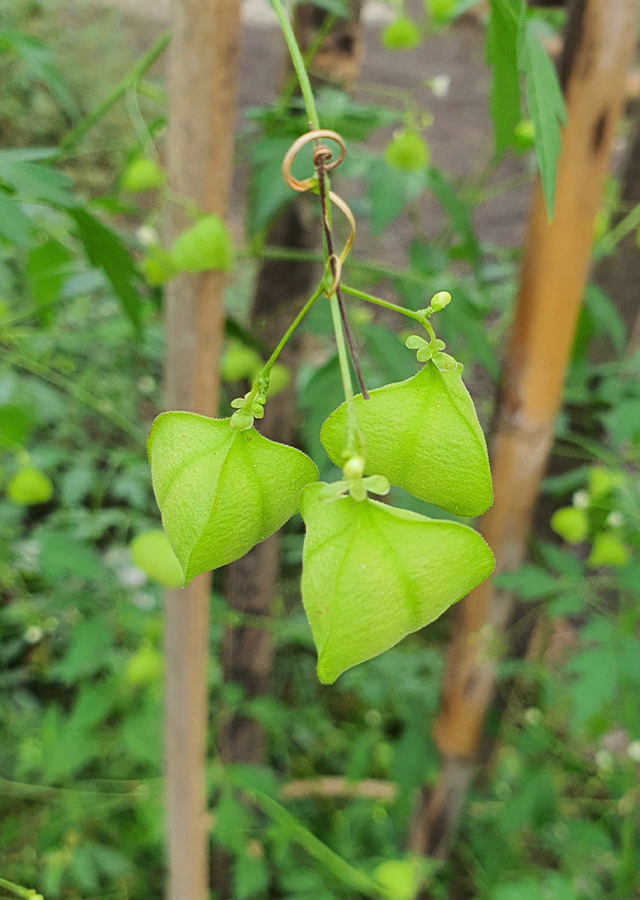
- Fruits - brown, pearlike, turbinate-obtriangular or sometimes nearly ellipsoid, pubescent.
- Seeds - black, shiny, approximately 5 mm in diameter; hilum green when fresh, white when dry, cordate.
Cultivation
- By seeds - sow in light shade in a nursery seedbed. Germination usually takes place within 3-4 weeks at 20 °C. When they are large enough to handle, prick the seedlings out into individual pots and grow them on until large enough to plant out
Chemical Constituents
- Saponins, tannins, alkaloids, flavonoids, proanthocyanidin, apigenin, phytosterols, glycosides and cardiac glycosides.
Traditional Medicinal Uses
- The whole plant is diaphoretic, diuretic, emetic, emmenagogue, laxative, refrigerant, rubefacient, stomachic and sudorific. It is used in the treatment of rheumatism, nervous diseases, stiffness of the limbs and snakebite.
- The root is occasionally used in the treatment of rheumatism, lumbago and nervous diseases. It is also used in the treatment of catarrh of the bladder and urinary tract.
- The leaves are rubefacient, they are applied as a poultice in the treatment of rheumatism. A tea made from them is used in the treatment of itchy skin. Salted leaves are used as a poultice on swellings. The leaf juice has been used as a treatment for earache.
- Fried leaves are applied to the pubis to increase menstrual flow in amenorrhea.
- Leaves boiled in castor oil applied for rheumatism, pains, swellings, tumors of various kinds.
- In the Philippines, decoction of roots used as diaphoretic, and used for catarrh of the bladder.
- In Ayurveda, used for rheumatism, fever and earache.