Finger Root
Boesenbergia rotunda (L.) Mansf.
Zingiberaceae
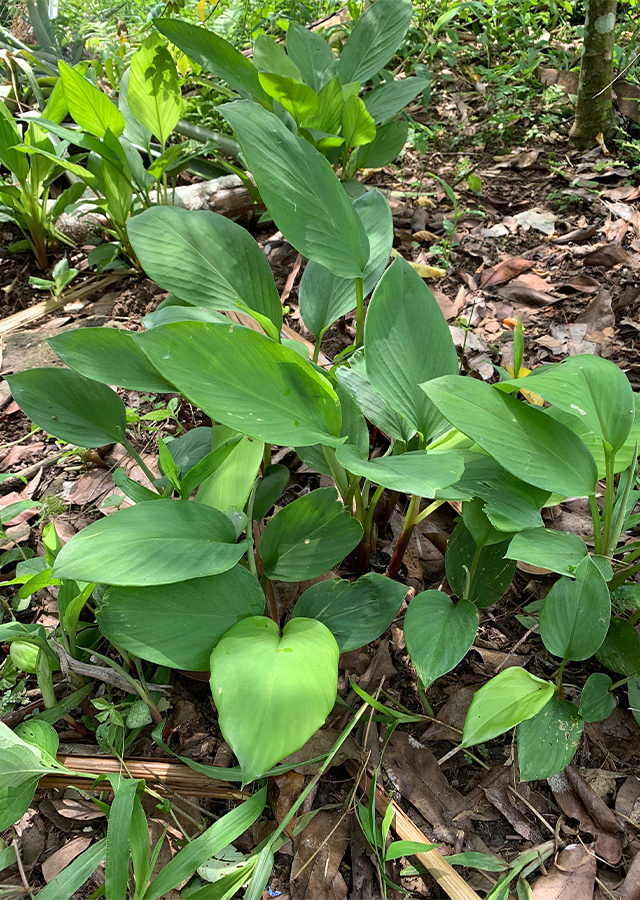
Location in our garden
Principal
Synonym
Boesenbergia cochinchinensis (Gagnep.) Loes.
Boesenbergia pandurata (Roxb.) Schltr.
Curcuma rotunda L.
Habitus

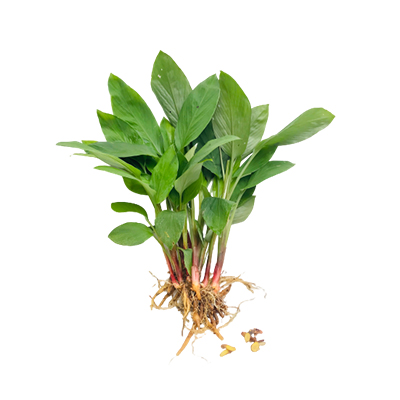
Herbaceous. A perennial herb, growing up to 30–70 cm
Part Used
 Leaves
 Rhizome
Growing Requirements
 Full Sunshine
 Need Shade
Habitat
 Riverbanks
 Forest
Overview
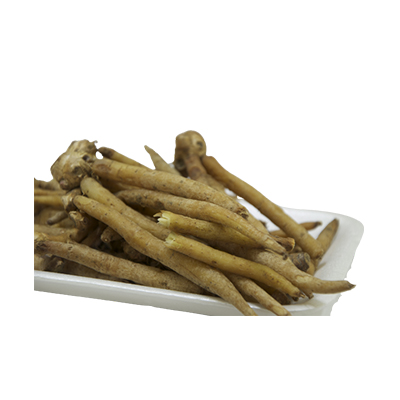
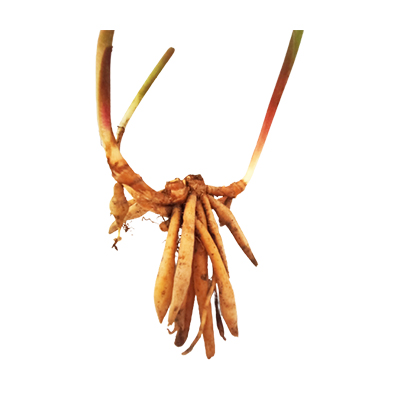
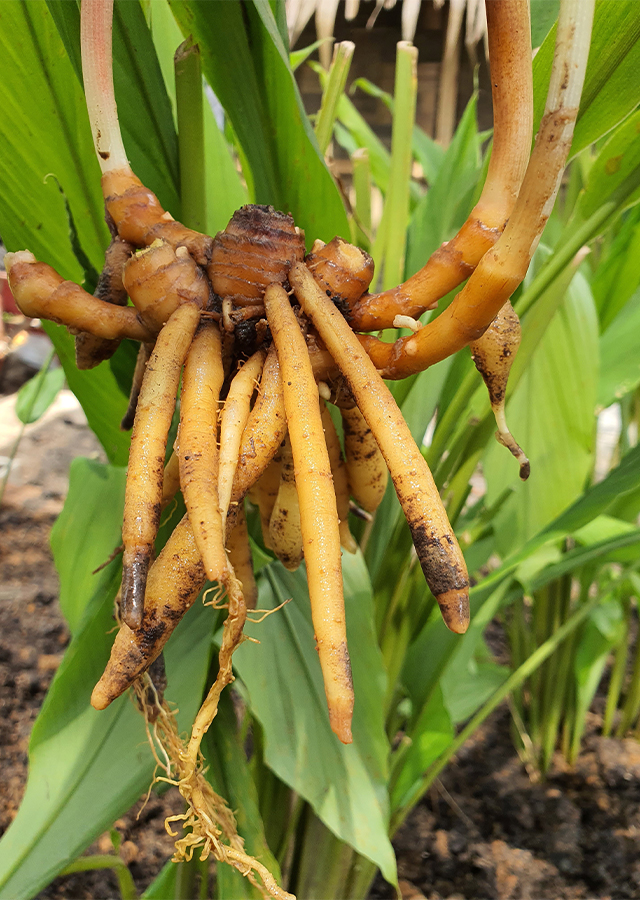
The species is native to China (S. Yunnan) and West Malaysia. It is widely cultivated in South-East Asia. The rhizome is finger look-like appearance, so its common English name is fingerroot. Fingerroot used in culinary and medicinal herb.
Vernacular Names
Ao chun jiang (Chinese), Gajutu (Javanese-Indonesia), Houo Ka Sai (Laos), Yao shi (Singapore), Krachai Dam (Thai), Bڠng nga truèt (Vietnamese), Chinese Keys, Chinese Ginger (English).
Agroecology
In its native sub-temperate to tropical range, it occurs in dense forests up to 1000 m elevation. It thrives in rich, alluvial soil or well-drained wood-land soil in filtered shade; will tolerate deep shade. It is frost sensitive.
Morphology
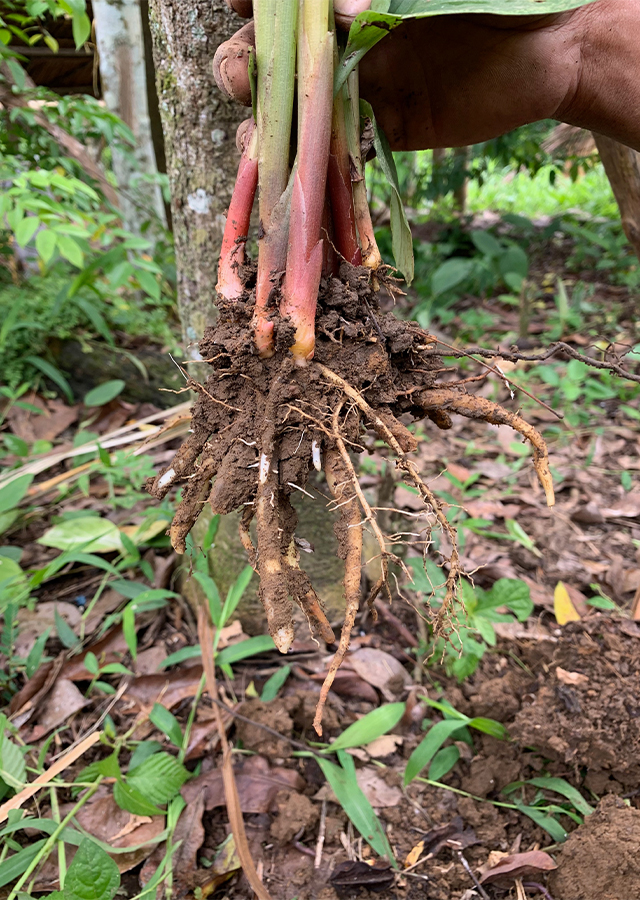
- Rhizome - small, robust, ovoid globose, 1.5–2cm in diameter, jointed or fused and strongly aromatic, bearing slender, 5–10 cm long, 1.0–1.5 cm thick, swollen, tapering or fusiform tuberous roots like a bunch of fingers.
- Leaves - 3–7, erect, biseriate, alternate, leaf sheath red, ligule 2-cleft, broadly deltoid,petiole 7–16 cm, channelled forming a short pseudostem.
- Inflorescences - terminal on pseudostems, appearing from within apical leaf sheaths, and are subsessile, bracts are lanceolate. Flowers is aromatic, exerted arising from theaxil of an outer bract and a similar oblong-lanceolate bracteole. The calyx is shortly tubular,1.5–2 cm; theapex is 2-cleft. Labellum is white or pink with purplestripe, patent, fiddle shaped, 2.5– 3.5 cm.
Cultivation
Fingerroot is traditionally propagated using rhizome segment.
Chemical Constituents
Monoterpenoids (geranial and neral),flavones, flavanones (pinostrobin, alpinetinand pinocembrin), and chalcone(cardamonin). The essential oil contains the following main compounds: 1,8-cineole ,camphor, d-borneol, d-pinene, zingiberene, curcumin, and zedoarine.
Traditional Medicinal Uses
- It has been shown to possess anti-allergic,anti bacterial, anti cancer, anti-inflammatory, antioxidant, antiulcer activities, and also shown wound healing.
- It is used as a mixture of herbal medicine.
- The rhizome is used as an ingredient in post-partum tonic mixtures, as stomachic and carminative, as remedy for coughs, dyspepsia, sprue, and colic; as external remedy for ringworm, rheumatic, and post-partum muscular pain and swollen abdomen, and as medication for urination problem in children.
- In Indonesia, it is typically used to prepare ‘jamu’, a popular traditional tonic for women after childbirth, also as a beauty aid for teenage girls, and to prevent leucorrhoea.
- In Thailand, ‘kra-chai’ is used for the relief of stomach-ache, anti-flatulence,the eradication of ringworm and the promotion of appetite, and as adiuretic