Fragrant Pandanus
Pandanus amaryllifolius Roxb. ex Lindl.
Pandanaceae
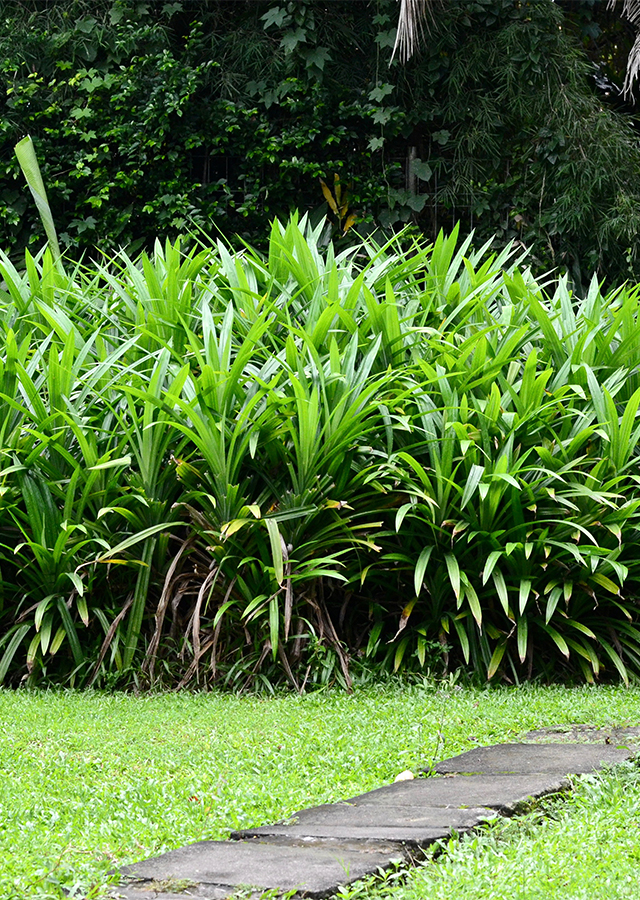
Location in our garden
Principal

Synonym
Pandanus hasskarlii Merr.
Pandanus latifolius Hassk.
Pandanus odorus Ridl.
Habitus

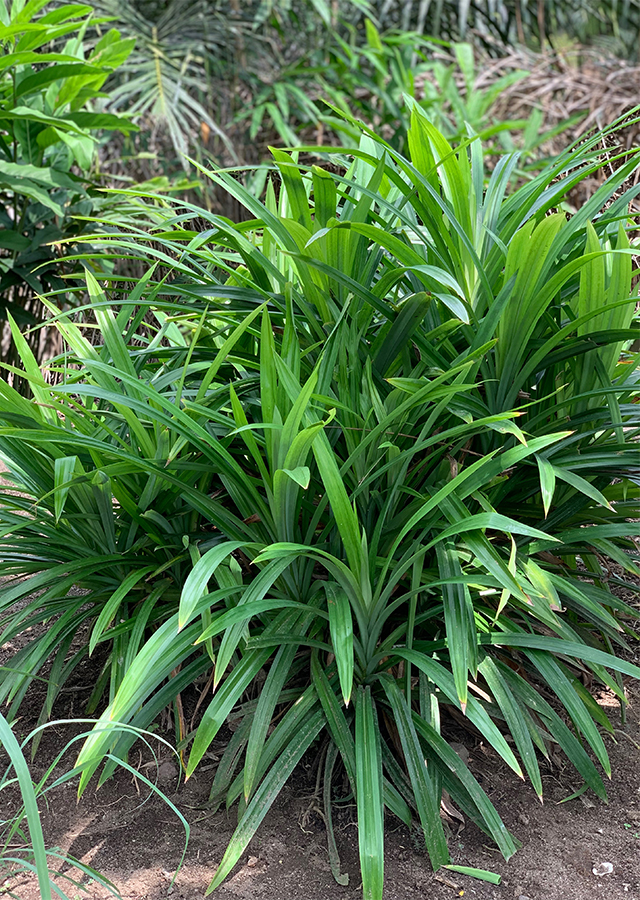
Herbaceous. Evergreen tree with fragrantly-scented leaves, grows up to 2 m tall
Part Used
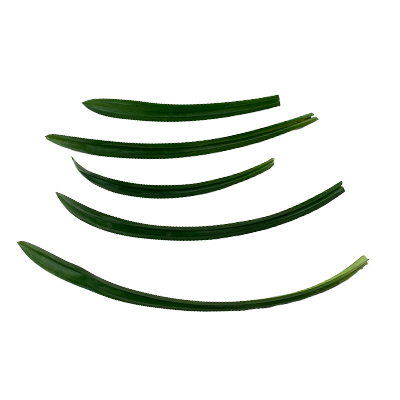
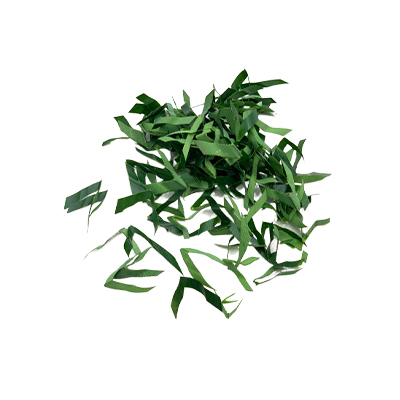
 Leaves
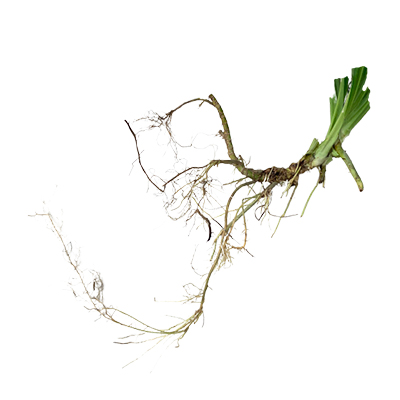
 Roots
Roots
Growing Requirements
 Full Sunshine
 Need Shade
Habitat
 Forest
Overview
Fragrant pandanus is an ancient cultigen which has never been found wild. It might originate from the Moluccas (Indonesia), from where the only flowering specimen is known. The plant is cultivated for its leaves in gardens in West Indonesia, Malaysia, Thailand, New Guinea, Sri Lanka, and the Philippines. It is often used as a natural food colouring and flavour concentrates.
Vernacular Names
Taëy (Cambodia), Të:y ho:m (Laos), Karuka (Papua New Guinea), Pandan mabango (Philippines), Toei-hom (Thai), Dứa thơm (Vietnamese).
Agroecology
There are some indications that ever-wet climatic conditions are less favourable for the development of the large growth form, and thus assist in the perpetuation of the small growth form. Fragrant pandan tolerates shade very well.
Morphology
- Stems - erect, 15 cm in diameter, unbranched or sparsely branched, bearing large aerial prop roots.
- Leaves - oblong, 150-220 cm × 7-9 cm, apex acute, rather dark green above, glaucous and keeled beneath, the twin lateral pleats above somewhat prominent, margins entire.
- Flowers - male, white or the lower ones with green foliaceous tips, bearing several oblong spikes to 35 cm long or more, composed of many crowded staminal phalanges, compressed to flat, containing 3-6 stamens with very short filaments.
Cultivation
- By seeds - pre-soak for 24 hours. Seed is not available for this plant because only male forms are known.
- By cuttings - stem cuttings should be inserted obliquely in the planting medium.
Chemical Constituents
Alkaloids, essential oil, saponin, flavonoids, tannins, polifenol, phenols, terpenes, pandanamine, 2-acetyl-1-pyrroline (2AP), 3 different piperidine alcaloids.
Traditional Medicinal Uses
- The leaves are diuretic and cardiotonic.
- The roots are antidiabetic, diuretic, tonic, and depurative.
- The leaves are used in the treatment of skin diseases, as a relaxing soak to counter restlessness.
- Oil is considered a stimulant, antispasmodic, and antiseptic.
- Studies have suggested antioxidant, hepatoprotective, antibacterial, hypoglycemic properties.
- An infusion of the leaves is used as a sedative against restlessness and is also a traditional treatment for diabetes.
- Externally, the leaves are used in the treatment of skin diseases; as a relaxing soak to counter restlessness.
- The leaves soaked in coconut oil, is employed as an embrocation for rheumatic troubles.
- Leaves are used as medicinal bath for women after childbirth in Malaysia and also for hair wash.