
Java Brucea
Brucea javanica (L.) Merr.
Simaroubaceae
Location in our garden
Principal


Synonym
Rhus affinis Wall.
Rhus bucki-amela Roxb.
Rhus bucku-amela Wall. ex Lindl.
Habitus

Shrubs. A monoecious or dioecious shrub or small tree up to 10 m tall with soft-haired twigs and leaves
Part Used
 Leaves
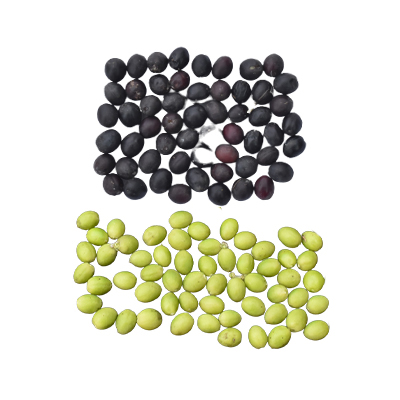
 Seeds
Seeds Bark
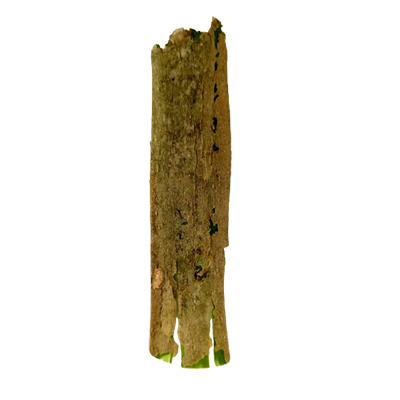
Bark Fruit
Fruit Roots
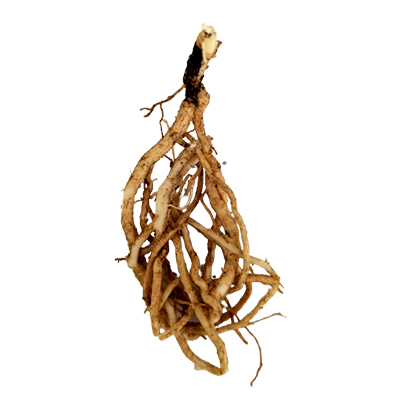
Roots
Growing Requirements
 Full Sunshine
 Need Shade
Habitat
 Forest
 Mountains
 Rocky Areas
 Shrublands
Overview
Java brucea is widespread and occurs from Sri Lanka and India towards Indo-China, Southern China, Taiwan, Thailand, but rare in the Moluccas and New Guinea throughout the Malesian region to northern Australia. Its patchy distribution in eastern Malesia suggests that it was introduced here by man long ago. It has certainly been introduced in Micronesia (Ponape) and Fiji.
Vernacular Names
Damli thnang (Cambodian), Ya dan zi (Chinese), Embalau padang (Malaysian), Balaniog (Philippines), Ratchadat (Thai), C[aa]y su[oos]t (Vietnamese).
Agroecology
Brucea javanica is very common, preferring open localities such as light secondary forest and thickets, forest edges, ridges, and even occurring in sunny places on sandy dunes and on limestone. It grows under both per-humid and seasonal conditions, from sea level up to 900 m altitude.
Morphology
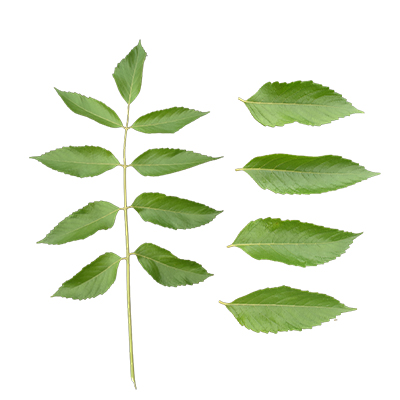
- Leaves - arranged spirally, imparipinnate, 20-50 cm long, exstipulate; leaflets 3-15, opposite, short petiolulate, ovate-oblong to ovate-lanceolate, margin bluntly serrate or crenate.
- Flowers - unisexual, 4-merous, small, greenish-white to greenish-red or purple.
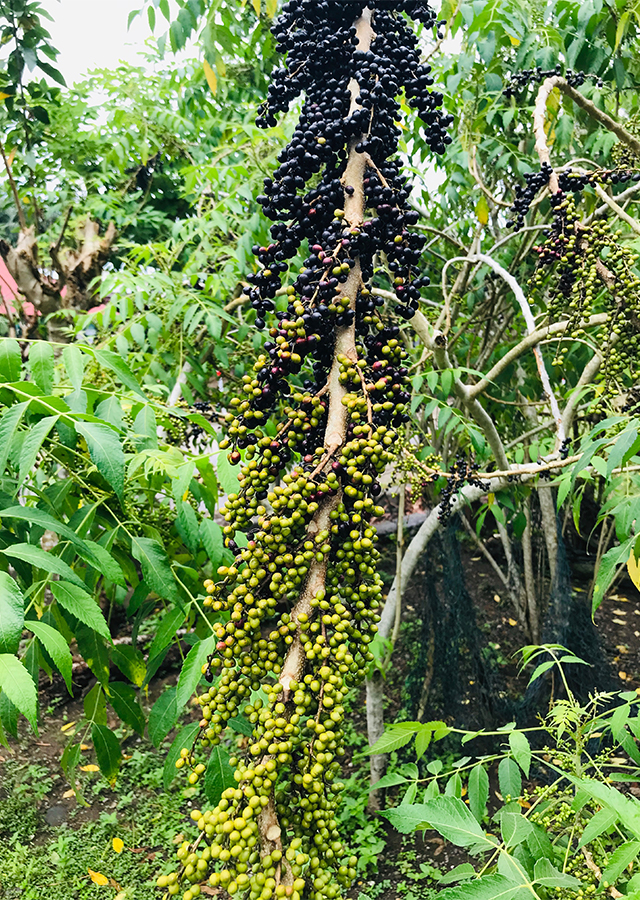
- Fruits - consisting of 1-4 hardly fleshy drupelets; drupelet 2-ribbed, dry, purplish-black and 4-5(-7) mm long when mature, pyrene with wrinkled endocarp.
- Seeds - ovoid, with thin testa and very thin endosperm.
Cultivation
- Generative propagation is by seed. The hard outer coat should be removed before the seed is sown.
- Vegetative propagation is by cuttings of ripe wood in sandy soil.
Chemical Constituents
- Tetracyclic triterpene quassinoids, anthraquinone, olein, oleic acid, linoleic acid, pregnane glycosides, sesquiterpenes, tannins, steroids, anthrones, flavonoid glycosides, and coumarins.
- The brusein-A compound was isolated from the fruit of B. javanica and has the potential as an antiproliferative against T47D Breast Cancer Cells.
- The main antitumor components of B. javanica are tetracyclic triterpene quassinoids.
Traditional Medicinal Uses
- The compound and its hydroxylated and methoxylated derivatives have demonstrated marked cytotoxic activities against malaria, leukemia, carcinoma, keratinocytes of the guinea-pig ear, and bacteria.
- Reduction of blood glucose concentration by both bruceines comparable to glibenclamide probably by acting as an insulin secretagogue.
- The fruit showed anti-malarial activity that was attributed to its quassinoid constituents.
- The seed has been reportedly used as a remedy for most types of pernicious dysentery, diabetes, malaria, with effects comparable to quinine.
- Fresh fruit is used for stomachache, treating cancer, malaria, and amoebic dysentery.
- In the East Indies, all parts of the plant are used as a stomachic tonic; also used for diarrhoea, intermittent fever, and worms.
- In China, it is used to treat malaria, amoebic dysentery, chronic dysentery, haemorrhoids, treatment of lung, and gastrointestinal cancers.
Part Used
Reference Sources
- Subeki, Muhartono. (2015). Senyawa brusein-A dari buah Makasar (Brucea javanica (L.) Merr.) sebagai antiproliferasi terhadap sel kanker payudara T47D. Majalah Kedokteran Bandung 47(1): 22-28.
- Chen, M., Chen, R., Wang, S., Tan, W., Hu, Y., Peng, X., Wang, Y. (2013). Chemical components, pharmacological properties, and nanoparticulate delivery systems of Brucea javanica. International Journal of Nanomedicine 8: 85-92.