
Snake Grass
Clinacanthus nutans (Burm.f.) Lindau
Acanthaceae
Location in our garden
Principal

Synonym
Habitus

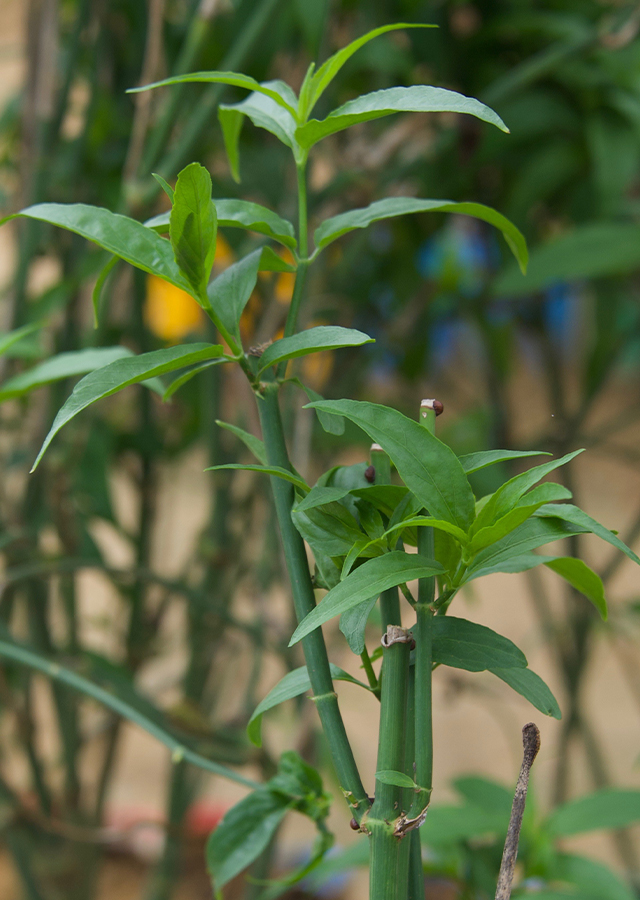
Herbaceous. Erect herbaceous perennial rambling shrub, grows up to 1 m tall.
Part Used
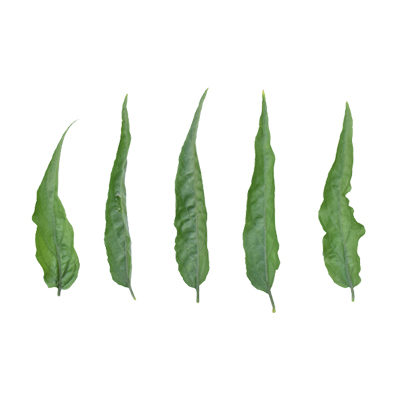
 Leaves
Growing Requirements
 Full Sunshine
 Need Shade
Habitat
 Forest
 Shrublands
Overview
Snake grass is indigenous to South-East Asia countries, namely South China, Indonesia, Malaysia, Myanmar, Philippines, Singapore, Thailand and Vietnam. It is a vegetable and a well-known herb, widely known as Sabah snake grass, which is considered an alternative medicine.
Vernacular Names
Belalai Gajah (Malaysia), Phaya Yo (Thailand), E Zuihua (China), Sabah Snake Grass (Brunei), Dandang Gendis (Indonesia).
Agroecology
In most environments, snake grass can be grown, consisting of dense or open woodland, trees, damp fields and valleys, sea shores and marine areas, swamps and mangroves.
Morphology
- Stem - pubescent, cylindrical, striate, glabrescent. The petiole is sulcate, bifariously pubescent.
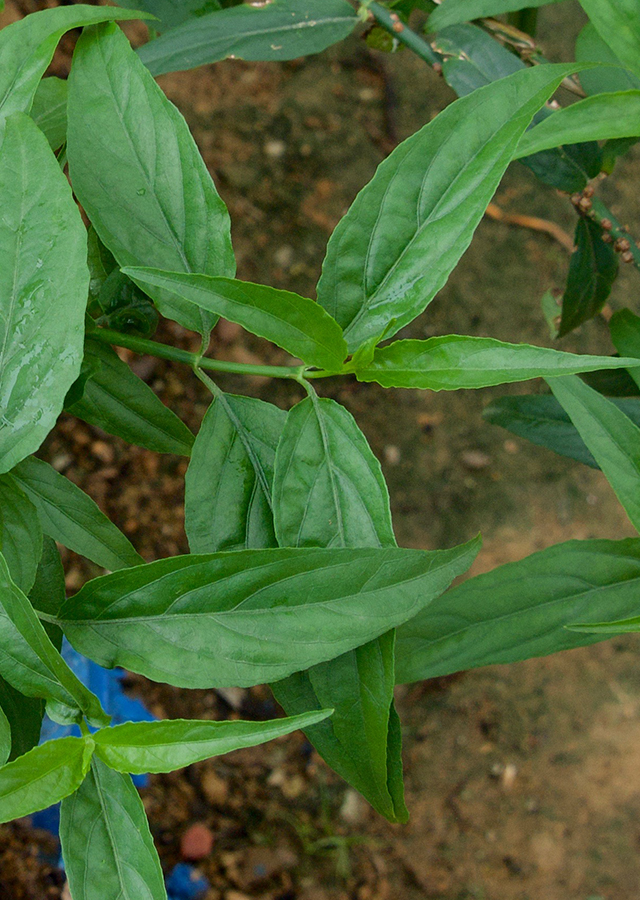
- Leaves - apex acute or acuminate and exsculptate; dentate or subentine margins; simple, opposite, narrowly elliptic-oblong or lanceolate. When young then glabrescent, all surfaces of leaves are pubescent. The leaf base is cuncate, obtuse, rounded or truncate; often oblique. The length of the petiole is 3-15 mm.
- Flowers - the calyx is sordidly yellow or greenish-yellow, 1 cm long with a grandiose-pubescent hue. It's a dull red Corolla with a green foundation. The stamen is stretched from the corolla's throat. The ovary is compressed into 2 cells and has 2 ovules in each cell. The styles are filiform with bidentate in brief. The capsule is oblong, essentially wrapped in 4 small stalk seeds.
Cultivation
- Vegetative (by cuttings) propagation.
- Generative (by seeds) propagation.
Chemical Constituents
Alkaloids, flavonoids, terpenoids, phenolic, triterpenoids/steroids, glykoside, tannins, saponins, phytosterols, sitosterols, C-glycosyl flavone, polyphenol, orientin, belutin, lupeol, isoorientin.
Traditional Medicinal Uses
- In conjunction with other conventional herbal medicines, its topical use was recorded to be 96.7 percent successful in the treatment of cervical ectopic columnar epithelium and blood stasis; spleen nourishment; dampness removal; heat clearing, detoxification.
- It is used to treat various inflammatory disorders in traditional Chinese medicine, such as hematoma, contusion, strains, sprains, rheumatism, high uric acid and gout. This herb was provided by Chinese healers to control mental function, alleviate pain, anemia and jaundice.
- Consumption of this herb has also been documented in order to prevent the fatty liver from being prepared in a very specific way.
- The decoction from fresh leaves is the typical prescription to treat patients suffering from dysentery, gastrointestinal problems, dysuria, and hyperglycemia in Indonesia
- This plant is used in Malaysia to reduce high cholesterol, glucose, uric acid, and blood pressure levels. For dialysis and treating kidney dysfunction, a drink of snake grass is helpful.
- It is praised as an anti-snake venom agent in Thailand and as a cure for scorpion bites and nettle rash.
Part Used

Reference Sources
- Science Direct. (2016). Clinacanthus nutans: A review of the medicinal uses, pharmacology and phytochemistry. https://www.sciencedirect.com/science/article/pii/S1995764516300116. 07-12-2020
- Abdul Majid et al, (2016). American Journal of Phytomedicine and Clinical Theurapeutics