
Frangipani
Plumeria sp.
Apocynaceae
Location in our garden
Principal

Synonym
Plumeria acuminata W.T.Aiton
Plumeria acutifolia Poir.
Plumeria angustifolia A.DC.
Habitus

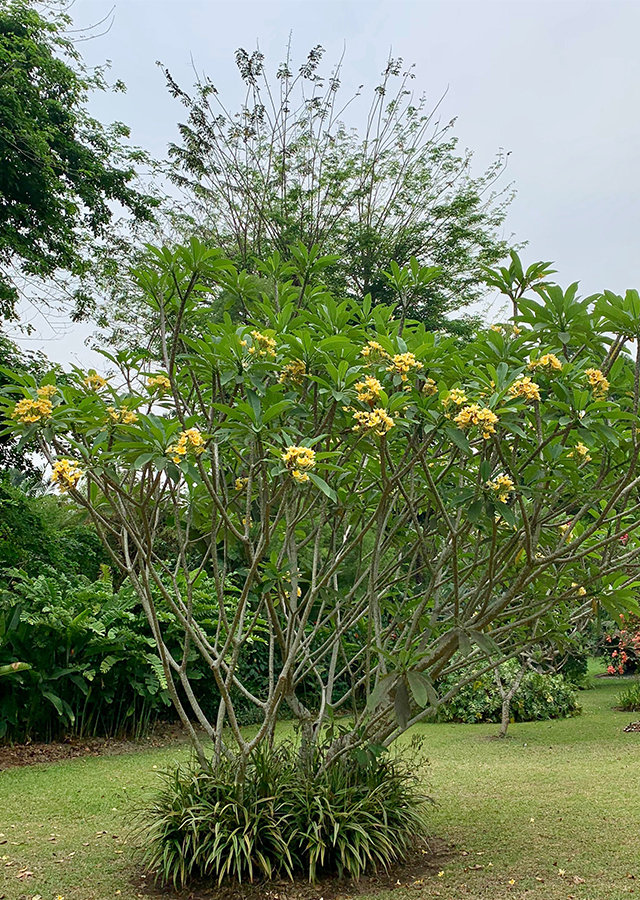
Shrubs. Succulent, evergreen shrub or a tree, grows up to 12 m tall
Part Used
 Seeds
Seeds Bark
Bark Flowers
 Roots
Roots Twigs
Twigs
Growing Requirements
 Full Sunshine
 Drought Resistant
Habitat
 Forest
 Mountains
 Rocky Areas
 Grassland
Overview
Frangipani is native to tropical America. In Hawaii, it is grown as ornamental and is not found in the wild. It has widespread use in tropical landscapes around the world and is frequently associated with temples and graveyards. One of the most common and best-known ornamental trees cultivated in the tropics. Brew the flowers as tea. Flowers are also cooked as vegetables. The plant is often used as a herbal remedy.
Vernacular Names
Gulchin (Hindi), Velutharali (Malayalam), Kananakaravira (Sanskrit), Perumalari (Tamil).
Agroecology
Plumeria is a common ornamental in yards and other planned landscapes. It is easy to grow in hot, dry areas from sea level to 600 m elevation. Plants succeed in climates with a pronounced dry season, when they are deciduous and flower on the bare branches, as well as in more humid conditions when they will remain evergreen. It is adaptable to most soil conditions, though requires full sun and grows best in well-drained soil. It has moderate wind resistance and salt tolerance.
Morphology
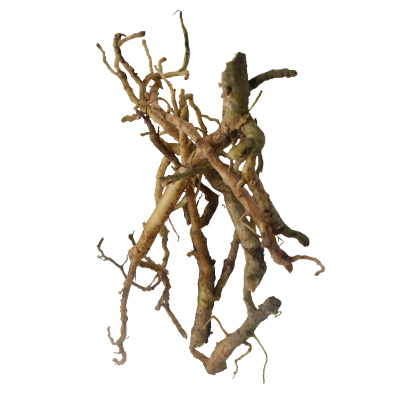
- Roots - small and fibrous, fairly shallow compared to the height of the plant.
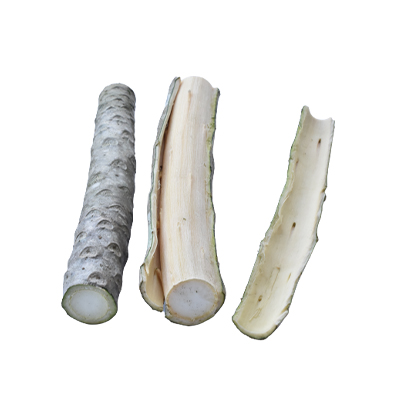
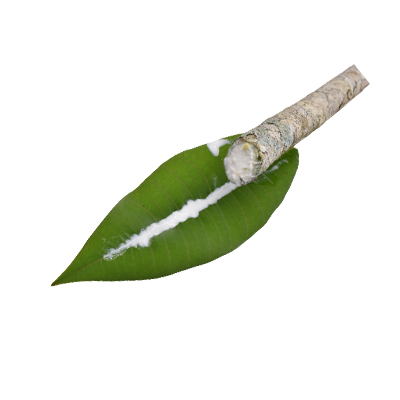
- Stem - smooth and shining stems, succulent, with abundant sticky, milky latex. Bark has a smooth, papery outer layer that is grey, shining, and constantly exfoliating in small flakes. Wood is yellowish-white and soft. Branches are thick, fleshy, swollen, and leafy at the tips.
- Leaves - glossy green or dull green, generally ovate, blunt-tipped, or pointed. Range from 5 to 10 cm wide and 20 to 30 cm long.
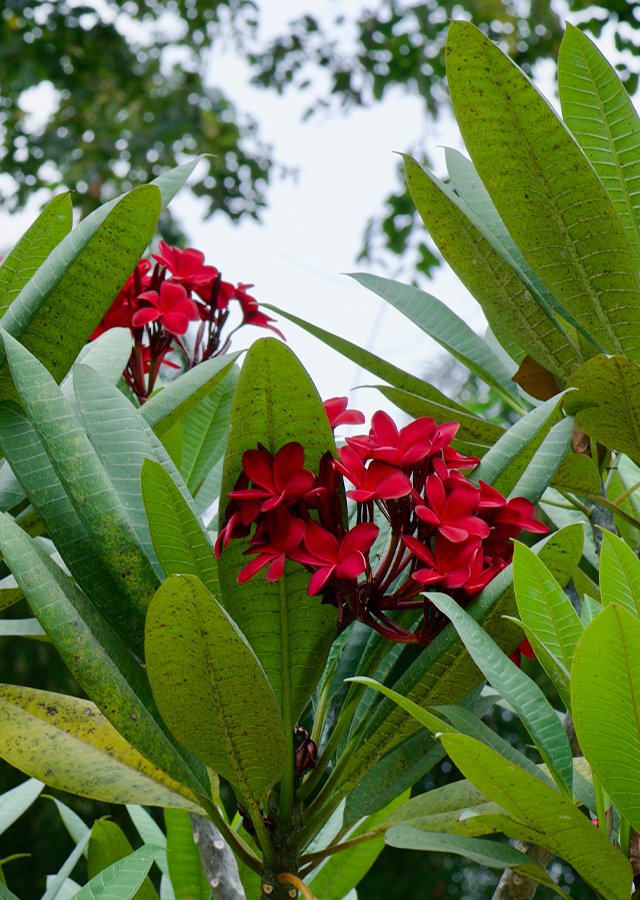
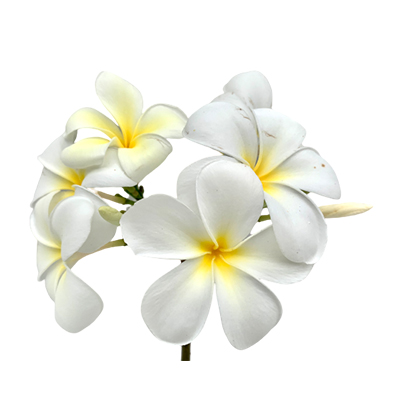
- Flowers - tubular, expanding into a “pinwheel” of five petals, 5–7.5 cm in diameter, white, red, yellow, pink, or multiple colors.
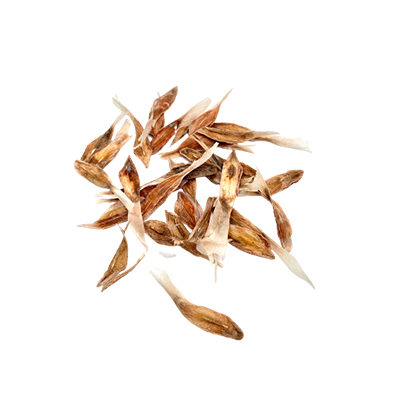
- Seeds - hard, narrow, pointed pods up to 17.5 cm long.
Cultivation
- By seeds - collect seeds when the pod splits open and sow them shallowly in pots or trays. Dry seeds can be stored for about three months in a plastic bag before beginning to lose viability. Seeds germinate in about two weeks.
- By cuttings - this method maintains the selected cultivar. Plant them in well drained soil in the landscape or in a pot. Do not water too much or too often while rooting is occurring.
Chemical Constituents
Agoniadin compounds, plumerat acid, lipeol, serotinat acid, saponins, flavonoids, alkaloids, polyphenol, benzyl salicylate, benzyl benzoate, palmitic acid, lauric acid, myristic acid.
Traditional Medicinal Uses
- The root bark is depurative and purgative, causing thirst. It is used in the treatment of blennorrhagia, herpes, and syphilis.
- The latex from the stem is caustic. It is used for treating ulcers, dartre skin (diseases), and scabies.
- The flowers are bitter and caustic. They are an ingredient in a complex pectoral syrup for treating chest coughs and grippe.
- The seeds are used in the treatment of dysentery (bloody flux).
- In India, the bark is used as a purgative. The bark is also used as an application for abscesses.
- In Java and Madera, bark decoction is used for gonorrhea, dropsy, and dysuria due to venereal disease.
- In Yucatan, latex is used for toothache.
- The juice is rubefacient in rheumatic pains, and with camphor, is also used for itching.
- A poultice of heated leaves is beneficial for swellings.
Part Used
Reference Sources
- Fern, Ken. (2019). Useful Tropical Plants: Plumeria alba. http://tropical.theferns.info/viewtropical.php?id=Plumeria+alba. 05-01-2021.
- Fiske, C. (2021). The Root System of Plumeria. https://www.hunker.com/12601449/the-root-system-of-plumeria. 1-12-2021.
- Stuart Jr, G.U. (2020). Philippine Medicinal Plants: Kalachuchi. http://www.stuartxchange.org/Kalachuchi.html. 05-01-2021.
- Criley, R.A. (1998). Plumeria. Ornamentals and Flowers 24. https://www.ctahr.hawaii.edu/oc/freepubs/pdf/OF-24.pdf. 1-12-2021.