Red spiderling
Boerhavia diffusa L.
Nyctaginaceae
Location in our garden
Principal

Synonym
Axia cochinchinensis Lour.
Boerhavia adscendens Willd.
Boerhavia africana Lour.
Habitus

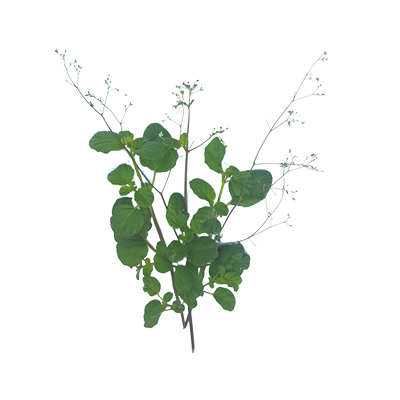
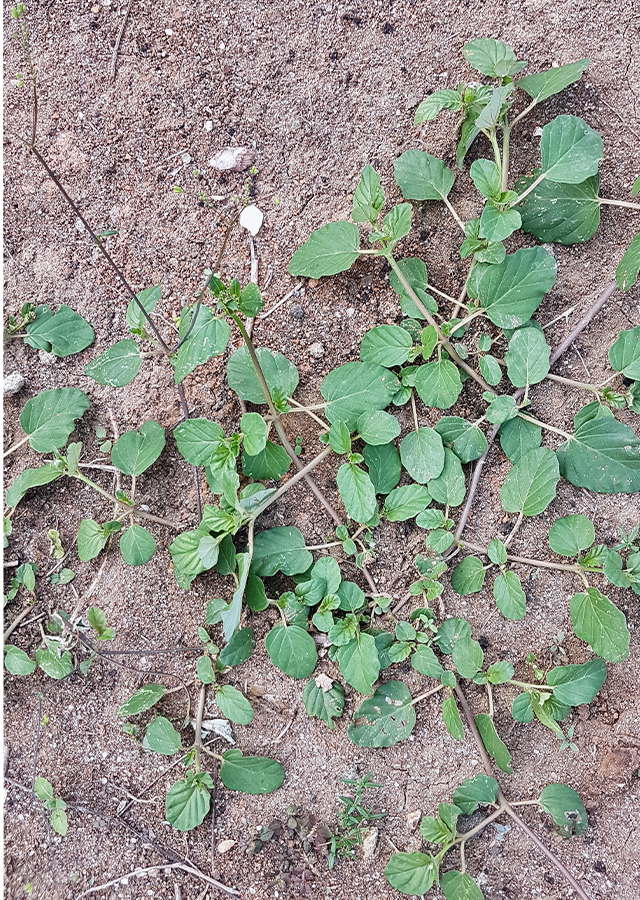
Herbaceous. A plant with vigorous, many-branched stems growing up to 2 m tall.
Part Used
 Leaves
 Seeds
Seeds Fruit
Fruit Roots
Roots The Whole Plant
Growing Requirements
 Full Sunshine
Habitat
 Riverbanks
 Forest
 Coastal
 Roadside
 Grassland
Overview
Red spiderling in ruderal areas, agricultural land, and pastures is a rapidly growing weed widespread. In Argentina, Paraguay, Chile, Trinidad and Tobago, Hawaii, Japan and Cambodia, it was identified as invasive where it invades mainly coastal and ruderal areas. The plant's sticky fruits encourage dispersal. This plant is a herb and other traditional medicines used in Ayurveda.
Vernacular Names
Shu shen (Chinese), Punarnava (India), Boerhaavia à fleurs rouges (French), Agarra-pinto (Portuguese), Escorian morado (Spanish), Punarnava (Nepalese).
Agroecology
B. diffusa is commonly found in open places close to the sea, in dry and warm river valleys, at altitudes of 100-1,900 m. It is common in most tropics and subtropics, and in parts of the temperate region, it has also become naturalized. A sunny location and well-drained soil are favored.
Morphology
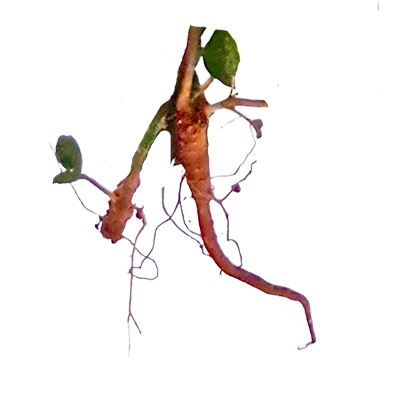
- Roots - tap root is tuberous, cylindrical to narrowly fusiform to conical or tapering, light yellow, brown, or brownish gray.
- Stem - It bears leaves with buds in its axils. Usually aerial, it can however be subterranean is full and cylindrical. It is covered with thin and short hairs interspersed with a few long hairs. It is often tinged with purple.
- Leaves - unequal pairs, ovate to wide ovate, chartaceous, sparsely pilose especially on veins, lower side glaucous, the apex rounded to acute, shortly apiculate, the margins wavy, ciliate, petioles pilose, 0.5-3 cm long
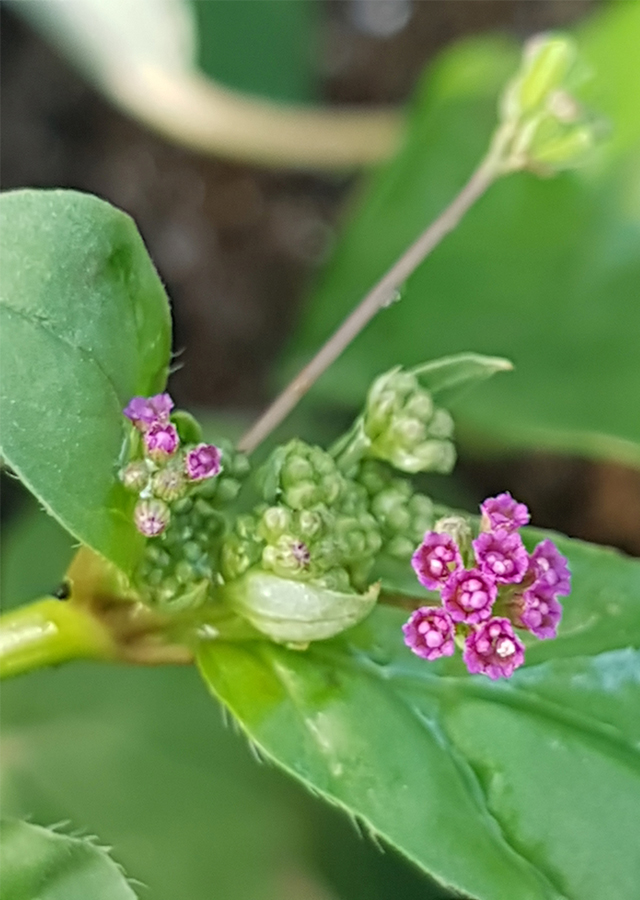
- Flower - in terminal or axillary panicles of umbellate or capitate clusters; pink. Flowering from January-April.
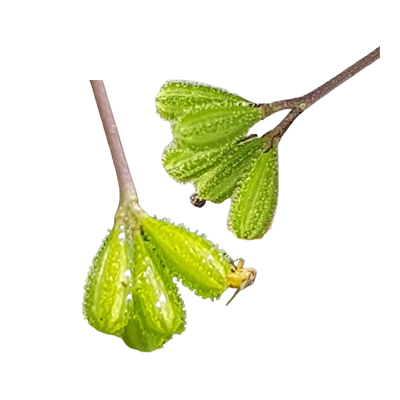
- Fruit - a club-shaped anthocarpous, glandular-hairy. Fruiting throughout the year.
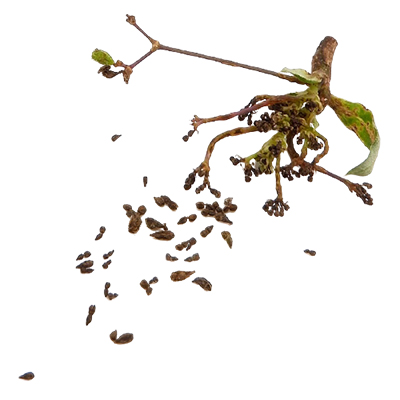
- Seeds - obovoid, 2 mm long, and 1 mm wide. It is ribbed and has a large dorsal-ventral furrow.
Cultivation
Propagation is by rootstocks and by plants, but only 21% of reproduction is due to seeds. The first flowers may appear 4 weeks after the seeds have germinated.
Chemical Constituents
Tanin, steroid, flavonoid, saponin, phlobatannin, phenolic, rotenoid, xanthone, purine nucleoside, β-sitosterol, α-2-sitosterol, palmitic acid, tetracosanoic, hexacosonoic, stearic, arachidic acid, urosilic acid, hentriacontane, β-ecdysone, triacontanol, lignan glycosides.
Traditional Medicinal Uses
- B. diffusa has been used for inflammation, jaundice, asthma, rheumatism, nephrologic disorders, ascites, anemia, and gynecological disorders in different formulations.
- Important anti-inflammatory activity, a cardiotonic effect, a rise in blood pressure, a relaxant effect and promising diuretic activity have been shown in the alcohol extract of the whole plant.
- The whole herb is used, including the root, and bitter, diaphoretic, diuretic, emetic, expectorant, laxative, and stomachic are said to be.
- The boiled roots are applied to ulcers, abscesses and to help with Guinea worm extraction.
- For treating jaundice, a decoction of the leaves is used. In a cataplasm, the leaves are used to treat indurated living conditions.
- Whole plant infusion is used as a mild laxative and febrifuge in children; it is also used for seizures.
- Considered to be bitter, cooling, astringent to intestines in Ayurveda; used for biliousness, leucorrhea, anemia, asthma. In dyspepsia, tumors, stomach pains and splenic enlargement, leaves are used. Roots are used to boost renal and hepatic functions as a diuretic, expectorant, vermifuge and analgesic.