
Curry Leaves
Murraya koenigii (L.) Spreng.
Rutaceae
Location in our garden
Shading Area

Synonym
Bergera koenigii L.
Camunium koenigii (L.) Kuntze
Chalcas koenigii (L.) Kurz
Habitus

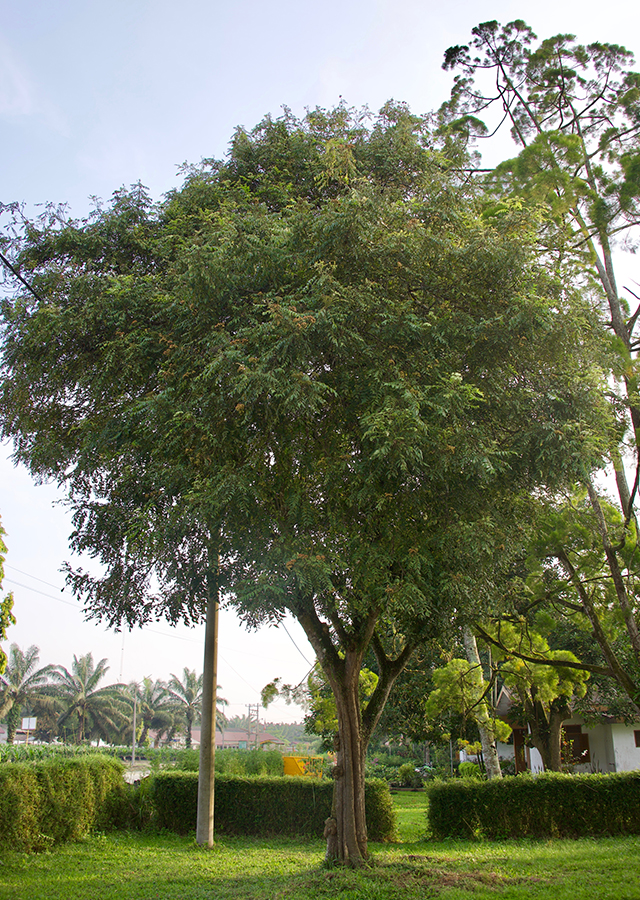
Shrubs. A deciduous plant growing to 6 m in height.
Part Used
 Leaves
 Flowers
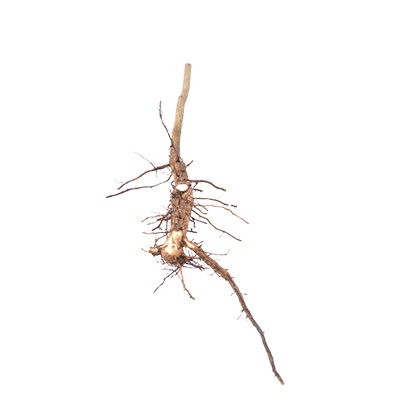
 Roots
Roots Stem
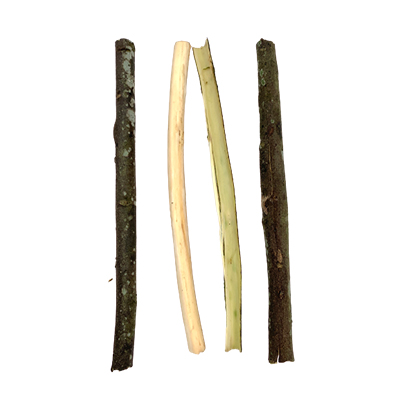
Stem
Growing Requirements
 Full Sunshine
 Drought Resistant
Habitat
 Forest
 Roadside
 Shrublands
Overview
The curry leaf tree, commonly found in Southern Asia and natively to India and Sri Lanka. It is widely grown in gardens and backyards, especially in India and most of South Asia, as it is part of daily cooking.
Vernacular Names
Daun kari pla (Malaysia), Karipatta (India), Kare-rifu (Japan), Diao liao jiu li xiang (China), Feuilles de Cari (French), Curryblatter (German), Kerriebladeren (Dutch).
Agroecology
The curry leaf tree is a plant that can be found up to 1,600 meters from the humid tropics. It grows best in areas where daytime temperatures range from 27 to 41 °C per year. Average annual precipitation in the range of 1,400 - 1,800 mm is preferred, but 500 - 2,500 mm can be tolerated. It grows best in full sunlight. A plant that is very easily grown and that succeeds in most soils and circumstances. Fertile, humus-rich, moisture-retentive, but well-drained, light soil is preferred. It is tolerant of drought.
Morphology
- Stem - brown to almost black, covered in small off-white small spots
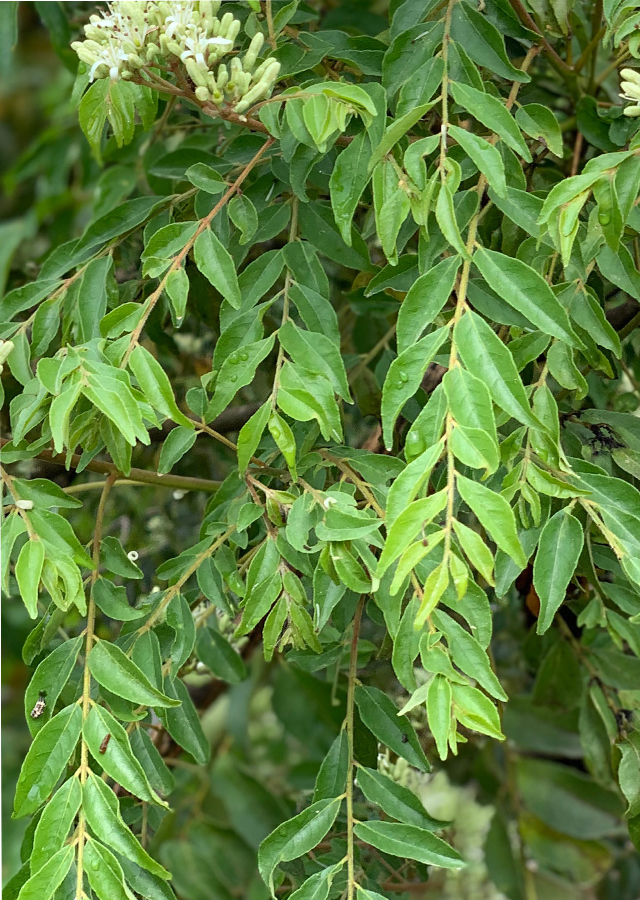
- Leaves - typically odd-pinnate, 11 to 21 leaves, thin, ovate, shiny, dark green leaflets 1 -2 cm long. They are highly aromatic when rubbed or bruised.
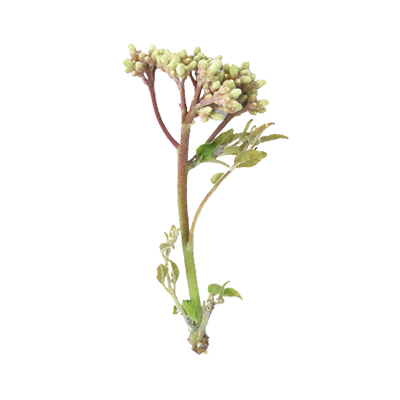
- Flowers - white and fragrant, each up to 0,7 cm across, many-flowered panicles (terminal cymes); bloom irregularly throughout the year.
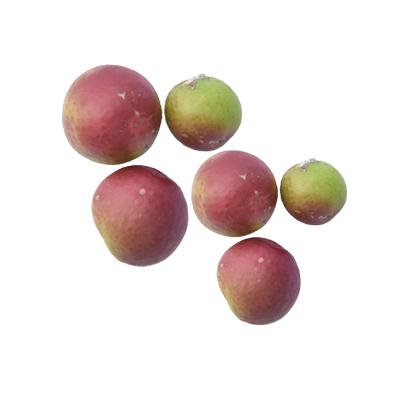
- Fruit - 1-2 seeded, ovoid to oblong, bluish-black fruits (each to 2 to 4 cm in diameter). Fruits are edible but the seeds are not.
Cultivation
Propagation by seeds or cuttings.
Chemical Constituents
Phenol, sterol, steroids, saponins, quinones, alkaloids, flavonoids, tannins, essential oils, terpenoids, caryophyllene, α-pinene, β-phellandrene, α-humulene, germacrene.
Traditional Medicinal Uses
- Antimicrobial, Anti-inflammatory, Anti-diabetic, widening of blood vessels, treat diarrhea, cancer treatment.
- Externally, roots and bark are used to treat skin eruptions and insect bites.
- To treat dysentery and fever, fresh leaves are eaten.
- To promote hair growth, curry leaf is used as a hair tonic, along with coconut oil.
- Bitter, acrid, cooling, anti-helminthic, analgesic leaves, and roots are used to treat piles, relieve body heat, thirst, pain, and itching.
Part Used

Reference Sources
- Brisbane City Council Weed Identification Tool. (No date). Curry Leaf Tree. https://weeds.brisbane.qld.gov.au/weeds/curry-leaf-tree. 24-08-2020
- Chevalier, Andrew (2016) Encyclopedia of Herbal Medicine, pg 238
- Fern, ken. (2019). Useful Tropical Plants. Murraya koenigii. http://tropical.theferns.info/viewtropical.php?id=Murraya+koenigii 25-08-2020
- Gernot Katzer’s Spice Pages. (No date). Curry leaves. http://gernot-katzers-spice-pages.com/engl/Murr_koe.html . 24-08-2020
- Google Books. (No date). Chemistry of Spices, V. A. Parthasarathy, Bhageerathy Chempakam, T. John Zachariah. https://books.google.co.id/booksid=5WY08iuJyawC&pg=PA423&lpg=PA423&dq=murraya+koenigii&source=bl&ots=1NwKUs6WWw&sig=ACfU3U2_XJz-bEODOMaGp7yufvbTYmGaA&hl=de&sa=X&ved=2ahUKEwiouOSIkJLrAhVIWysKHWn0DT4Q6AEwBHoECB4QAQ#v=onepage&q=murraya%20koenigii&f=false. 25-08-2020
- Google Books. (No date). The Encyclopedia of Herbs and Spices, n P N Ravindran https://books.google.co.id/books?id=6pJNDwAAQBAJ&pg=PA330&lpg=PA330&dq=murraya+koenigii&source=bl&ots=L9bZRkw5lO&sig=ACfU3U0iTzvBQfML_OlcasdzHmlM03tiDA&hl=de&sa=X&ved=2ahUKEwiouOSIkJLrAhVIWysKHWn0DT4Q6AEwCXoECBUQAQ#v=onepage&q=murraya%20koenigii&f=false 25-08-2020
- Missouri Botanical Garden. (No date). Murraya koenigii. https://www.missouribotanicalgarden.org/PlantFinder/PlantFinderDetails.aspx?kempercode=d441 25-08-2020
- Research Gate. (2012). A review on Murraya Koenigii: Multipotential Medicinal Plant. https://www.researchgate.net/publication/235758652_A_REVIEW_ON_MURRAYA_KOENIGII_MULTIPOTENTIAL_MEDICINAL_PLANT 25-08-2020