
Heart-Leaved Moonseed
Tinospora crispa (L.) Hook.f. & Thomson
Menispermaceae
Location in our garden
Principal
Synonym
Chasmanthera crispa (L.) Baill.
Cocculus bantamensis Blume
Menispermum crispum L.
Habitus

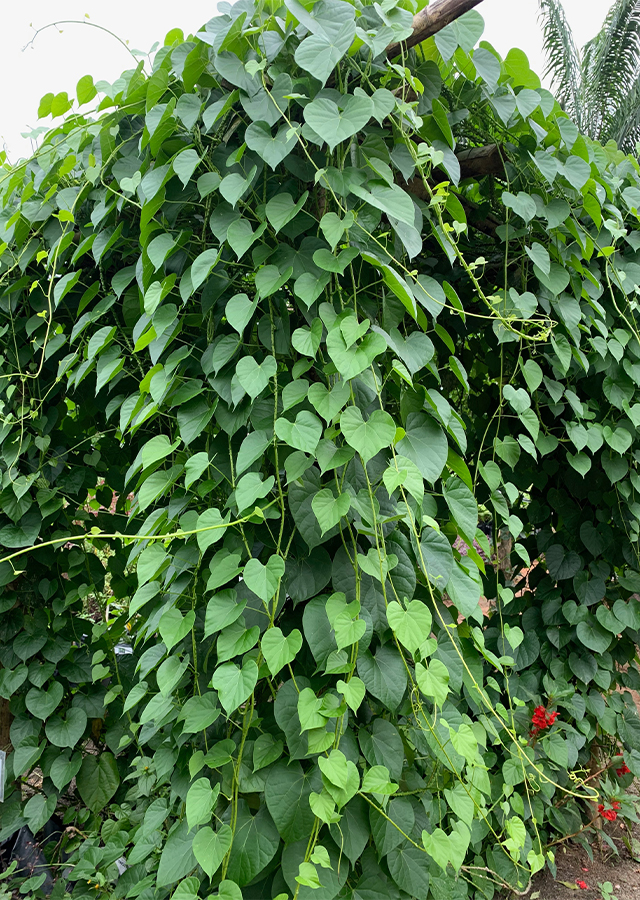
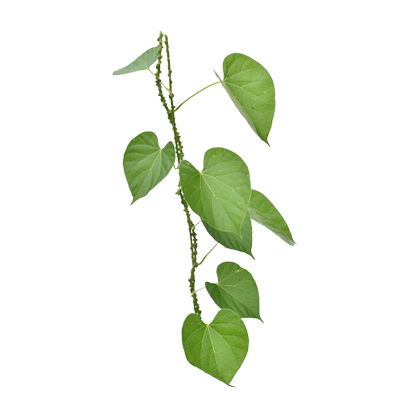
Climbers. Deciduous climbing perennial shrub producing stems up to 15 m long and reaching a height of 4-10 m
Part Used
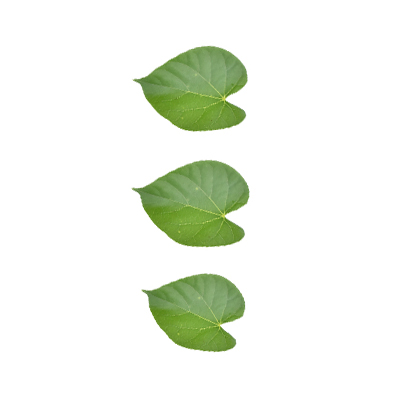
 Leaves
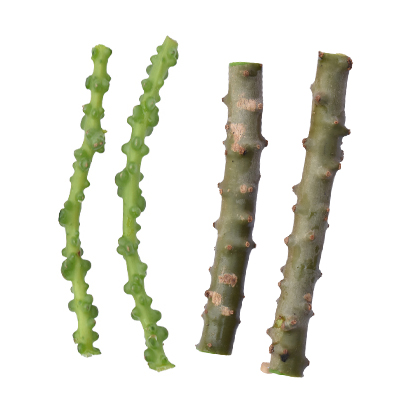
 Stem
Stem
Growing Requirements
 Full Sunshine
Habitat
 Forest
 Shrublands
Overview
Predominantly from Southeast Asia, is native to Asia. In Africa and Asia, it is found in rainforests or mixed deciduous forests. It is a very common medicinal plant in Southeast Asia, where the plant is typically collected from the wild. Further investigations are needed to turn the experience-based arguments regarding the use of T. crispa in conventional medicine practices into evidence-based knowledge for its wide range of pharmacological activities.
Vernacular Names
Guloncho-ban (Bangladesh), Fa leng teng (Chinese), Liane-quinine (French), Giloya (India), Patawali (Malaysia), Makabuhay (Philippines), Brotowali (Indonesia), and Bora phet (Thai).
Agroecology
T. crispa can be found in wastelands, margins of forests, primary rainforests, and mixed deciduous forests, and can also be very prevalent after logging in secondary vegetation and up to 1,000 m high in hedges. It grows in soils that are sandy, loamy, and clay and prefers well-drained soil. It can not grow in the shade.
Morphology
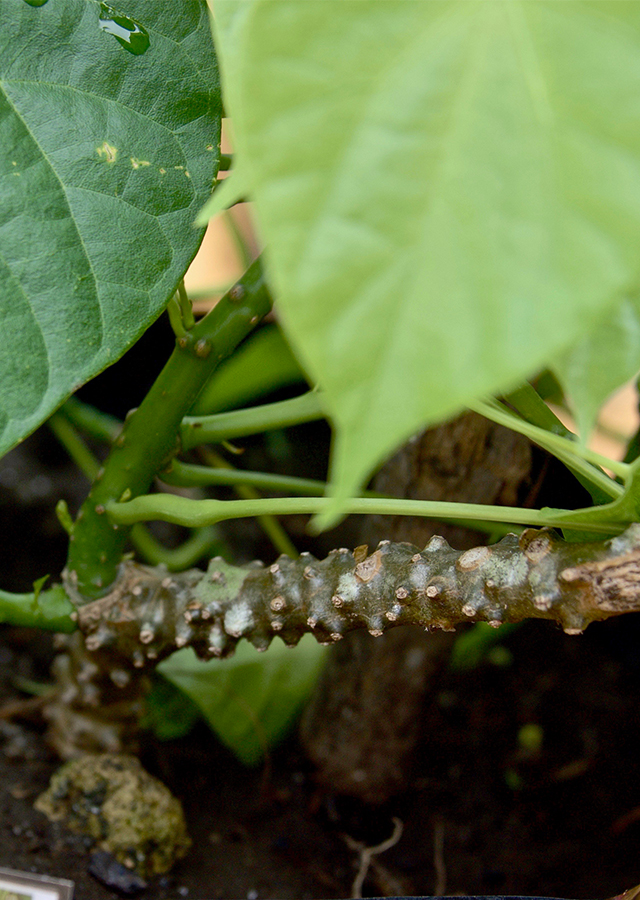
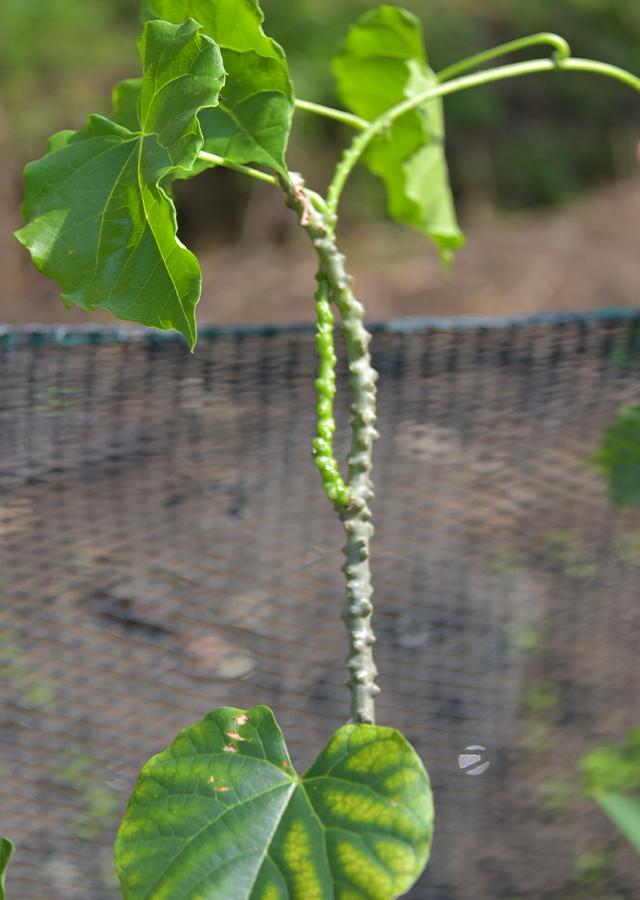
- Stems - with scattered protuberances, up to 1 cm thick, and somewhat fleshy. The plant also generates aerial roots from its stems, which can grow down to > 10 m to root into the soil.
- Leaves - slender, ovate, 6-12 cm long and 7-12 cm wide, smooth and shiny, pointed and truncated or heart-shaped. Petioles measure 3.5-6 cm in length. Racemes are solitary or in pairs, 10-20 cm long, light green, emerging from the axils of fallen leaves.
- Flowers - pale green, petals 3, short pedicelled.
- Fruits - drupe orange, endocarp, 11-13 x 7-8 mm, in long clusters.
Cultivation
Propagated by seeds and stem cuttings, required support for climbing.
Chemical Constituents
Alkaloids, glicoside, pikroretosid, harsa, pikroretin (bitter component), tinokrisposid, berberin, palmatin, columbin, caokulin or pikrotoksin.
Traditional Medicinal Uses
Medicinal Uses
- According to studies, crude extracts and isolated compounds of T. crispa has a wide range of pharmacological activities, including anti-inflammatory, immunomodulatory, antimalarial, antioxidant, cardio-protective, antibacterial, antifilarial, cytotoxic, and anti-diabetic.
Traditional Uses
- The plant is typically prescribed as a decoction or in powder form in the treatment of fevers, indigestion, stomach trouble, and diarrhoea.
- An infusion of the stem is drunk as a vermifuge in Malaysia and Indonesia and of the whole plant to treat cholera. It is used for the treatment of diabetes too.
- In Thailand, an infusion from the stem is used to treat jaundice, cholera, malaria, and against worms in children.
- Stem juice is used for the treatment of intestinal diseases, rheumatism, jaundice, skin disease, paralysis, leprosy and body pain in Bangladesh.
- For a variety of rheumatic and arthritic complaints, pounded stem, mixed with coconut oil, was used, even for abdominal colic.
- Externally, a decoction of the stem is considered an effective cure if used as a wash for tropical ulcers, external parasites, and is also an outstanding vulnerary for itching, natural and cancerous wounds.
Part Used
Reference Sources
- Ahmad, W., Jantan, I., and Bukhari, S.N.A. (2016). Tinospora crispa (L.) Hook. f. & Thomson: A Review of Its Ethnobotanical, Phytochemical, and Pharmacological Aspects. https://www.frontiersin.org/articles/10.3389/fphar.2016.00059/full. 24-11-2020.
- E-Flora of India. (No date). Database of Plants of Indian Subcontinent: Tinospora crispa. https://sites.google.com/site/efloraofindia/species/m---z/m/menispermaceae/tinospora/tinospora-crispa. 24-11-2020.
- Fern, K. (2014). Useful Tropical Plants. Tinospora crispa. http://tropical.theferns.info/viewtropical.php?id=Tinospora+crispa. 27-09-2020.
- Health Benefit Times. (No date). Health benefits of Tinospora crispa. https://www.healthbenefitstimes.com/tinosporacrispa. 27-09-2020.
- Kew Science. (No date). Plants of the World online - Tinospora crispa (L.) Hook.f. & Thomson. http://www.plantsoftheworldonline.org/taxon/urn:lsid:ipni.org:names:581600-1. 27-09-2020.
- PFAF. (No date). Tinospora crispa - (L.) Hook.f. & Thomson. https://pfaf.org/user/Plant.aspx?LatinName=Tinospora+crispa. 24-11-2020.
- StuartXchange. (2016). Philippine Medicinal Plants. Makabuhay - Tinospora crispa (L.) Hook.f. & Thomson, HEAVENLY ELIXIR http://www.stuartxchange.org/Makabuhay.html. 27-09-2020.