
White Alder
Turnera subulata Sm.
Passifloraceae
Location in our garden
Principal
Synonym
Turnera elegans Otto
Turnera mollis Kunth
Turnera peruviana Willd. ex Schult.
Habitus

Shrubs. Erect shrub, annual, growing about 30 - 80 cm high.
Part Used
 Leaves
 Flowers
 Roots
Roots
Growing Requirements
 Full Sunshine
Habitat
 Terrestrial
Overview
Turnera subulata or white alder is a plant native to the West Indies, Brazil and Central America which later became naturalized in the Indian subcontinent and spread all over the world. In Indonesia, Turnera subulata flowers are often found in Java, Sumatera and Kalimantan. This plant is widely used as an ornamental plant, pest control, also used as herbal medicine to treat certain diseases in the body. In the plantation area, this plant is often planted around staple crops because it attracts some predatory insects for some pests. T. subulata is used in the northeastern region of Brazil for the treatment of amenorrhea and dysmenorrhea. T. subulata is a source of nectar and food for the Sycanus insect, a predator that preys on caterpillars that are detrimental to oil palm plantations, which play an important role in maintaining leaf-eating caterpillar populations.
Vernacular Names
No information found on this. Need further research.
Agroecology
T. subulata is found growing wild in wastelands, fields, feedlots, edges of waterways, and generally grows in groups. Most easily found in dry sandy soil areas at an altitude of 10-250 m above sea level, in places exposed to direct sunlight or slightly protected. However, this species must receive full sunlight for full bloom.
Morphology
- Roots - tap root, strong and densed.
- Stems - erect, cylindrical, woody, smooth, green-brown.
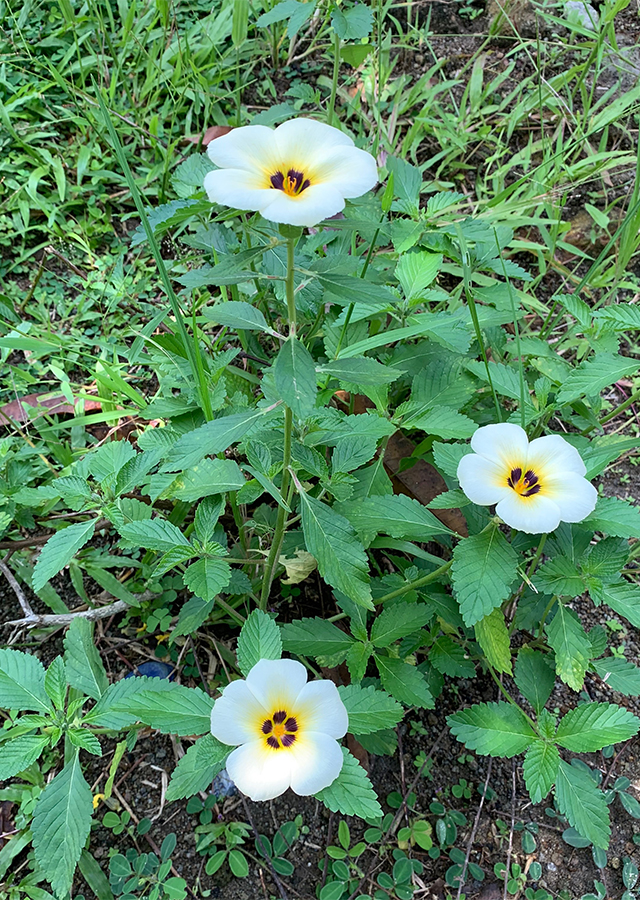
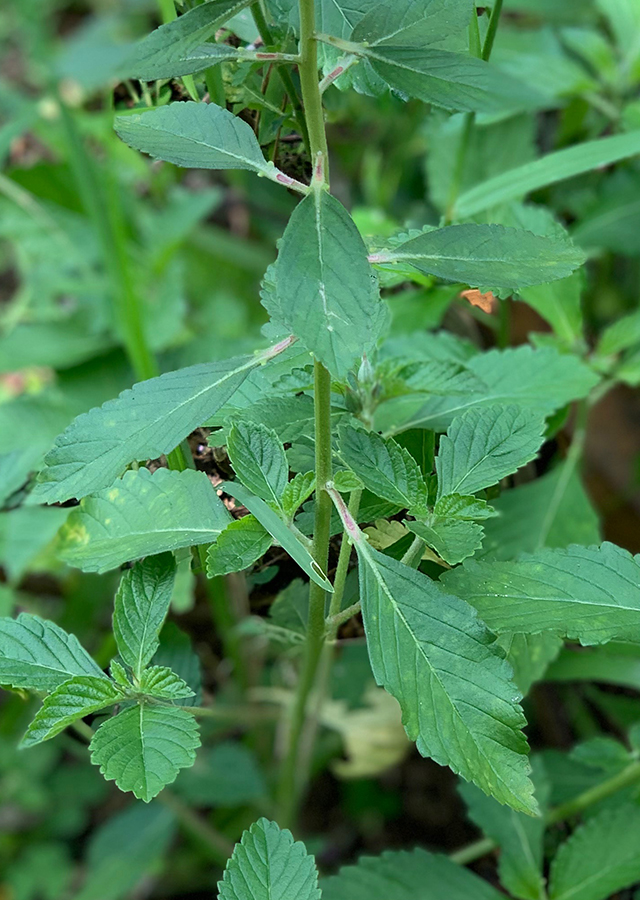
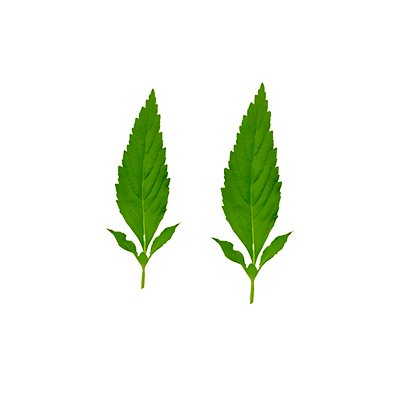
- Leaves - unifoliate, green, lanceolate in shape, has a toothed leaf edge, acuminate, leaf base rounded or obtuse, leaf arrangement spiral, stemmed. There are a pair of rounded glands, greenish to yellowish in color at the base of the leaf blade on both sides of the petiole. Pinnate venation, prominent with leaf blades slightly protruding between the veins. The leaf surface is covered with short white hairs. The size of the leaves is smaller than the leaves of Turnera ulmifolia.
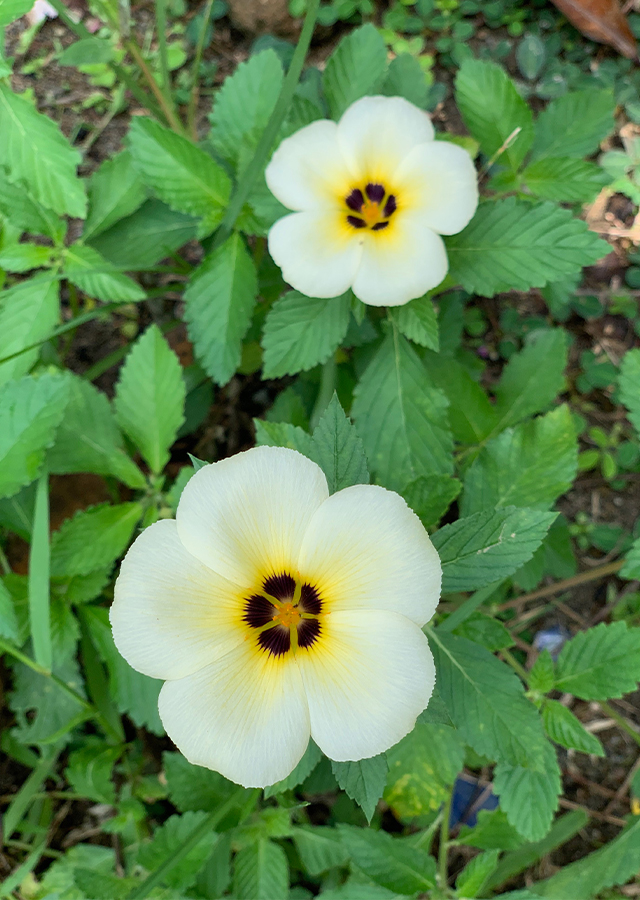
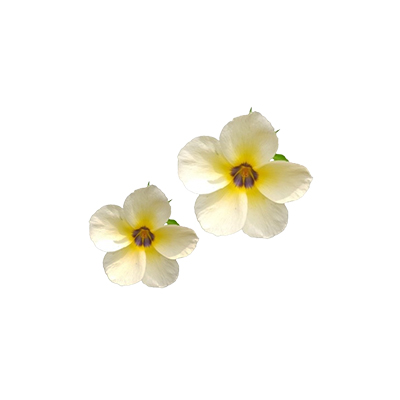
- Flowers - large, consisting of 5 oval-shaped petals or breech eggs which are creamy-white with a yellow color around the center, the crown strands are also slightly hairy. There are 2 forms of flowers, namely thrum flowers where the stamens (male, the pollen-producing part) are taller than the pistil (female, the egg-producing part) and pin flowers where the stamens are shorter than the pistils. Flowers cannot self-pollinate, needing pollen from other flowers to produce seeds. Flowers bloom around 8 am and wither around 12 noon. The flowers appear in the axils of the taller leaves.
- Fruits - wide egg-shaped, with more than 30 seeds.
Cultivation
Propagated by seeds, cuttings, and division.
Chemical Constituents
Saponins, polyphenols, flavonoids, kaempferol, steroids, phaeophytin, limonene, cineol, terpinene, phenolics, terpenoids, benzenoids, alkaloids.
Traditional Medicinal Uses
- Used as tonic and improve blood flow.
- Treat ulcers, rheumatic joints accompanied by swelling, swelling due to bruises.
- Relieve inflammation of the throat, relieve stress.
- Overcome digestive disorders (such as flatulence, no appetite), weakness after recovering from serious illness, diabetes, hypertension, chronic pain, amenorrhea (absence of menstruation), dysmenorrhea (painful menstruation).
- Treating tumors, influenza, wounds, gastrointestinal and respiratory diseases.
- Has anti-inflammatory, antibacterial, antibiotic, antioxidant properties.
Part Used

Reference Sources
- Royal Botanic Gardens, Kew. Plants of the World Online: Turnera subulata Sm.. https://powo.science.kew.org/taxon/urn:lsid:ipni.org:names:836689-1. 18-01-23.
- Flora Fauna Web. 2022. Turnera subulata. https://www.nparks.gov.sg/florafaunaweb/flora/2/5/2534. 18-01-23.
- IDN Medis. 2023. Turnera Subulata: Manfaat – Efek Samping Dan Tips Penggunaan. https://idnmedis.com/turnera-subulata. 18-01-23.
- Saravanan M. et al. 2018. Phytochemical and pharmacological profiling of Turnera subulata Sm., a vital medicinal herb. Industrial Crops and Product Vol 124 : 822-833. https://www.sciencedirect.com/science/article/abs/pii/S0926669018307647. 18-01-23.
- Flowers of India. White Alder. http://www.flowersofindia.net/catalog/slides/White%20Alder.html. 18-01-23.