
Mexican Petunia
Ruellia simplex C.Wright
Acanthaceae
Location in our garden
Principal

Synonym
Arrhostoxylum microphyllum Ness
Ruellia brittoniana Leonard
Ruellia coerulea Morong
Habitus

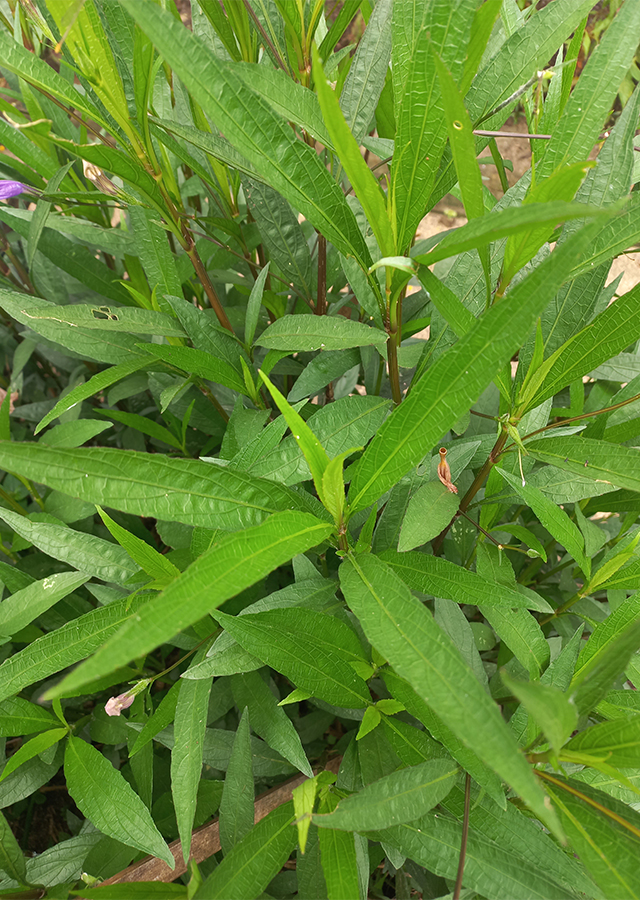
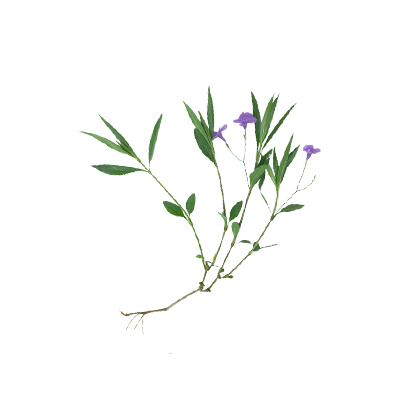
Herbaceous. An evergreen perennial, herbaceous plant growing up to 1 m high
Part Used
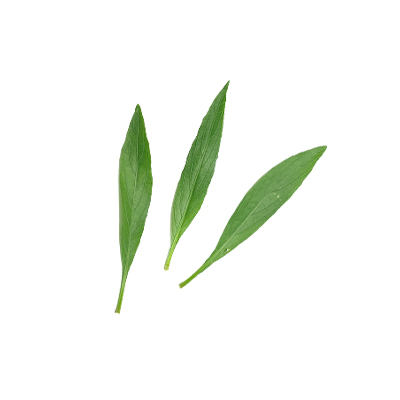
 Leaves
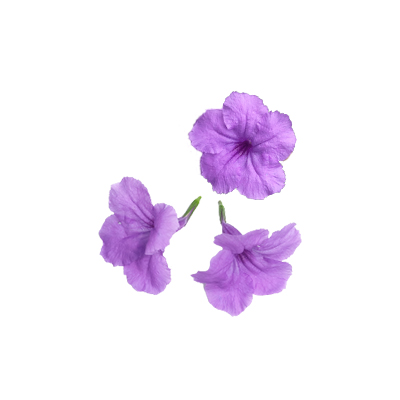
 Flowers
 The Whole Plant
Growing Requirements
 Full Sunshine
 Need Shade
 Drought Resistant
Habitat
 Riverbanks
 Roadside
 Grassland
 Terrestrial
Overview
R. simplex is native to Mexico, the West Indies, western Bolivia, southwestern Brazil, Paraguay, Uruguay, and northeastern Argentina. It has been introduced as an ornamental in North America, Australia, Asia, and on several islands in the Pacific Ocean. R. simplex has been widely commercialized as an ornamental. It is also grown as a potted-plant. Many cultivars of this species have been selected commercially and are now available in the nursery and landscape industry. Despite being highly weedy, R. simplex is very popular among consumers, landscapers and growers.
Vernacular Names
A las doce me voy (Spanish), Guaucí (Dominican).
Agroecology
R. simplex grows in wet, disturbed sites including drainage ditches, shores of ponds or lakes, and moist to wet wooded areas. It grows well in both wet and dry conditions, and plants may survive in drier sites with full sunlight exposure. Mexican petunia prefers medium to wet soil that is fertile, well-drained, and flowers best in full sun. Mexican petunia is a tolerant plant. It is willing to grow in boggy wet conditions, in soil that varies from wet to dry, and tolerates high heat and humidity. Once established, the plant does well in drought conditions.
Morphology
- Stems - many, glabrous, often woody at the base, rhizomatous.
- Leaves - opposite, linear-lanceolate to linear-elliptic, to 25 cm long and 2 cm wide, veins prominently raised beneath; margins entire to wavy, bases tapering, tips pinched to a long point; petioles to 2 cm long, often purplish or red.
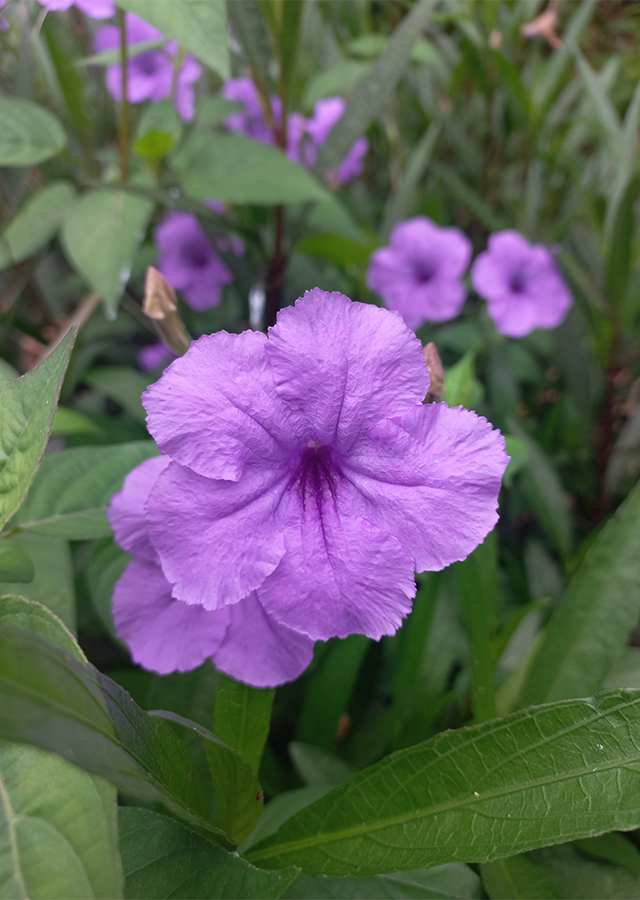
- Flowers - in clusters or solitary on long axillary stalks, each flower subtended by 2 linear bracts; calyx lobes 5, linear, to 1 cm long; corolla lavender with a darker purple throat, to 4.5 cm long, tube to 1.5 cm long, flaring to 5 rounded lobes.
- Fruits - light brown fruits are long, containing 4-20 tiny seeds.
- Seeds - cylindrical seed pods with pointed tips.
Cultivation
Propagated by seeds and stem cuttings.
Chemical Constituents
Flavonoids, lignans, coumarins, alkaloids, triterpenes, sterols, phenolic glycosides, phenyl ethanoids, megastigmane glycosides, benzoxazinoid glucosides, tanin, 5, 2, 3-trihydroxy 7-O-glucoflavone; 5,7,4-trimethoxy 3-O-Rhamnoflavone and 2,2,4,6 -tetrahydroxy-chalcone.
Traditional Medicinal Uses
The genus has been traditionally claimed to be used for the treatment of flu, asthma, fever, bronchitis, high blood pressure, eczema, and diabetes.
Part Used
Reference Sources
- CABI. Ruellia simplex (Mexican petunia). https://www.cabi.org/isc/datasheet/110307. 27-08-22.
- National Parks. Flora & Fauna Web. 2022. Ruellia simplex. https://www.nparks.gov.sg/florafaunaweb/flora/2/3/2397. 27-08-22.
- North Carolina Extension Gardener Plant Toolbox. Ruellia simplex. https://plants.ces.ncsu.edu/plants/ruellia-simplex/. 27-08-22.
- Afzal, Khurram. etc. Pub Med. GENUS RUELLIA: PHARMACOLOGICAL AND PHYTOCHEMICAL IMPORTANCE IN ETHNOPHARMACOLOGY. 2015. https://pubmed.ncbi.nlm.nih.gov/26665388/#:~:text=The%20phytochemicals%20constituents%3A%20glycosides%2C%20alkaloids,pressure%2C%20eczema%2C%20and%20diabetes. 27-08-22.