
Rainforest Spinach
Elatostema reticulatum Wedd.
Urticaceae
Location in our garden
Green House
Synonym
Elatostema reticulatum var. glabrum Domin
Elatostema reticulatum var. minus Domin
Elatostema reticulatum var. sessile Benth.
Habitus

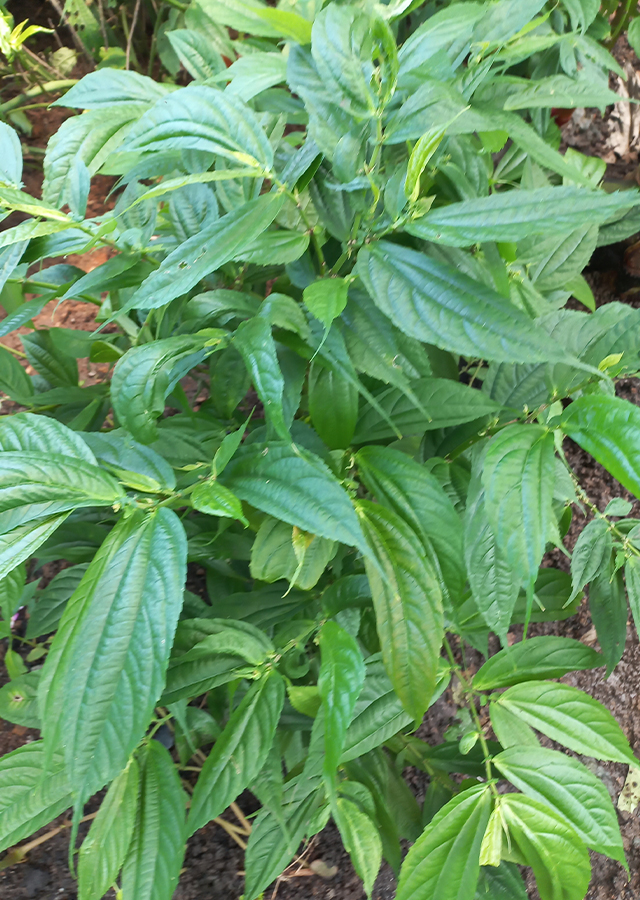
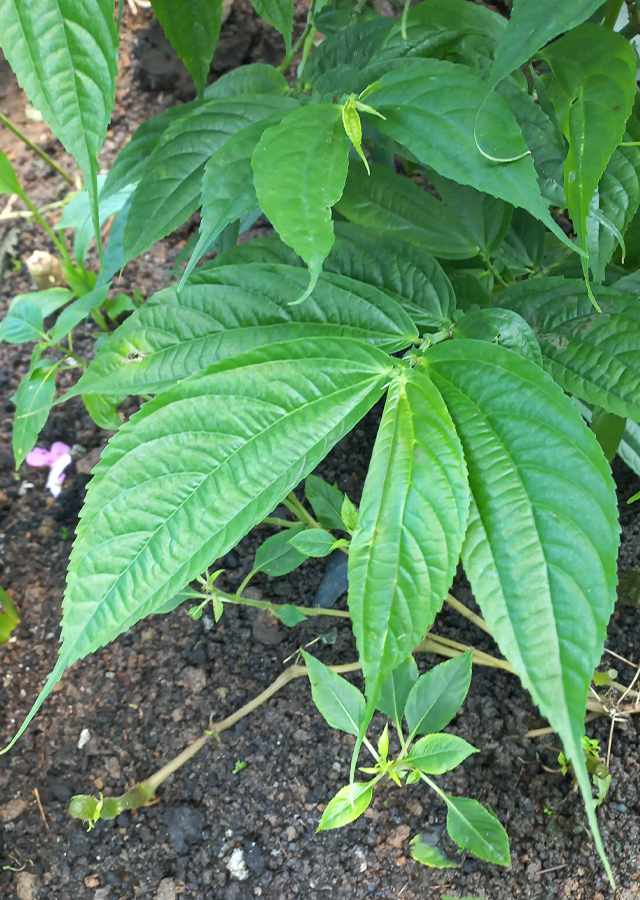
Herbaceous. A coarse, straggling, evergreen perennial herb with stems growing 50 - 100 cm tall
Part Used
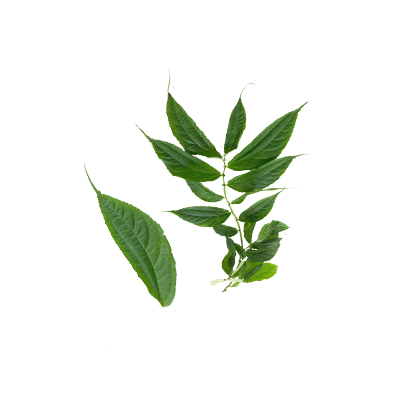
 Leaves
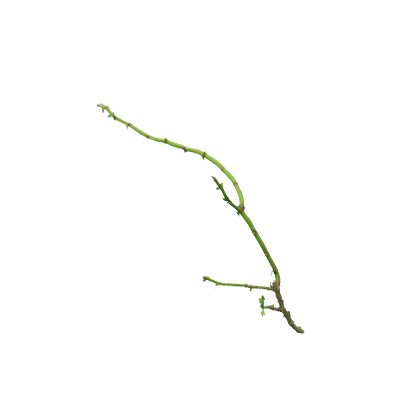
 Stem
Stem
Growing Requirements
 Need Shade
Habitat
 Riverbanks
 Forest
 Rocky Areas
 Terrestrial
Overview
Elatostema reticulatum is a plant from the Urticaceae family originating from Eastern Australia, Solomon Island. This species can be consumed as a vegetable, where the young stems and leaves can be cooked instead of spinach. Traditionally, this species has also been used as a medicinal herb, which is believed to be able to overcome complaints of disease, especially complaints of digestive disorders.
Vernacular Names
No found data on this. Need further research.
Agroecology
Rainforest spinach grows in damp to wet shaded areas on rocks along or in creeks in the rainforest. The altitude range is at an altitude of 110 to 1,250 m above sea level.
Morphology
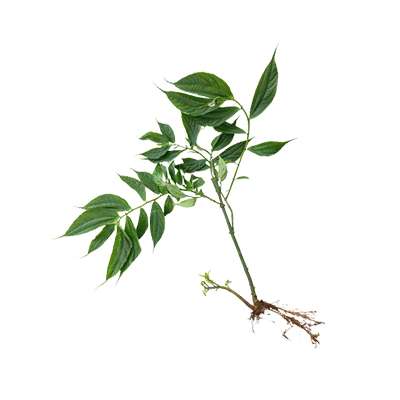
- Roots - tap root.
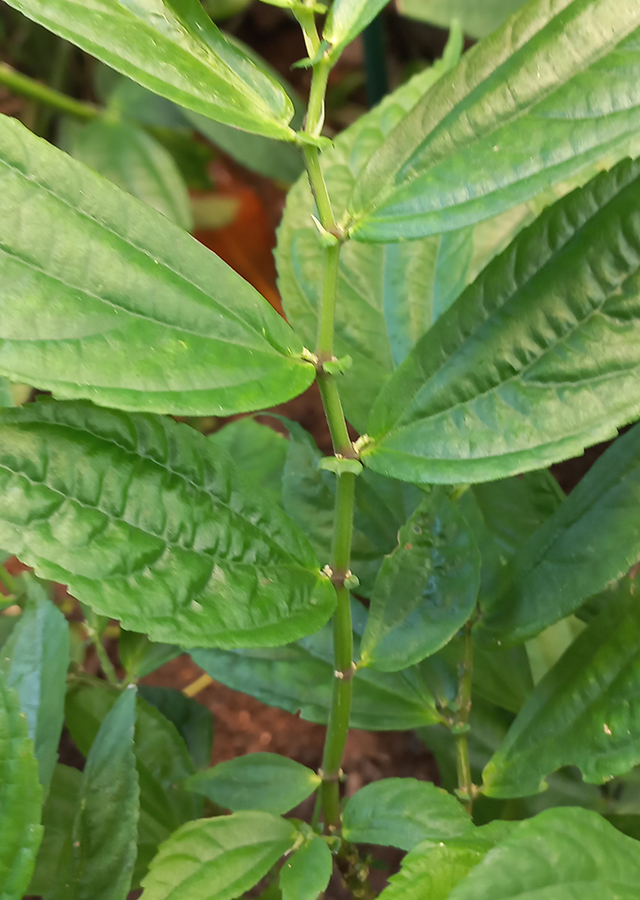
- Stems - about 7 mm in diameter, green, round, hairy.
- Leaves - single, opposite, green, leaves sitting or sessile (petiole length < 2 mm) or short-stemmed (2-4.5 mm long), non-lobed lamina. The stipules are narrow triangular in shape, covering the terminal shoots. Leaf blades that are sparsely hairy on the lower surface (abaxial surface), glabrous on the upper surface (adaxial surface), ovate to elliptical, often slightly falcate, uniformly toothed leaf margins, leaf base asymmetrical or oblique, leaf tip or apex tapering (acuminate), the surface is not wrinkled (rugose). The veins are pinnate, symmetrical, with 10-13 pairs of veins. Cystoliths are linear, present in primary, secondary and tertiary veins on the lower (abaxial) surface. Oil spots are visible on the upper surface of the leaf blade as small craters.
- Flowers - unisexual, flowers are borne in dense umbels subtended by bracts. Tepals greenish to transparent with ribs on the outer surface that extend beyond the blunt apex. Male inflorescences are pedunculated, branched, irregular, involucral bracts present, hairy. Female inflorescences sessile, involucral bracts present, hairy.
- Fruits - achene, uncovered (or only partially), tuberculous, small, smooth surface, star-shaped, purplish in color.
Cultivation
Propagated by seeds, stem cuttings and division.
Chemical Constituents
No found data on this. Need further research.
Traditional Medicinal Uses
- Treating stomach pain, diarrhea and vomiting.
Part Used
Reference Sources
- Royal Botanic Gardens, Kew. Plants of the World Online: Elatostema reticulatum Wedd.. https://powo.science.kew.org/taxon/urn:lsid:ipni.org:names:852148-1. 23-07-22.
- Fern. Ken. Tropical Plants Database. 2021. Elatostema reticulatum. https://tropical.theferns.info/viewtropical.php?id=Elatostema+reticulatum. 23-07-22.
- CSIRO. 2020. Elatostema reticulatum Wedd. https://apps.lucidcentral.org/rainforest/text/entities/elatostema_reticulatum.htm. 23-07-22.
- Hadiah J.T. 2007. Systematics of Elatostema (Urticaceae). Thesis. University of New South Wales. Sydney.