
Cat's Claw Creeper
Dolichandra unguis-cati (L.) L.G.Lohmann
Bignoniaceae
Location in our garden
Principal
Synonym
Batocydia exoleta Mart. ex DC.
Bignonia unguis-cati L.
Macfadyena unguis-cati (L.) A.H.Gentry
Habitus

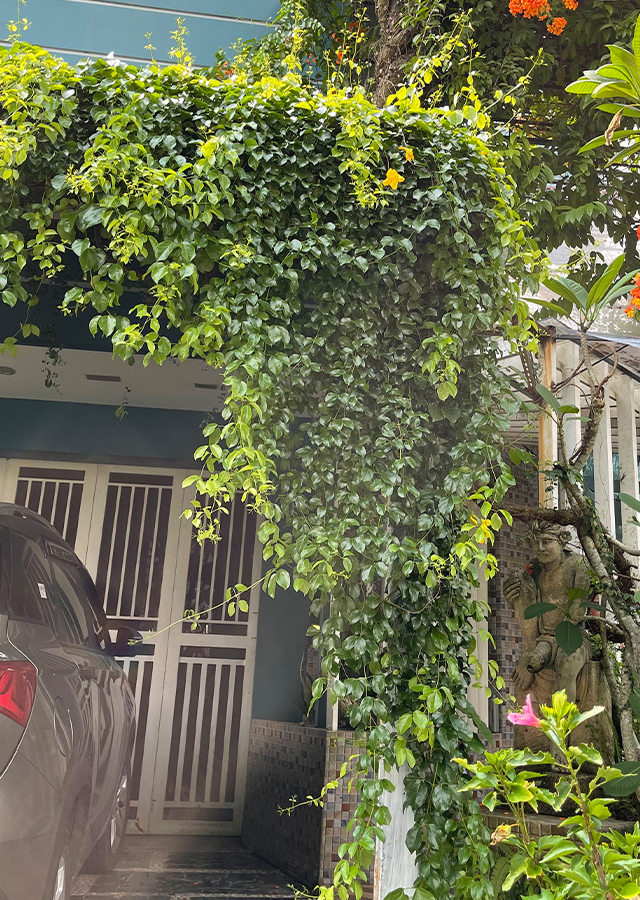
Climbers. A vigorous, woody vine that can climb up to 15 m or higher
Part Used
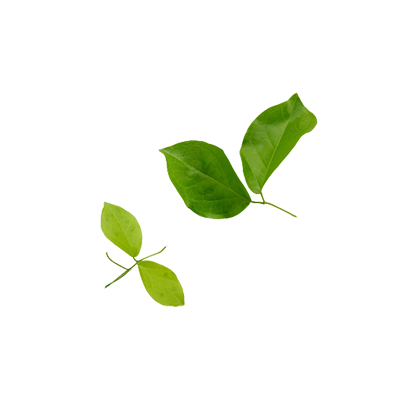
 Leaves
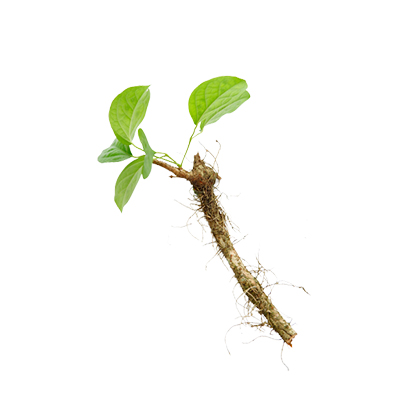
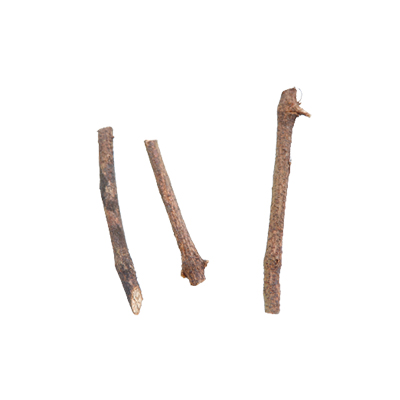
 Stem
Stem The Whole Plant
Growing Requirements
 Full Sunshine
 Need Shade
 Drought Resistant
Habitat
 Wetland
 Riverbanks
 Forest
 Coastal
 Roadside
 Shrublands
 Terrestrial
Overview
D. unguis-cati comes from tropical America from Mexico to Argentina and West Indies, including Trinidad and Tobago. This species has been widely commercialized as an ornamental plant and can now be found to be naturalized in Asia, Africa, Europe, Australia, and in many islands in the Pacific Ocean. This species also has good benefits for health and has been used as a medicinal plant in several countries.
Vernacular Names
Bejuco de gato (Spanish), Griffe à chatte (French), Uña de murciélago (Mexican), Unha-de-gato (Portuguese).
Agroecology
D. unguis-cati grows in tropical dry forest, tropical and premontane moist forest, rainforests at middle and lower elevations, savannas, seasonally deciduous forest and Amazonian seasonally waterlogged forests.
Morphology
- Stems - cylindrical, lenticellate, up to 6 cm in diameter; cross section of the mature stem with multilobed xylem, the lobes alternating with radially arranged phloem tissue; nodes thickened; interpetiolar zone not glandular. Pseudostipules are ovate, approximately 5 mm long.
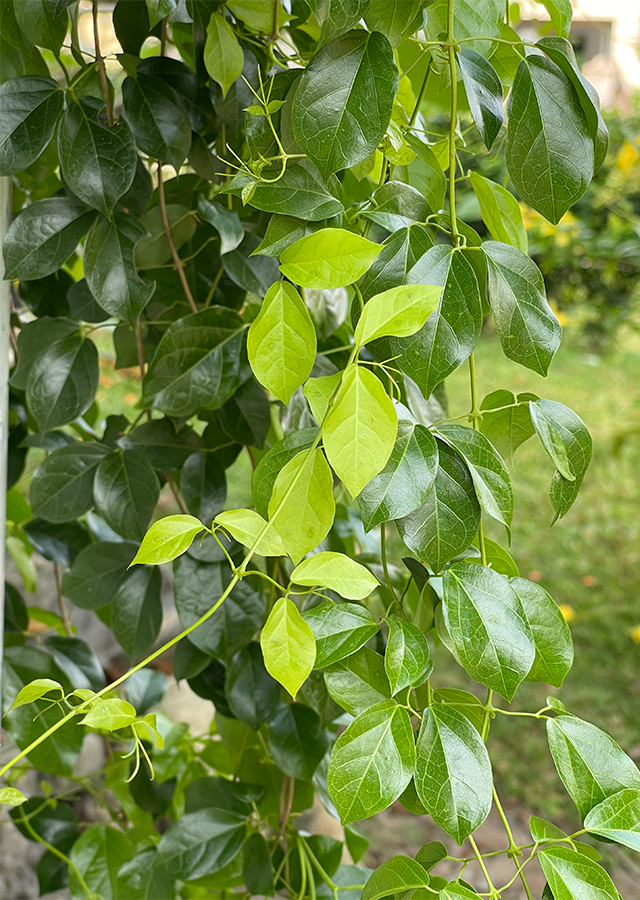
- Leaves - opposite, 2-foliolate, with a terminal tendril, trifid like a claw, generally of short duration; leaflets 6-16 x 1.2-7 cm, elliptical, oblong or obovate, chartaceous or coriaceous, glabrous or with punctiform scales, the apex acute or acuminate, the base acute, rounded, or unequal, the margins undulate or rarely denticulate; upper surface dark, shiny, with sunken venation; lower surface light green, dull, with prominent venation; petioles 1-4.5 cm long, petiolules 0.5-2.5 cm long, both glabrous.
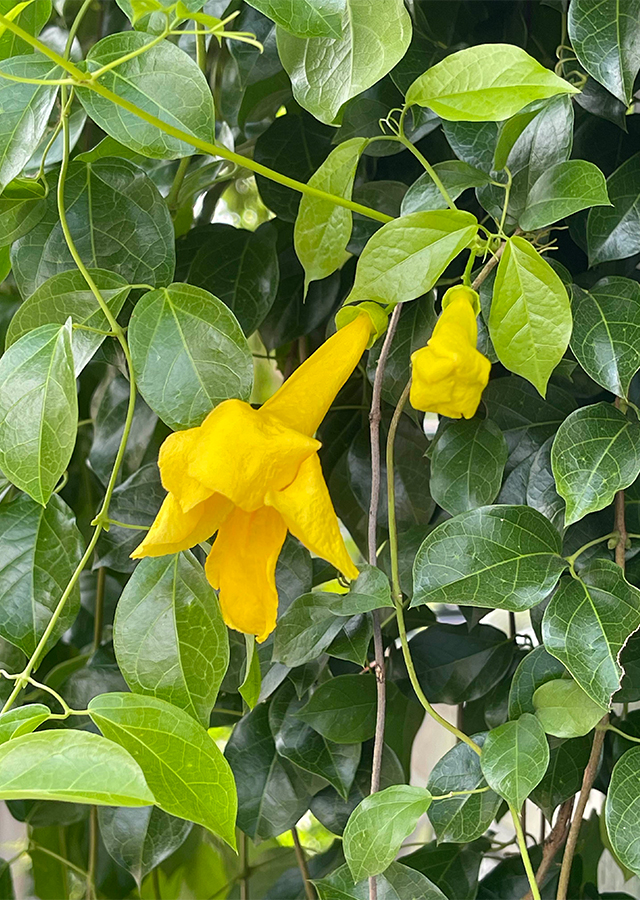
- Flowers - solitary or in pairs, axillary; pedicel 2 cm long. Calyx is green, campanulate, 12-16 mm long, with five unequal lobes; corolla brilliant yellow, infundibuliform, 4-8 cm long, the limb 3-6 cm in diameter, with five unequal lobes, rounded; 4 stamens, didynamous, inserted; ovary covered with punctiform scales.
- Fruits - linear, somewhat woody, brown, 25-95 cm long.
- Seeds - numerous, 1-3.5 cm long, with two membranaceous wings.
Cultivation
Propagated by seeds and stem cuttings.
Chemical Constituents
Phenolic compounds, six flavonoids (8, methoxy, acacetin, 7-O glucoside; 6, methoxy apigenin 7-O glucoside; 4‵-O methyl scutellarin, 6-O apiosyl galactoside; acacetin, 7-O glucosyl, 8-C rhamnosyl , 3-O-α arabinofuranoside; 4‵-methyl, 6-methoxy kaempferol, 7-O, 8-C diglucoside and vicenin II), lapachol, quinovic acid, 3-(O-fucosyl) alcohol, β-amyrin, and β-sitosterol.
Traditional Medicinal Uses
- Leaves and stems are used as sudorific for fevers and as emollient, to treat coughs, for a febrifuge and as a diuretic, and to treat snakebites.
- It is also used for female sterility and haemorrhage in Guyana.
Part Used
Reference Sources
- Royal Botanic Gardens, Kew. Plants of the World Online. Dolichandra unguis-cati (L.) L.G.Lohmann. https://powo.science.kew.org/taxon/urn:lsid:ipni.org:names:77100466-1. 01-07-22.
- CAB International. 2022. Invasive Species Compendium: Dolichandra unguis-cat (cat's claw creeper). https://www.cabi.org/isc/datasheet/9159#tosummaryOfInvasiveness. 01-07-22.
- Flora Fauna Web. 2022. Dolichandra unguis-cati (L.) A. Gentry. https://www.nparks.gov.sg/florafaunaweb/flora/1/4/1444. 01-07-22.
- BioNET-EAFRINET, Keys and Fact Sheets. Macfadyena unguis-cati (Cat's Claw Creeper). https://keys.lucidcentral.org/keys/v3/eafrinet/weeds/key/weeds/Media/Html/Macfadyena_unguis-cati_(Cats_Claw_Creeper).htm. 01-07-22.
- E.A. Aboutabl, F.A. Hashem, A.A. Sleem, A.A. Maamoon. 2008. Flavonoids, Anti-Inflammatory Activity and Cytotoxicity of Macfadyena unguis-Cati L. African Journal of Traditional, Complementary and Alternative Medicines, 5(1): 18-26.