
Nam-Nam
Cynometra cauliflora L.
Fabaceae
Location in our garden
Orchard
Synonym
Cynometra acutifolia S.Vidal
Habitus

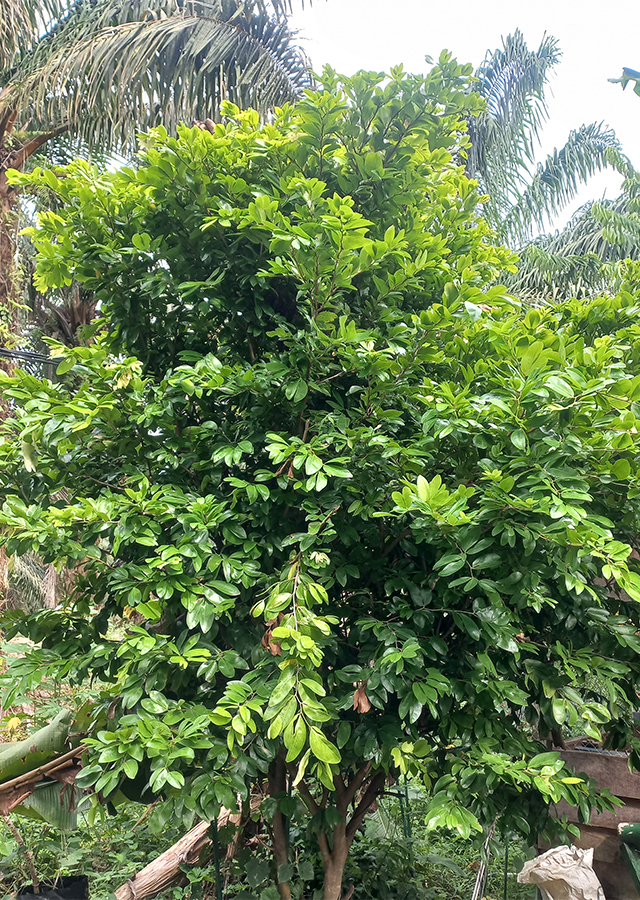
Shrubs. An attractive shrub or small tree with a rather dense crown and zigzag twigs, growing from 3-15 m tall.
Part Used
 Leaves
 Fruit
Fruit
Growing Requirements
 Full Sunshine
 Need Shade
Habitat
 Terrestrial
Overview
Nam-nam is only known in the cultivated state from South-East Asia and India. Possibly it originated in eastern Malesia. The tree has a very long history of cultivation both for food and as an ornament, but only on a garden scale. The young fruit is very sour, but the acid content decreases with maturity. The mature fruit can be eaten fresh or cooked with sugar to make sweets (compote). It can also be made into a fruit salad, pickled, or be used to prepare a special "sambal" (a condiment based on pounded chili). The tree makes an attractive ornamental plant in home gardens and is also potted and grown as bonsai plant. The seedpods are highly valued as a food and as an ingredient for traditional medicine, and are sold in local markets.
Vernacular Names
Puki anjing (Malay), Amphawa (Thai).
Agroecology
Nam-nam grows well in wet tropical lowlands, but experience in India suggests that it is more fruitful in monsoon climates with a distinct dry season. It succeeds at elevations up to 400 metres. It grows best in areas where annual daytime temperatures are within the range 22-35 °C, but can tolerate 17-40 °C. It prefers a mean annual rainfall in the range 1,500-2,000 mm, but tolerates 1,200-2,500 mm. Prefers a position in full sun but tolerates some shade. Prefers a pH in the range 5-6, tolerating 4.5-6.5. The tree is wind resistant.
Morphology
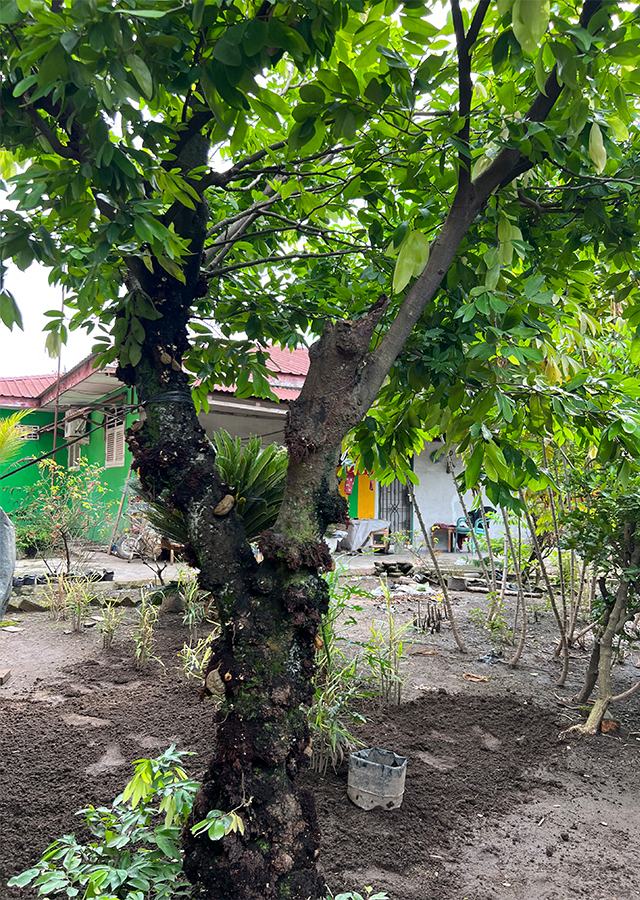
- Stem - smooth, brownish or greyish.
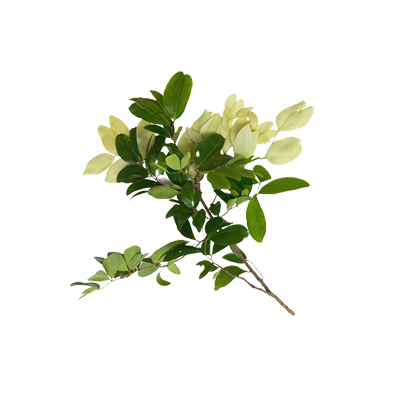
- Leaves - one-jugate with 1 pair of leaflets, petiole 2-8 mm long; leaflets ovate-oblong, very asymmetric, 5.5-16.5 cm × 1.5-5.5 cm, almost sessile, drooping.
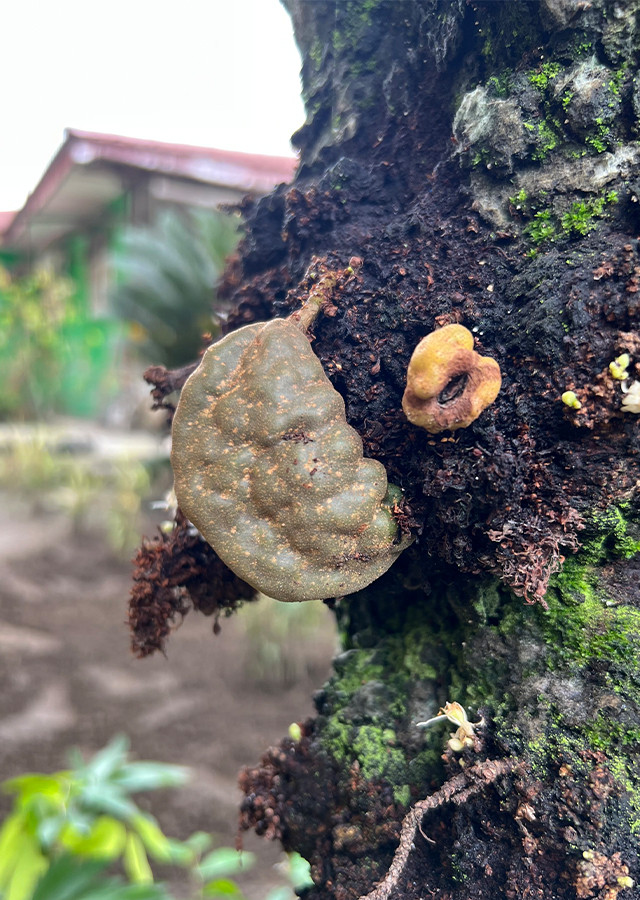
- Flower - inflorescences cauliflorous, 4-5 small racemes crowded together on hard knots on the trunk right down to the ground, rachis 0.5-3 cm long; sepals 4, 2-4 mm long, pinkish-white; petals 5, 3-4 mm long, white; stamens 8-10; style 5-6 mm long.
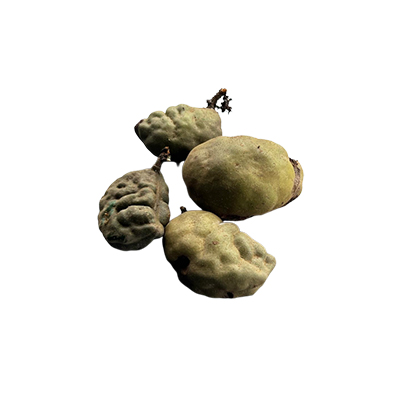
- Fruit - pod, kidney-shaped, 3-9 cm × 2-6 cm × 1-4 cm, fleshy, rugose, brownish-green, hanging from the trunk, 1-seeded.
- Seeds - flattened kidney-shaped, 3-6 cm × 2-4 cm, brown.
Cultivation
- Generative propagation is by seed.
- Vegetative propagation is by budding, approach grafting and other methods. The trees get no special attention in the home garden, apart from sackcloth being wrapped around the trunk to protect the pods against rodents and fruit borers. This wrapping does not seem to hinder the progress of flowering and fruit set. Pests and diseases are not serious. The pods are attacked by borers, and the young leaves may be infested by black aphids.
Chemical Constituents
Saponins, steroids or triterpenoid, phenolics, flavonoids, tannins, quinones and cardiac glycosides.
Traditional Medicinal Uses
- Relieve the symptoms of diarrhea.
- To increase appetite.
- It is used in the treatment of urinary stones, leprosy and skin diseases.
Part Used
Reference Sources
- Fern, Ken. (2022). Useful Tropical Plants: Cynometra cauliflora. https://tropical.theferns.info/viewtropical.php?id=Cynometra+cauliflora. 25-06-2022.
- Kew Royal Botanic Gardens. (No date). Plants of the World Online: Cynometra cauliflora L. https://powo.science.kew.org/taxon/urn:lsid:ipni.org:names:489381-1#image-gallery. 25-06-2022.
- National Park of Singapore (2022). Flora Fauna Web: Cynometra cauliflora. 02-06-2022. https://www.nparks.gov.sg/florafaunaweb/flora/2/8/2833. 25-06-2022.
- Sunarjono, H.H. (2022). Cynometra cauliflora. https://uses.plantnet-project.org/e/index.php?title=Cynometra_cauliflora_(PROSEA)&mobileaction=toggle_view_desktop. 25-06-2022.